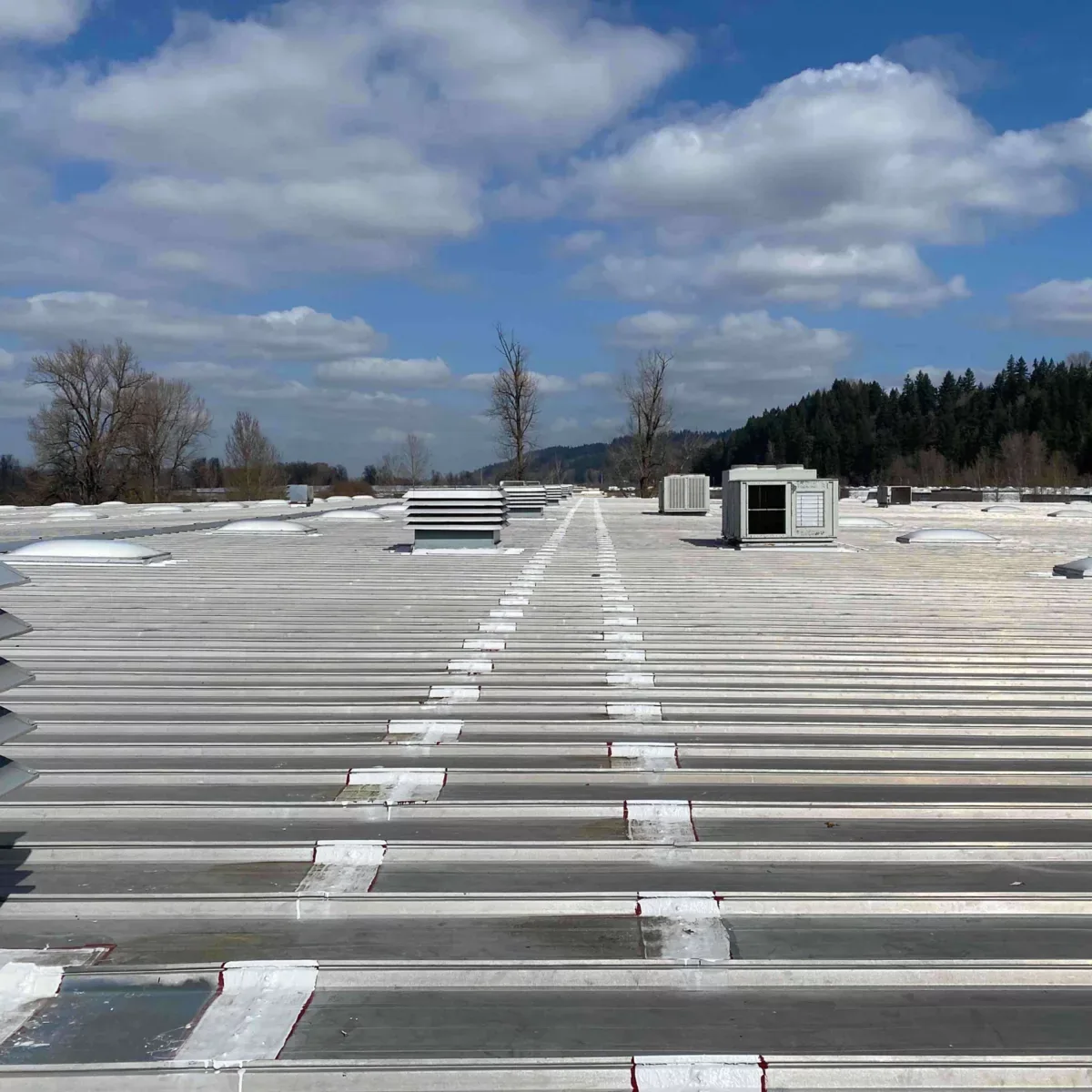
Commercial Roof Ponding Repair
Continuous equipment condensate discharge can keep a shallow roof area wet even between storms. The repair decision needs two examinations: the equipment water route and the roof's drainage geometry. We identify the discharge location while the equipment trade assesses a suitable connection. On a requested commercial building in New Braunfels, TX, the owner should fund the required water-routing correction and any damaged roof layers separately. Another surface finish would leave that continual discharge unchanged.
We investigate retained water on commercial roofing and rebuild the assembly where its condition requires work. The inspection follows water movement from its entry onto the field to the outlet. We examine low areas, surface transitions and concealed layers where they affect the correction. A useful proposal distinguishes equipment discharge, outlet work and roof reconstruction. Each task should have a measurable boundary and a practical sequence before the work area is opened.
Identify water arriving outside a rain event
A wet area concentrated near an equipment discharge needs examination while that equipment operates. We observe the outlet and its receiving roof area where access permits. The responsible equipment trade checks the condensate collection and routing requirements. A disconnected pipe or unsuitable discharge arrangement may need correction before roof restoration. Its revised route should avoid damaging the sheet or obstructing the building's actual roof drainage.
We examine the membrane beneath that repeated wetting for loose repairs, punctures and failing connections. Roof repairs beside equipment and its supports may need removal where the receiving layers are damaged. Equipment water routing remains a coordinated trade task. Identify who completes it and when. Closing a roof repair beneath an unchanged discharge would leave an operating condition that may complicate maintenance and later investigation.
Examine the outlet and approach before changing slope
A roof can have suitable slope yet retain water when its outlet is obstructed or its approach is restricted. We check accessible bowls, strainers and scuppers, including the adjoining roof connection. Loose debris, damaged components and a raised repair boundary need different corrections. The inspection identifies the actual restriction before a new slope assembly is priced. The pipe below a drain also needs separate assessment if its condition affects discharge.
Repair of roof drain and scupper connections should leave water a usable path from the reconstructed field. We examine how replacement layers meet the outlet height. Adding material without that check can raise the field unevenly or leave a low pocket nearby. Where receiving geometry is unsuitable, the proposal should identify the local slope reconstruction and outlet interface as one complete drainage task.
Inspect drainage at the requested operating building
Seguin's manufacturing employers include Hexcel, CMC Steel and Caterpillar. For a requested manufacturing roof in Seguin, equipment water and roof rainfall drainage need examination at the actual building. The work may require access between services or coordination with equipment maintenance. We identify those routes before opening the low area. Suitable handling keeps removed material and tools away from operating equipment and the water path being corrected.
Downtown New Braunfels has boutiques, music venues, cafes and galleries. A requested occupied property there can need protection above shared approaches while its roof work proceeds. We locate the outlet and affected field before selecting a release. Interior symptoms or water visible at a parapet do not give the removal boundary by themselves. The roof inspection reaches the receiving material and the route necessary to complete the local drainage correction.
Measure damage beneath the retained water
A membrane over a recurring wet area needs inspection for open seams, damaged patches and other entry points. Water on the surface and moisture within insulation require different examination. Selected openings establish lower-layer condition where it determines retention. Wet or fractured boards receive a removal allowance. Sound material can remain where the repaired assembly permits it. The resulting boundary should reach construction capable of receiving the new waterproof connection.
For reconstruction of roof insulation and receiving boards, we identify thickness changes and outlet transitions before closure. The repair must suit the retained roof and selected membrane. An open seam in the wet area needs material-specific preparation or replacement. A separate failed flashing connection beside the ponding can enlarge the work without requiring removal of usable roofing elsewhere.
Compare the complete drainage correction with surface restoration
A low area that remains after equipment routing and outlet correction may require local slope rebuilding. We examine the deck and support if visible sagging or unusual movement raises a structural concern. Qualified assessment should resolve that condition before additional material is selected. The roofing scope follows suitable support. Tapered insulation or another appropriate slope arrangement must connect to both the existing field and the outlet without leaving a new trapped area.
A silicone restoration treatment can be considered only against its material requirements and a suitable receiving roof. Coating does not establish the missing drainage geometry or replace wet insulation. We compare preparation, local rebuilding and the remaining surface treatment with a wider renewal. The owner needs each option's complete work quantity, including the transitions that let water leave the reconstructed area.
Check the water path after reconstruction
The completed repair should let water approach the intended outlet without a raised membrane edge interrupting it. We inspect transitions, flashing and drain components before removing work protection. Any equipment discharge correction should also be completed by its responsible trade. Review the arrangement under suitable operating conditions. A dry appearance on the day of roof completion alone may not reveal a discharge that resumes with equipment use.
The remaining maintenance task should identify accessible outlets and vulnerable approaches. Dirt or discarded service material can recreate a restriction. We connect continued drainage and roof maintenance with those physical areas rather than a general instruction to watch the roof. Keep the reconstructed slope boundary and material information with the building's repair history. Later equipment changes should be checked for new water routing and access requirements before they disturb the corrected drainage.
Commercial Roofing Questions
Should a roof be rebuilt if the wet area comes from equipment condensate?
Examine the equipment route and roof assembly first. Correcting the discharge may resolve the continual water input, while the roof still needs repair if its sheet or lower layers are damaged. We identify those quantities separately. If the receiving geometry also traps rainfall, the drainage reconstruction requires its own complete boundary and outlet connection.
Can clearing the drain eliminate the need for new slope material?
An obstructed outlet may be the principal restriction. We examine its approach and the remaining water path after the appropriate correction. A low field or unsuitable transition can still require rebuilding. Price slope work from that inspected geometry rather than assuming every wet area needs additional insulation or that outlet clearing completes every drainage repair.
What makes a local slope repair larger than the visible puddle?
The new construction must reach suitable support and join the retained field without creating another pocket. Damaged lower layers may also extend beyond visible surface water. We measure the removal and transition boundaries before defining the allowance. The completed assembly needs a working outlet approach, not simply added height at the center of the low area.
How do you separate coating from drainage repair in the proposal?
Identify the material and geometry corrections required before any surface application. Those can include outlet reconstruction, damaged-layer removal and slope adjustment. The coating allowance then states preparation and eligible receiving material. Compare that entire treatment with another renewal option. A finish should not conceal an unresolved wet board or an unchanged obstruction to water movement.

Commercial Roof Ponding Repair