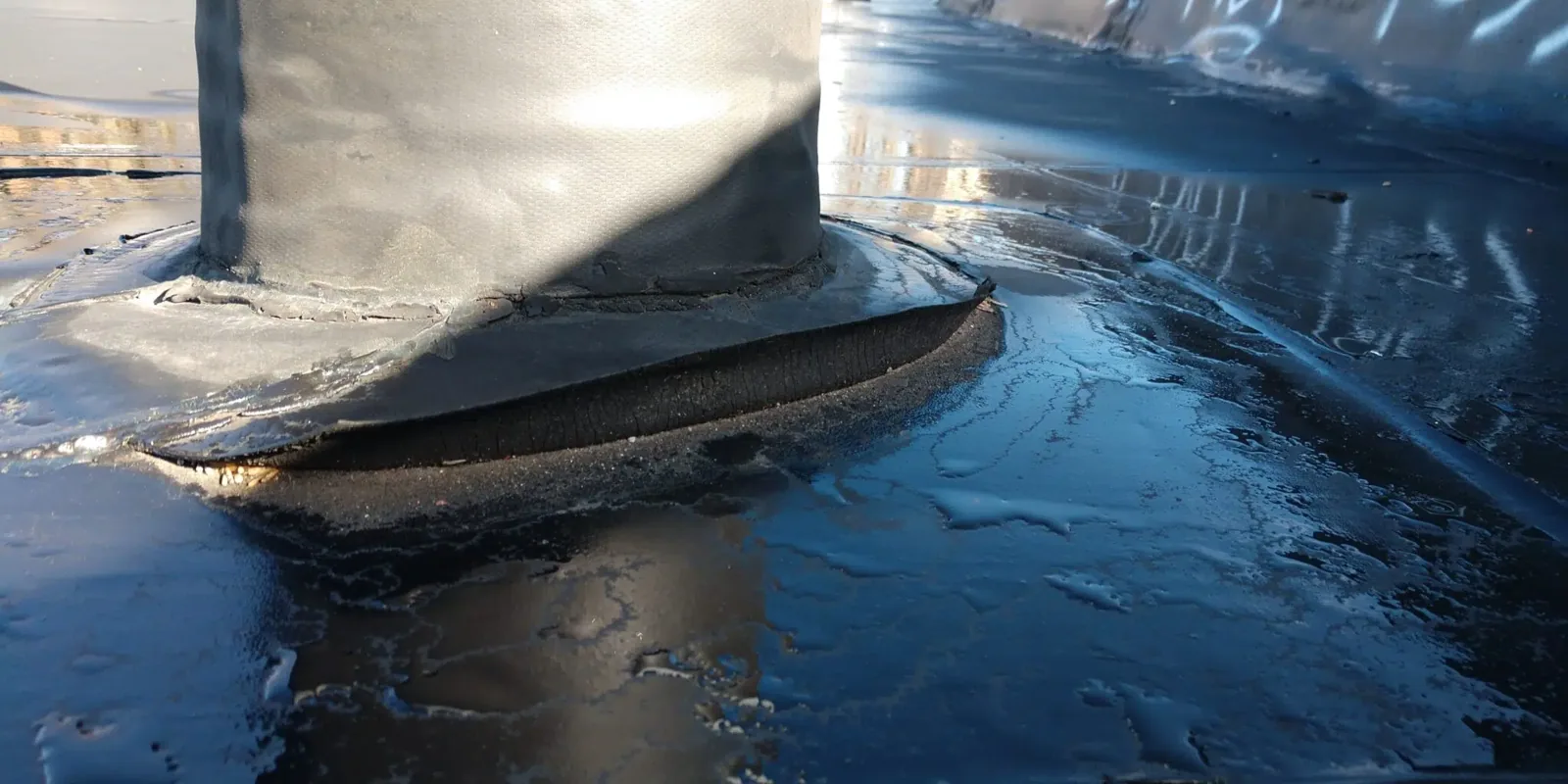
Failed Commercial Roof Flashing Repair
A brittle liquid-applied wall transition that fractures under examination changes the repair from a surface touch-up to removal of unsuitable material. The field sheet may still be usable. We inspect the old transition's bond, receiving wall and adjoining membrane before defining reconstruction. On a commercial roof in New Braunfels, TX, that finding determines what can remain beside the failed connection. The next finish needs a suitable base and compatible detail, not another layer over the fracture.
We repair roof flashing at walls, equipment and penetrations. Each task follows the connection's material and physical condition. A detached edge, cracked coating and torn sheet require different preparation. We examine the receiving construction and measure the opening needed to reach sound material. The owner can compare that complete local rebuilding with wider renewal where adjoining defects extend the work. Useful field roofing should have a suitable connection to whatever replaces the failed transition.
Identify the old treatment before selecting its replacement
An older liquid repair may cover membrane, metal and wall material in the same transition. We identify those surfaces and examine where adhesion has failed. The installed treatment may need removal to expose the actual roofing connection. Residue can affect the bond of replacement material. Preparation should reach a surface suited to the specified detail while avoiding damage to useful adjoining sheet. Its compatibility requirements determine the next construction method.
A KEE membrane connection and a modified-bitumen flashing assembly need their own material-specific details. A proposed replacement should identify the existing system rather than selecting a repair by appearance alone. We check the useful sheet at the removal edge and establish how the new transition joins it. If the sheet cannot receive that connection, the roof opening may need to extend farther.
Inspect the receiving wall and termination
A wall transition can fail above the field sheet's attachment. We examine the termination, receiving wall and any protective metal. Loose fasteners, damaged wall material or unsuitable height can require correction before new flashing is installed. Water arriving from higher wall construction also needs investigation where the findings point there. Repairing the roof-side connection alone may leave that higher entry unchanged.
For reconstruction of roof flashing and penetration interfaces, the proposal identifies preparation, replacement material and complete termination. We distinguish work on the wall or component from work on the roof assembly. The receiving condition determines whether metal removal, local wall correction or another trade is needed. Those tasks should be resolved while the connection remains accessible, before the new roofing hides the material still requiring examination.
Reach the requested building's wall-side connections
Downtown New Braunfels includes nineteenth-century German-influenced architecture alongside galleries, cafes and music venues. A requested roof there needs examination of its actual wall and roofing junction. We assess accessible edges and retained construction before deciding the repair boundary. Existing covers or nearby equipment may limit access to the termination. Identify removal needed to reach it rather than leaving the owner with a surface treatment below an unresolved connection.
Wimberley Square combines restaurants, galleries, antique shops and boutiques, with limestone facades around the square. For a requested building in Wimberley, the wall-side repair may affect an occupied approach beneath the work. We inspect the actual receiving surface and protect that approach as required. Handling and access add to the allowance when they permit complete flashing removal and reconstruction, especially where a cover must be dismantled to reach the detail.
Measure the material affected beneath the fracture
A cracked transition can admit water into insulation at the wall edge. We examine lower layers where their condition changes the correction. An opening can establish damaged board, retained insulation and the deck beneath them. The reconstruction needs suitable material at each receiving side. Closing the outer fracture without removing unsuitable lower layers would leave the new flashing supported by damaged construction.
The extent of roof board and insulation replacement should be measured independently from the visible treatment. We examine the construction between failed areas before recommending one continuous opening. A nearby separated roof seam may need another compatible closure, while a puncture through the field sheet can create a separate lower-layer defect. Distinguish those tasks while keeping their finished boundaries workable.
Arrange preparation before the wall detail closes
The existing treatment may need scraping, removal of metal covers or opening of the adjoining field. We plan that preparation with a weather-resistant stopping point. The area released should permit suitable removal and drying where required by the material. A restricted opening can save handling but leave the new transition joined to an unsuitable edge. The work allowance should identify the access and complete rebuilding rather than only the finish applied.
Roof work above continuing building operations may require different noise or handling periods near the wall. We coordinate the affected area with the operator. Another trade should complete its receiving-wall or component task before final flashing where practical. Temporary protection must not become an obstruction to drainage or a substitute for the permanent detail. The release date follows that sequence and the material's installation conditions.
Check continuity from retained sheet to termination
The finished connection needs a compatible transition across the prepared surfaces. We examine visible bond, terminations and changes in direction. Corners require particular attention where the new detail crosses adjoining planes. Reinforcement, lap arrangement and receiving height should suit that turn. We check the assembled corner before a protective cover restricts examination. A continuous appearance should be supported by the installed construction, including suitable lower layers where they were opened. The final inspection identifies the reconstructed wall-side boundary and any remaining defect beyond it.
For the next roof renewal decision, separate the completed flashing from field material still in service. The repair may restore one connection while another part needs later investment. We describe that remaining physical condition and the work it implies. A later wall alteration or equipment installation can disturb the finished transition. Review its receiving surfaces and dimensions before modifying the connection or applying another incompatible treatment.
Commercial Roofing Questions
Can a fractured liquid wall repair be coated again?
Examine adhesion, material identity and the receiving surfaces before deciding. Brittle or detached treatment may need removal. The new detail must meet suitable construction and remain compatible with retained sheet. Another coating layer should not conceal an unprepared fracture or missing termination. We compare complete preparation and reconstruction with a different flashing method where appropriate.
What happens if the wall beneath the termination is unsuitable?
Identify the receiving-wall correction and the party responsible for completing it. We measure roof removal needed to reach the interface and rebuild the flashing after the wall can receive it. Temporary weather protection may be necessary during that sequence. The permanent roof connection should not be installed against material that remains loose or damaged.
Does flashing removal require replacing the whole field?
A suitable adjoining sheet can often provide a local repair boundary. We examine that material and the lower layers before defining retention. If deterioration or incompatible residues extend beyond the wall, the opening may enlarge. The field quantity follows those conditions and the new connection's requirements, rather than the mere fact that wall flashing has failed.
What should the completed flashing repair identify?
Keep the material, prepared receiving surfaces and reconstructed boundary with the roof history. Completion photographs should show accessible transitions and termination details. Identify lower layers replaced and any remaining defect outside the work. That information helps assess later changes at the wall and keeps a completed local connection distinct from field roofing awaiting another renewal decision.

Failed Commercial Roof Flashing Repair