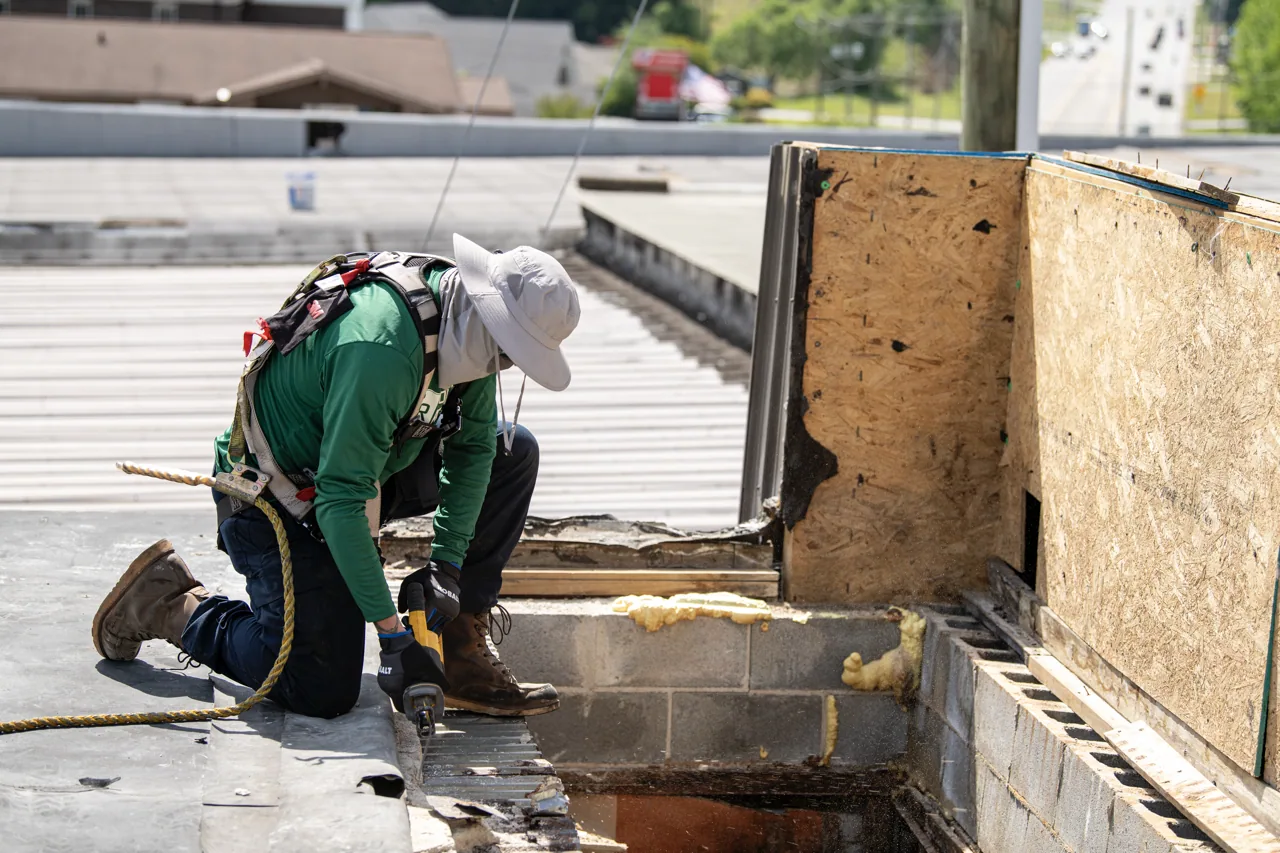
Occupied Commercial Building Reroofing
A damaged roof area crossing a tenant boundary makes the work release a building decision. The repair needs a suitable connection even where the operating spaces have different schedules. Occupied building reroofing in New Braunfels, TX, connects the removal quantity with the activities beneath it. We define the exposed area, temporary closure and rebuilding sequence. The owner can then compare the roof work with the practical interruption each release needs.
Commercial Roofing New Braunfels works on buildings that remain in use. We plan roof removal and installation against tenants, equipment and available access. Continued occupation needs assessment area by area. Some activities may proceed while nearby work is isolated. Others may need a specific interruption for protection or equipment coordination. The useful sequence serves both the roof assembly and the operating use rather than assume every space can follow one identical release.
Define the removal area by sound construction
Wet layers can extend beyond the most convenient operating boundary. We examine the assembly before choosing the opening quantity. Removal needs to reach suitable material for rebuilding and temporary connection. A work area selected only by tenant limits may leave damaged layers or an unstable transition in place. The roof boundary and the occupied boundary therefore need assessment together, with each serving its own practical purpose.
We connect roof removal and replacement work with that examination. Deck repairs or deeper wet-layer removal can affect the exposure and handling quantity. Those conditions may require a different release from membrane installation alone. The owner should see which spaces need protection and why. A defined phase can keep unaffected operations separate where practical, while still opening enough suitable roof area to complete the necessary rebuilding.
Match each opening to a usable dry-in plan
Removal exposes material that the old assembly had covered. We assess weather conditions and the available path to suitable temporary or permanent closure. The phase needs realistic handling and installation capacity for its exposure. Opening more area than can be protected within the usable window increases schedule risk. The release should suit the actual roof condition rather than a desired completion date alone.
Comal County summer conditions include both humidity and heat. Material preparation, surface dryness and worker access can affect installation timing. We evaluate those conditions as the work proceeds. Temporary closures also need suitable drainage and securement. If a later phase is delayed, its transition should remain a defined protection detail rather than an unfinished edge. The building operator needs to know which occupied area remains affected by that temporary condition.
Separate roofing from the necessary interruption
An equipment curb rebuild may need a unit disconnected or moved. The related operating interruption belongs in the work sequence before the roof is opened. We coordinate the roofing with the relevant equipment trade and identify the specific connection being changed. Unaffected equipment may remain in service where the arrangement permits it. The release should follow the actual task rather than treat the entire building's systems as one shutdown.
For equipment curb and support rebuilding, lifting access and temporary weather protection can affect the phase. Service routes must also remain workable after installation. Added insulation may change heights at equipment or openings. We identify those interfaces ahead of the field work. A newly finished surface should not require another opening because an equipment connection was omitted from the operating and roofing comparison.
Protect the approach used by occupants
A debris-handling route beside an entrance can affect customers or staff even where the roof opening is elsewhere. We examine lift positions, disposal handling and the work area below exposed edges. Suitable separation and a practical access route are necessary. A narrow roof phase still needs enough space for safe handling. We coordinate those conditions with the building operator before the release begins.
Preparation materials and installation methods can also affect sensitive occupied areas. We assess the proposed system, ventilation concerns and appropriate protective measures. A recover on eligible existing material may reduce removal exposure, but it still needs suitable interfaces and operating coordination. We compare those actual tasks with replacement rather than presume retention eliminates disruption. The owner can then evaluate the roof condition and the practical work release together.
Sequence the work for the business below
Downtown New Braunfels has galleries and music venues within its commercial mix. Roof work above an occupied property needs the operating activity beneath each phase identified. Entrances, deliveries and equipment can influence the release. We discuss those conditions while examining the assembly. The useful sequence may isolate a specific area for removal while keeping other suitable spaces available, where the hazard and protection requirements permit that arrangement.
The Gruene Historic District includes restored buildings used for dining, retail and hospitality. For renewal above hospitality operations, room use and equipment service can affect the work timing. A property in downtown New Braunfels may need a different release from one in Gruene. We set the roof boundaries from the material condition and coordinate the occupied boundaries from the building use, rather than force unlike properties into the same removal sequence.
Compare phase handling with the rebuilding quantity
Smaller phases can reduce simultaneous exposure but add handling and temporary transition work. A larger release can require more operating separation and a broader dry-in plan. We compare those drivers with the roof's actual removal needs. The preferred sequence should not retain damaged material merely to shorten an interruption. It should also avoid closing unaffected spaces where a narrower safe arrangement is practical.
The renewal funding decision includes access, supporting repairs, temporary closures and installation. Planned tenant or equipment changes can influence that sequence. We identify which work restores the assembly now and which later interface remains to be changed. Ongoing care of retained roof areas can remain appropriate between phases. The investment should leave each completed area suitable for its intended use while keeping the remaining roof quantity distinct.
Commercial Roofing Questions
Can a reroofing phase stop directly above a tenant dividing wall?
The roof needs a suitable temporary and permanent connection at the boundary. We examine the material and water route before selecting that location. A tenant line may fit the work release, or damaged layers may require a wider opening. We coordinate the operating boundary with the roof boundary so the phase does not leave unsuitable material or an unstable transition in place.
What if one equipment shutdown affects spaces outside the removal area?
Identify the system connection and the activities that depend on it before opening the roof. We coordinate that interruption with the relevant trade and the building operator. The roof phase may need a different date or protection arrangement. Unaffected roofing can remain separate, but the operating release must account for the actual equipment dependency rather than only the dimensions of the removal area.
Should I choose more small phases to keep tenants operating?
Compare the reduced exposure with added handling, transitions and the suitability of each closure. Smaller releases can be useful where the assembly allows sound boundaries. They can also add work without resolving an operating constraint. We assess those differences against the material condition. The sequence should produce suitable completed areas while keeping each interruption and remaining quantity clear.
How does suspected deck damage affect the occupied work plan?
Supporting repairs may enlarge the opening or extend the protection needed below it. We investigate suspect areas where practical before finalizing the release. Unresolved conditions need a work plan that allows appropriate examination and rebuilding. A membrane-only sequence may be insufficient. The owner should compare the supporting repair quantity with the access and occupied protection required to carry it out.
Can an incomplete renewal phase remain protected during a delay?
A suitable temporary closure needs securement, drainage and follow-up appropriate to its exposure. We identify that condition at the phase boundary and the occupied area still affected. Later work should reconnect to suitable material. The building operator may need continued protection or restricted access while the temporary detail remains. A paused sequence should not leave an undefined open edge as the roof's weather protection.

Occupied Commercial Building Reroofing