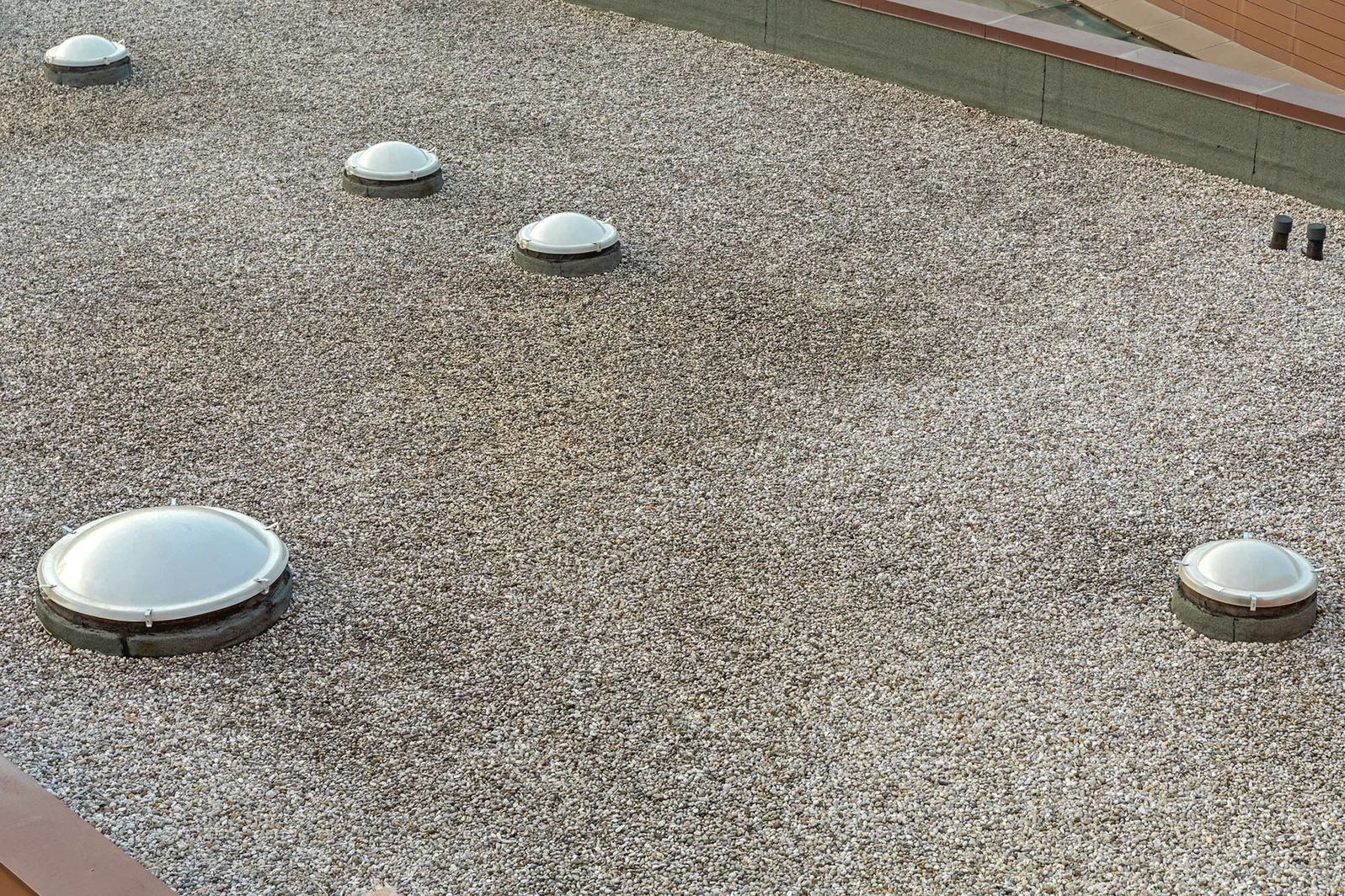
Commercial Built-Up Roofing
A split upper ply beside a metal transition can leave the lower roof layers carrying a connection they were not intended to finish alone. That finding changes the local reconstruction quantity. Built-up roofing in New Braunfels, TX, needs the damaged ply boundary examined before a surface repair is chosen. We assess the adjoining bonded material and metal interface. The owner can then compare rebuilding that junction with retaining suitable field roofing away from it.
Commercial Roofing New Braunfels installs and repairs built-up commercial roof systems. Their reinforcing plies, bonding material and finish work together with the supporting construction. A new surface treatment cannot restore separated layers or wet insulation below them. We examine those conditions before selecting retention. The owner should compare the complete repair quantity with the material that remains, rather than assume every exposed area needs either a coating or full tear-off.
Restore protection where the base remains suitable
Aggregate, a compatible coating or another specified finish can protect the exposed portion of a built-up roof. The correct restoration method follows the installed system and its requirements. We examine areas of surface loss and the condition underneath them. Replacing loose material over damaged bitumen can conceal a separate repair need. A suitable finish should serve sound construction rather than become another layer over an unresolved defect.
We assess compatible surface restoration work where the assembly is eligible. Preparation and drainage affect that option. Residue, loose material or degraded surface can change the useful method. The owner needs to see the repair and preparation quantities before comparing finishes. A surface that can be restored economically has a different work boundary from one whose reinforcing layers have separated or whose support is no longer suitable.
Inspect the bond within the layered membrane
A blister or ridge can indicate a condition between plies that requires closer examination. We assess its extent and the material around it. Suitable openings may be needed to establish separation, moisture or deterioration beneath the surface. Repair must follow the layer condition. Merely flattening or covering a raised area can leave its cause inside the assembly and an unsuitable connection at the new surface.
We compare local ply rebuilding with a modified bitumen renewal construction where appropriate. The methods have different details and preparation requirements. A single-ply TPO assembly presents another complete-system comparison, not an interchangeable surface layer. Each option needs suitable support, attachment and transitions. The useful decision includes the material that will remain beneath the chosen roof and the condition that needs removal first.
Assess the complete retained weight and support
Multiple roofing layers and an aggregate finish can create a substantial retained assembly. Proposed additions need assessment of existing construction and loading. We examine available layer information and investigate where necessary. Deck deterioration or uncertainty about the supporting material can change the work. Appropriate structural review may be required. Installing another surface without that assessment can leave the owner funding construction whose retention suitability is still unresolved.
We connect insulation and board rebuilding with the proposed assembly. Moisture can make layers unsuitable even where their exposed finish looks serviceable. The removal boundary should reflect that damage and the suitable material beyond it. Adding a stronger top layer does not repair weak support. The scope should distinguish retained construction from what is rebuilt, with the proposed attachment and material load assessed for the finished roof.
Rebuild flashing that cannot follow the field
A wall or equipment transition can deteriorate differently from the open roof area. We inspect the raised connection, termination and supporting substrate. Suitable flashing may need local replacement even where the field can remain. Movement, limited height and incompatible earlier repairs can alter the correction. The repair boundary must permit a suitable connection between the new detail and the retained built-up construction.
Drain areas need attention as well. Surface debris, depressed insulation or a damaged outlet can expose the assembly to retained water. We assess drainage work within the renewal where needed. The finish should not conceal an unsuitable sump or prevent useful discharge. Those detail quantities belong beside field restoration so the owner can compare an assembly correction rather than a surface-only expenditure that leaves its vulnerable interfaces untouched.
Release layered-roof work above occupied uses
For a roof project above educational use, the occupied space and access can affect removal, handling and the installation method. We assess the actual assembly before choosing the work phase. An existing built-up system can need different material handling from a proposed replacement. That quantity should be included in the operating release.
For roof work above educational facilities or another occupied commercial use, temporary protection and sensitive activity below the opening matter. A property in Kyle needs its own sequence, just as one in San Marcos does. We define the roof boundary from the material condition and coordinate the work release with the activity beneath it.
Compare finish restoration with layer removal
Widespread ply separation or moisture can limit the value of repeated surface treatment. We examine the areas between visible defects and identify what restoration would retain. Suitable material can support a defined repair and finish correction. Broader damage may make removal more useful. The comparison includes access, debris handling and support rebuilding rather than the coating or aggregate quantity alone.
For replacement of the layered roof, deck repairs and changed interface heights can influence cost and timing. Planned equipment work may also affect the release. We identify those quantities before the old assembly is removed. The owner's next allocation should restore suitable protection and support while separating completed corrections from material retained outside them. A layered system needs that complete comparison so a new finish does not become a substitute for necessary rebuilding.
Commercial Roofing Questions
Does lost aggregate mean the entire built-up membrane needs replacement?
Examine the exposed bitumen and plies first. Suitable material may support compatible restoration of its protective surface. Deterioration or separation beneath the bare area can require local rebuilding or broader removal. We assess that boundary before selecting the finish. The useful correction follows the remaining assembly condition rather than treating surface loss alone as a complete replacement decision.
Can a coating reconnect separated built-up plies?
A surface application does not restore the bond inside a detached layered membrane. We investigate the affected construction and define an appropriate repair. Eligible surrounding material may remain where the new connection is suitable. Broad separation can change the renewal recommendation. A coating can serve a suitable restored assembly, but the layer rebuilding needs its own work quantity first.
What should be examined before adding roofing over a built-up system?
Assess moisture, existing layers, support, attachment and the proposed load. Applicable requirements also affect retention. We identify the concealed questions that need examination before a new assembly closes them. Detail heights and drainage may need changes. The recover comparison should include those corrections rather than treat the existing layered roof as a suitable base solely because its finish appears intact.
Why can field restoration still require new equipment flashing?
The raised detail can have different deterioration, movement and connection demands from the field. We examine it separately and identify what needs rebuilding. The restored surface must connect to suitable flashing at the interface. Retaining a failed curb detail can leave active entry beside newly protected field material. The investment should address both quantities where both conditions need work.
How do I judge whether repeated local repairs are still useful?
Compare the construction between the repaired areas with the effort needed to establish suitable connections. Sound plies and support can make localized work worthwhile. Broad moisture, separation or deterioration can favor a larger phase. We identify the retained material and removal quantities for each option. A repair history helps direct examination, but the current assembly determines the next expenditure.

Commercial Built-Up Roofing