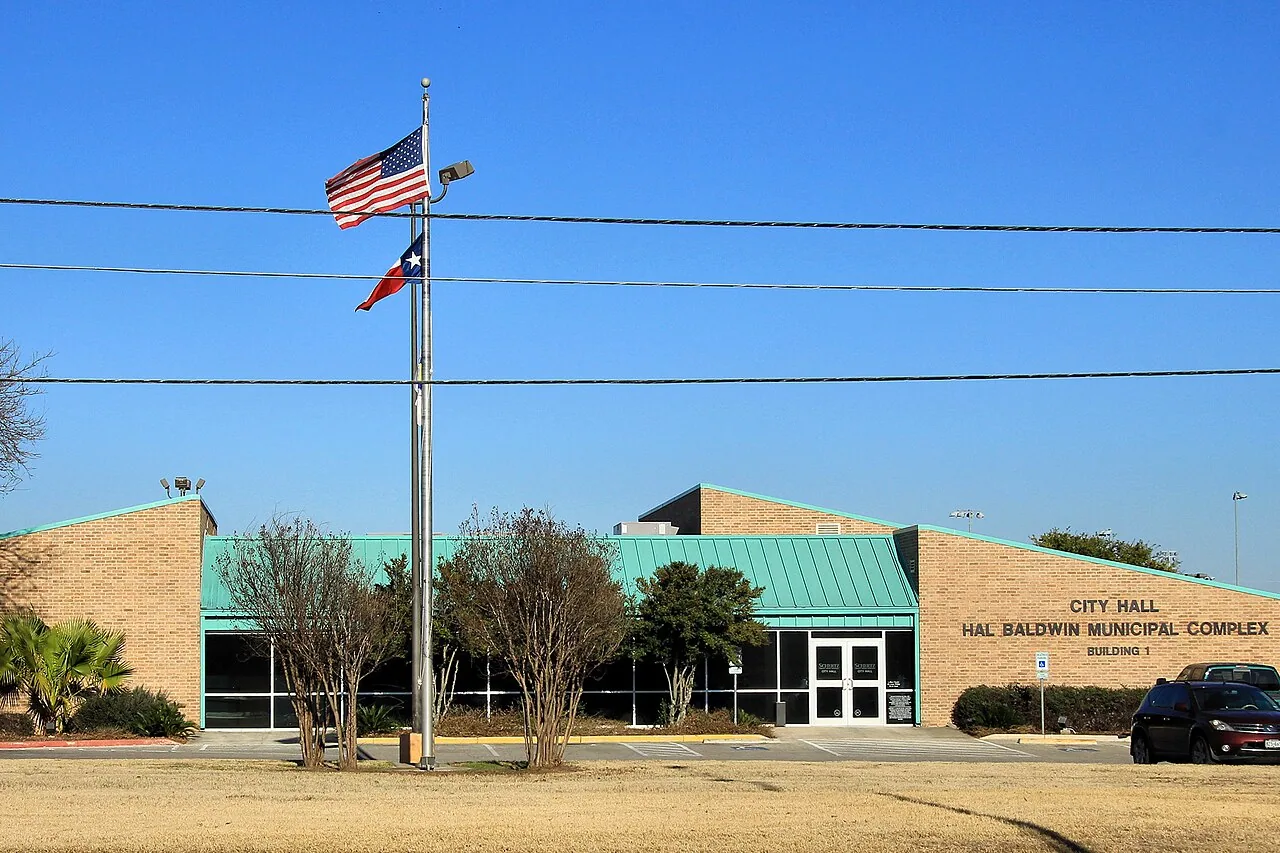
Schertz
Unsecured equipment flashing can require more than a perimeter seal. Schertz spans Guadalupe, Comal and Bexar counties. Along its north, Interstate 35 is reached from exits 174 to 180. County lines affect permit review, while the exit range helps orient travel across northern Schertz. We open the reported area where it clarifies the leak route, then mark sound adjoining sheet separately from material that must leave.
For school roofs, the operator’s calendar and building access plan shape the work release. We confirm the property use and access limits with its owner, then plan a roof section that can be opened and closed with occupants protected below. New Braunfels, TX, has hot, humid summers, a useful regional condition for preparation and installation planning. We check the surface and forecast on the building before releasing work that depends on adhesion, welding or cure.
Locate the failure before setting removal
A water mark inside a commercial building is a report location, not a roof-side measurement. Moisture can follow board joints or structural channels and surface indoors well beyond the roof entry. We compare the interior area with up-slope walls, equipment curbs, penetrations, drains and previous patches. The I-35 exit range locates northern Schertz; at the property, we map roof orientation, system and access route before setting removal. The property owner confirms access; the inspection determines where the assembly changed.
If the surface does not expose the lower condition, we make a test opening and record each layer. Dry, firmly attached material can remain when the assembly supports that decision. Soft cover board, wet insulation or a weak deck receiver changes the repair boundary. A commercial inspection captures photographs and locations, while a condition report can separate the urgent correction from work that belongs in the next capital phase. The owner receives dimensions tied to the actual roof area rather than an assumed extension from the interior stain.
Coordinate access with the building operator
School calendars and commercial operations create different work windows. We ask the owner which entrances stay active, when deliveries arrive, whether rooftop equipment must remain online and what interior areas need protection. For a school project, the operator supplies the calendar, occupied rooms and pedestrian routes. We arrange staging and roof access around those instructions before material is lifted. We place staging, debris handling and roof access around those instructions before material is lifted.
We size each daily roof release to the crew’s capacity to restore a dependable weather seal before leaving. A complete section includes its membrane laps, curb flashing, edge transition and drainage connection. If work reaches a shared wall or equipment base, the scope coordinates with the trade responsible for that component. Our occupied-building reroof planning identifies each release point. If water is still entering, we first cover the exposed opening and shield the space below; that temporary measure receives its own record. Once conditions allow inspection, we define the permanent repair from the roof-side failure and price it separately.
Keep jurisdiction attached to the permit plan
Schertz crosses three counties, so a property's jurisdiction should be confirmed before permit assumptions enter a roofing schedule. We identify the address with the owner, verify the responsible building department and check the permit requirements that apply to the scope. A property near an exit is not necessarily subject to the same municipal limits as another one farther along the corridor. The work plan records the governing jurisdiction and its inspection milestones where they affect mobilization and release.
Permit hold points should fit the repair sequence. We identify which inspection must occur before concealed layers close, then align that review with the planned work area. If removal exposes damaged substrate, the revised scope waits for the owner and applicable authority to resolve the change before closure. That timing belongs in the release plan beside material delivery and weather protection. At the roof, we still inspect deck condition, fastening, insulation and perimeter geometry before selecting a system. A replacement scope can show removal, new layers and finished elevations. A recover review is appropriate only when retained material and edge details can support the added assembly.
Follow drainage through the finished connection
Water management continues past the visible roof surface. We inspect the approach to each drain, bowl connection, scupper, overflow and discharge transition. An open strainer can sit over a leaking clamp. A new insulation layer can leave an existing curb or drain too low for a complete termination. We measure finished height before approving a recover or replacement, then include the metal and flashing adjustments needed to finish the boundary. If a slope correction is part of the work, the scope describes where it directs water and what remains beyond that area.
New Braunfels has hot, humid summers. For a Schertz project, we check roof-surface moisture and temperature before releasing adhesive, welding or coating work. A drain and scupper correction addresses the membrane-to-outlet connection as well as the open water route. If a coating is proposed, restoration work follows only after the surface is compatible, dry and able to drain. It cannot resolve a concealed wet layer or a depressed field by itself.
Compare the local correction with broader work
A localized correction suits a single confirmed failure when the neighboring membrane and base remain secure. When openings reveal moisture in separate roof bays or loss of attachment across a broader section, we scope a renewal alternative. Both estimates use the same roof map and list removal, deck repair, perimeter metal, equipment moves, debris handling and interior safeguards. That lets the owner compare a defined repair to phased replacement without changing quantities midway through the decision.
At closeout, we inspect the finished laps, curbs, drains and edge metal, then record the roof zone and date. Photographs identify what was removed and what remains outside the work boundary. A roof asset record can carry condition changes into the next investment decision. Properties farther southwest can use Cibolo roof planning, while New Braunfels commercial roofing stays grounded in the primary city's own building rules. Schertz scopes remain specific to the property inspected.
Commercial Roofing Questions
Do the I-35 exits determine which building department approves work in Schertz?
The exits help orient the northern part of the city, but jurisdiction depends on the property's location and applicable limits. We confirm the responsible department with the owner before setting permit milestones. A roof repair near an exit still needs its own permit review when the scope requires one. We record the approval and inspection steps that can affect the release date.
Can you inspect a roof serving a school without disrupting classes?
We coordinate the walk with the building operator, identify occupied rooms and pedestrian routes, and stage away from active entrances. Each roof phase closes to a complete weather boundary; the work window follows the school’s calendar and access rules.
What is the first step when a roof leak returns after patching?
We inspect the prior repair and the material receiving it, then trace water across the adjoining roof details. A failed termination, wet insulation or a separate drain connection can each explain a return. We open the assembly if surface observations cannot resolve it. The scope then identifies the confirmed boundary and distinguishes the next correction from any wider renewal.
How do hot, humid conditions affect roof work near Schertz?
New Braunfels area climate records describe hot, humid summers. We use that regional context for planning, then check the actual surface and forecast where a weld, adhesive or coating depends on conditions. A roof is released when preparation and installation requirements can be met. If they cannot, the owner receives a revised sequence tied to the material and work area.

Schertz