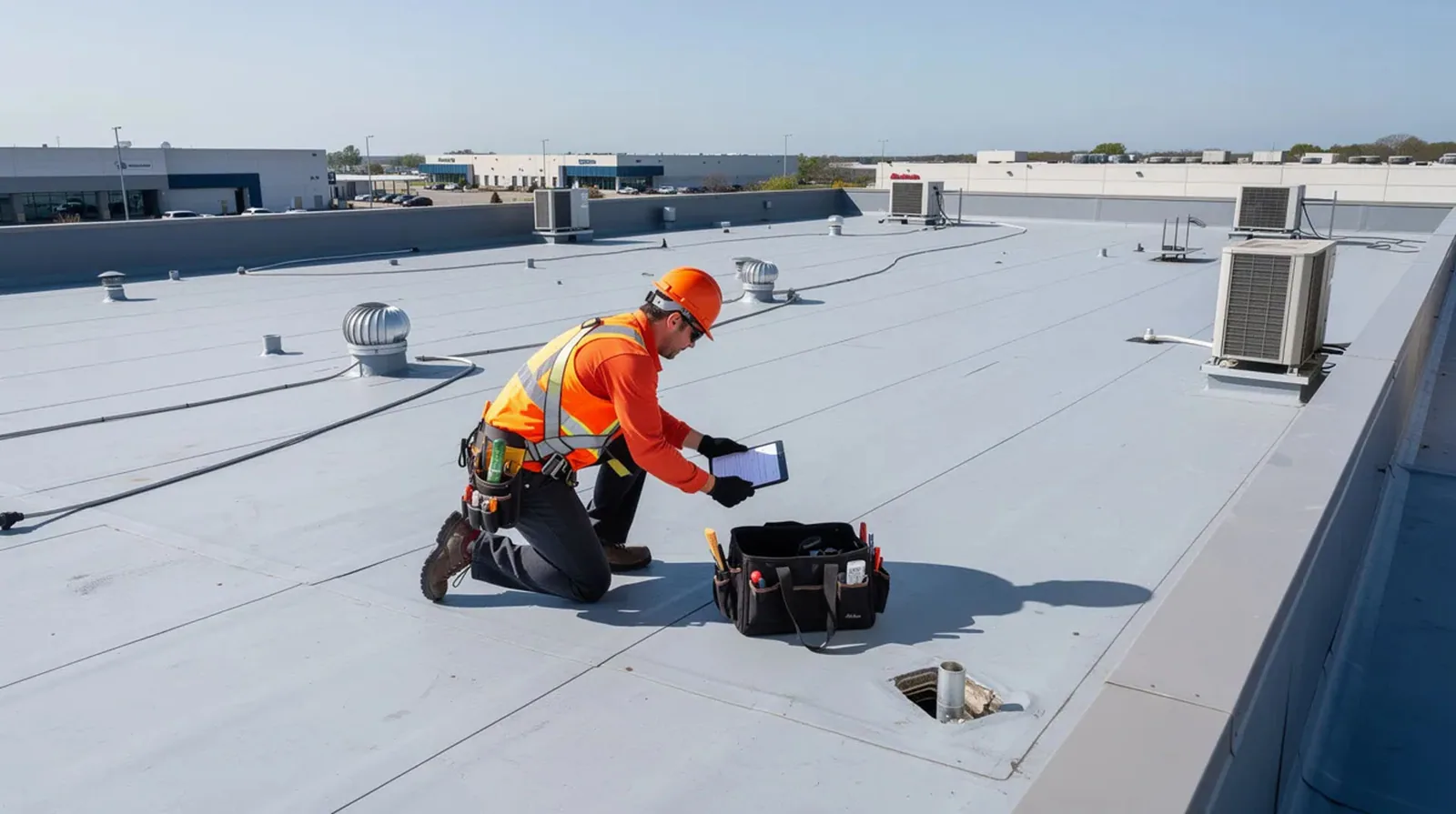
Commercial Roof Asset Management
Corroded rooflight frame-to-curb attachments can change the next investment while a nearby membrane repair remains serviceable. The component's receiver needs examination before its condition is grouped with the field roof. We inspect the affected commercial building in New Braunfels, TX, and identify the roof connection that would be disturbed during correction. The owner can fund component rebuilding and retain suitable field material, or compare another renewal where examination reveals a wider construction problem.
We manage roof decisions through physical inspection and measured work. Each building needs an identifiable assembly, repaired boundary and remaining material condition. Those findings determine the next correction or renewal phase. A photograph without a useful work boundary leaves the investment unresolved. We quantify demolition and detail reconstruction, then record the building release needed to complete that work. The roof history supports that work instead of becoming a substitute for examining the roof itself.
Separate the component receiver from the surrounding field
Corrosion at a frame attachment can reduce the useful receiving metal or require component replacement. The responsible component assessment establishes that task. We examine adjacent flashing for strain, loose termination and damage needing roofing correction. Dismantling the frame may expose a suitable curb or material requiring reconstruction. Identify that possibility before pricing only the visible fasteners. A new attachment needs an appropriate receiver and the component's required arrangement.
The roof connection around a raised opening should remain distinct in the scope. We measure sheet and lower layers disturbed by the component task. Sound field material may remain if it can receive the restored detail. If component dimensions change, examine the proposed connection before installation. The asset decision includes any roofing work needed to complete that change, not merely purchase of the new frame.
We also identify covers that restrict the attachment inspection. Their required removal and reinstatement belong in the component allowance before the work area is released.
Identify what the earlier repair actually rebuilt
A prior repair near the rooflight may have restored only sheet, or it may have included board and flashing. We inspect that boundary and compare available photographs and material information. The roof history should identify the construction restored. An entry saying only that a leak was repaired gives little basis for deciding whether the current component finding changes the same receiving assembly or another one.
A current report on the roof's physical condition connects those earlier repairs with the material now accessible. We identify the field inspected and any opening needed to establish concealed condition. Suitable older reconstruction can remain where it meets the next detail. Damaged or incompatible material needs another allowance. The owner can then compare the new component task with the remaining roof work without treating every repair date as a field replacement.
Examine each requested building in its operating setting
Downtown New Braunfels contains boutiques, cafes, galleries and music venues. A requested roof above those uses needs access planning at the actual component and work boundary. We locate occupied approaches, service routes and material handling positions before recommending the repair release. A rooflight beside an active entry may require different protection from one above a closed service room. That protection belongs with the measured component and roofing work.
For a requested property in San Marcos, examine its specific roof assembly and equipment arrangement before extending another building's repair approach. The operating need can change access and timing. It does not eliminate the requirement to reach suitable receiving material. Each building's investment should follow the complete correction its inspected assembly requires.
Establish the material that can remain through the next phase
A serviceable-looking field needs examination where retention affects the proposed work. We check sheet connections, attachments and accessible lower layers. Selected openings may be required to identify board or insulation condition. The resulting scope separates damaged construction from material capable of receiving the new detail. A component correction should not conceal wet board merely because the surrounding sheet remains bonded.
Rebuilding unsuitable lower roof layers can enlarge a local opening. We measure its depth and transition to retained material. A broader roof replacement phase may need comparison if suitable repair edges are not available. The new field and component interfaces must meet one another. Those physical requirements determine whether local rebuilding or a larger release offers the more workable complete construction.
Set the next work date from the unresolved condition
A component that cannot provide suitable weather protection needs a correction decision. The owner should distinguish that task from field renewal that can follow another release. We identify temporary protection where necessary and coordinate permanent component work with the responsible installer. Access, material preparation and receiving-wall or curb correction can affect the date. The proposal should show which tasks are needed before the reconstructed roof boundary can close.
Planning the next roofing investment uses that physical sequence. For owners coordinating with managers responsible for multiple buildings, keep each affected component and field boundary identifiable. A suitable local repair at one property does not establish the receiver at another. We inspect the next building and compare its measured work before carrying the same investment decision into another release.
Review condition changes at the completed boundary
After correction, we inspect the restored flashing and the roof material disturbed during component work. The responsible installer checks the component attachment and operation. Completion photographs identify those different tasks. The roof history should retain the material and dimensions needed for later assessment. A new leak or service change can then be located against the completed work rather than becoming another undifferentiated entry for the entire building.
For continued care of the retained roof, identify outlets, vulnerable interfaces and service approaches needing attention. A later equipment relocation can disturb the rooflight area or another detail. Coordinated work across several properties should carry those actual condition changes into each building's next inspection. The program remains useful when its next date leads to a material examination or correction, with the remaining assembly and work release clearly identified.
Commercial Roofing Questions
Should a failing rooflight attachment move the whole roof into replacement?
Assess the component receiver and surrounding assembly separately. The frame may need rebuilding while useful field material remains. We identify roofing disturbed by that task and examine any lower damage affecting retention. Wider renewal is compared where those findings support it. A component defect alone should not substitute for measuring the field's required work.
What roof history is useful before the next component decision?
Keep repair material, photographs and the reconstructed boundary with the building information. Include lower layers replaced and connections left outside the work. We compare those details with the current inspection. They help distinguish a new component finding from a failure in earlier roofing and define what the next correction must meet.
How do you prioritize a local repair against a later renewal phase?
Identify the unresolved physical condition and the complete correction it needs. An exposed or unsuitable connection may require protection and local work before a wider release is available. We compare that reconstruction with material likely to be disturbed during renewal. The owner can then fund the required immediate task while keeping the remaining assembly decision distinct.
What should change after another trade modifies the roof?
Inspect the new opening, attachment or service route and compare it with the installed assembly. The work history should identify material disturbed and roofing reconstructed afterward. Carry any remaining defect into its own repair decision. A trade change should receive a suitable permanent connection rather than relying on an earlier roof assessment made before that construction existed.

Commercial Roof Asset Management