
Our Company
A wet insulation core beneath one roof opening changes the removal boundary. The visible membrane may still be serviceable, or the concealed layers may need rebuilding. We inspect the assembly, measure the affected area and connect the finding to a repair or renewal decision. Commercial Roofing New Braunfels works with building owners, property managers, facilities teams and general contractors who need that sequence made clear. A commercial roof repair starts with the same separation of visible damage from the material that must be rebuilt.
Start with the building and its use
Before proposing work, we identify what operates under the affected roof, how the building is accessed and what date controls the next release. A warehouse, medical office and hospitality property may use similar membrane, but their work zones are not interchangeable. That distinction matters when a project scope is measured. We do not derive roof area from a facility figure. A roof walk establishes the surface and its edge conditions. Where building records show system changes, we compare them with the visible layers and test openings. The resulting scope states the measured area, the removal depth and any condition that remains uncertain. A manufacturing plant roof assessment still documents the actual roof.
Find the entry path and affected layer
An interior water mark is a starting point, not a roof-side diagnosis. We examine seams, curbs, walls, drains, scuppers, penetrations and exposed edges. When surface inspection cannot establish the concealed condition, we use suitable testing or a controlled opening. Photos and notes identify what was visible, what was tested and where moisture or attachment loss changes the scope. The owner receives a repair boundary rather than a guess based on the stain. A roof condition report connects the photograph to the affected roof location and tested material. We also check whether the water path crosses a transition before reaching the reported room. A drain can discharge correctly while its membrane clamp leaks. A curb may look intact at the face but fail at the uphill corner. We record the observation and test where a hidden layer could change the repair. If the opening confirms dry, stable support, that material can remain when the assembly allows. If it does not, the rebuilding quantity follows the wet boundary.
Compare correction with renewal
A compatible patch may restore a small defect where adjoining material is sound. Repeated openings, broad wet insulation or unstable attachment can make a larger renewal phase more useful. We state the removal depth, rebuilt layers, flashing work and perimeter quantities. Repair and replacement are compared using the same condition record. The choice belongs to the property owner, supported by a clear explanation of what stays and what does not. We compare a measured repair with commercial roof replacement, naming the conditions that make each quantity useful. We identify cost drivers such as tear-off depth, deck repairs, equipment protection, perimeter rebuilding, freight access and the number of close-in phases. A coating is not a substitute for sound substrate. A recover is not useful over trapped moisture. The comparison includes these limits so a lower first quantity does not hide work that will remain necessary.

Work around real operating limits
Occupied roofing needs a work zone that can open and close on a workable schedule. We coordinate access, material movement, debris handling and protection with the owner. The occupied-building reroofing sequence identifies when each area can open and close. A permanent assembly also needs preparation and weather conditions suitable for its materials. Comal County has hot, humid summers and mild, warm winters. We check conditions at the roof and schedule the application or closure accordingly; climate context does not substitute for measuring the assembly. Material preparation and cure requirements also affect the daily release. We check the forecast and the surface at the start of work, protect openings when conditions change, and avoid treating a calendar date as proof that a layer is ready. For occupied buildings, each phase should end with a secure roof boundary and an understood return window.
Keep local context in its proper place
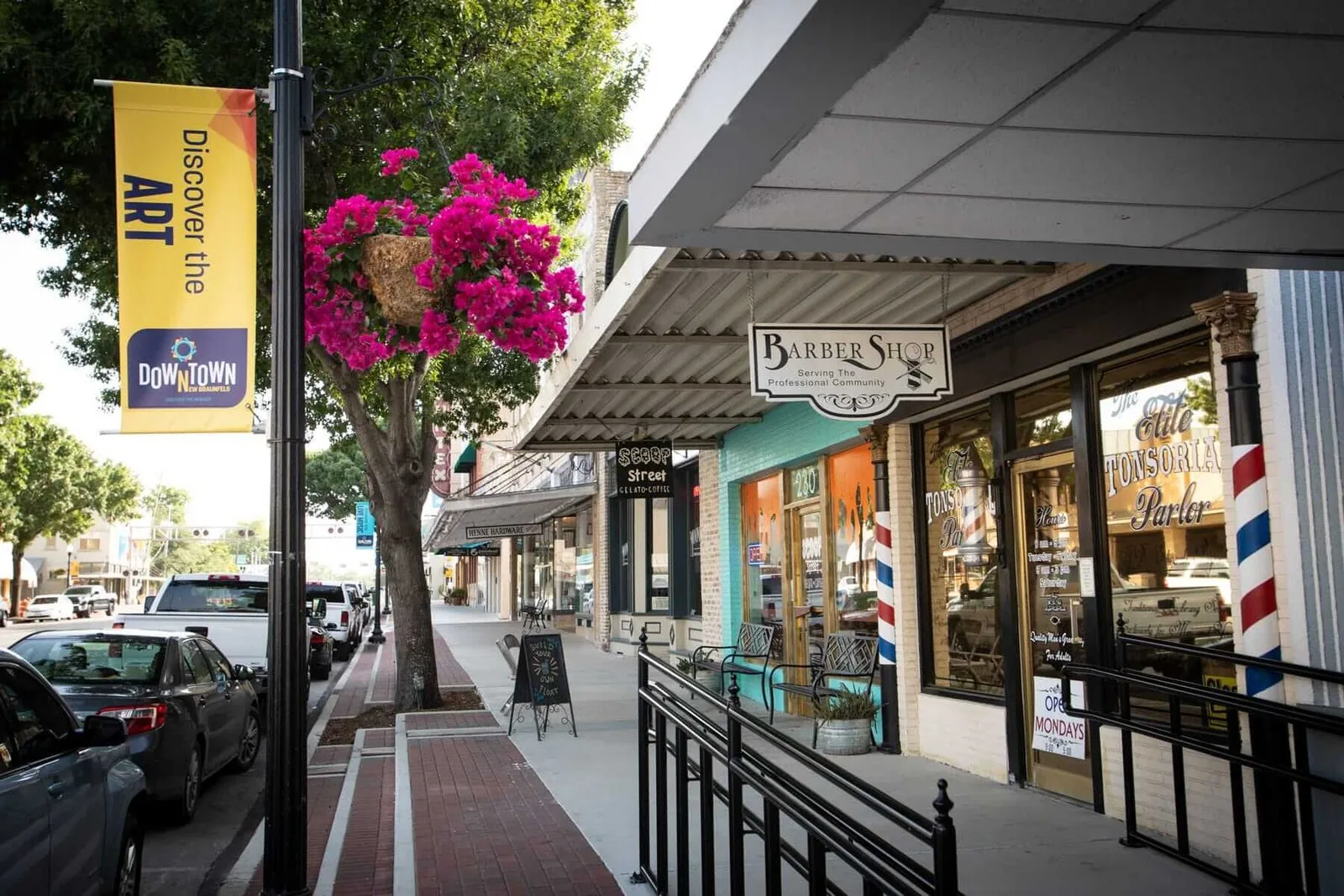
Gruene’s restored historic buildings support shops, restaurants and hospitality businesses. We coordinate customer routes and deliveries with each property's operator before setting the roof work release. New Braunfels adopted local changes to its 2021 building, existing-building and energy codes; confirm which provisions govern the roof scope. We confirm the applicable local requirements with the project team and coordinate them with the assembly and permit scope. Work in downtown New Braunfels still follows the condition at the individual building.
Leave a record the next decision can use
Our inspection reports, repair records and maintenance findings connect a photo and roof location to an action, quantity and next decision date. The owner can track a completed correction, retain a layer where appropriate and identify an area requiring future investigation. For a portfolio with buildings in Seguin or San Marcos, each roof receives a separate condition record. Shared tracking should not flatten differences in construction, exposure or operations. Roof asset management preserves that building-specific record across later decisions. We separate active leaks from maintenance observations and future capital needs. Photos identify the roof location, while the note explains the condition, access impact and action. That creates a record a new manager can use without relying on memory or vendor shorthand. At a property with several buildings, one investigation should never be extended to roofs that were not inspected.
Questions from New Braunfels Building Owners
What information helps you plan an initial roof visit?
Send the building use, affected area, leak history, prior repairs and roof access details. Tell us when the owner needs a decision and whether water is still entering. That lets us prepare for the right examination and distinguish immediate protection from a permanent repair.
Will the inspection determine whether the whole roof needs replacement?
It will establish the visible and tested conditions within the inspected scope. We compare those findings with surrounding material and the support layers. If broader moisture or attachment concerns remain outside the opening, we state what additional examination would resolve them instead of treating one sample as proof for every area.
Can work be phased around tenants or production?
We map access and occupied zones before setting the roof release. A practical phase has a removal boundary, a protection plan and a closure point that suit the materials. The owner confirms operational limits; we connect those limits to crew access, staging and the sequence of roof work.
How do you document completed repairs?
We identify the repaired area, materials and closure, then connect photographs and notes to the work record. Any condition outside the completed scope stays separate, with its own next action. That gives a property manager a usable basis for maintenance or a later renewal decision.