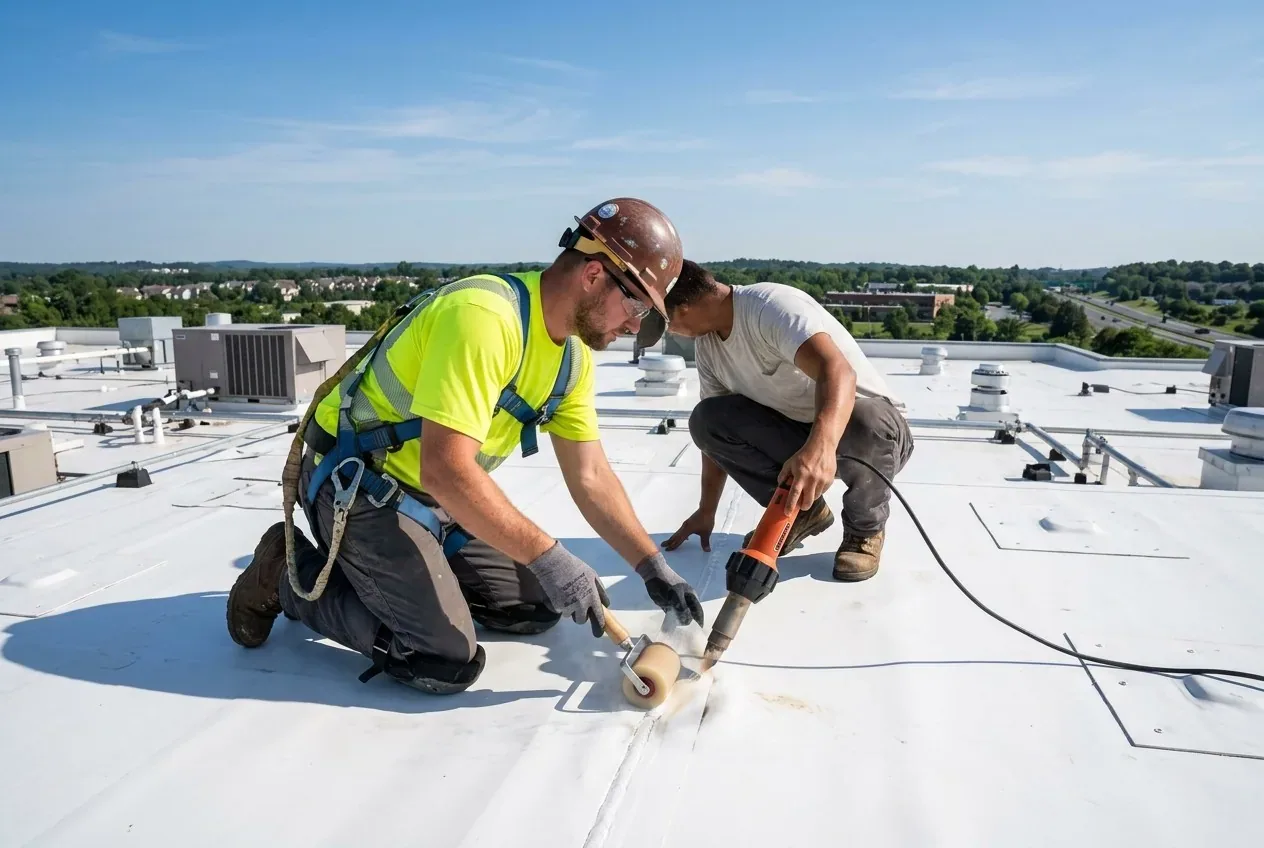
Commercial EPDM Roofing
A puncture along an equipment service route changes the repair allowance beyond the hole itself. The exposed rubber needs correction. The recurring traffic needs suitable protection. EPDM roofing in New Braunfels, TX, connects those decisions with the membrane and the layers beneath it. We examine the affected material and define a compatible repair boundary. Retaining useful roofing also means addressing the condition likely to disturb the same area again.
Commercial Roofing New Braunfels installs and repairs EPDM commercial roof assemblies. We assess membrane condition, joining details, attachment and support before choosing a local correction or renewal phase. Rubber roofing uses repair methods suited to its material. A heat-welded approach from another system cannot simply carry over. The investment should restore a suitable EPDM connection and leave the retained assembly capable of serving the building.
Correct the wear route with the puncture
Repeated equipment access can scuff a membrane or expose it to tools and sharp components. We examine the service route and the damage around the immediate opening. Suitable walkway or protection details may be useful where the assembly allows them. The layout must preserve discharge and access to drains. A protection pad that traps debris can leave another condition for the next maintenance visit.
We assess repair of the damaged rubber surface together with the route correction. Wet insulation or compressed support beneath a puncture may enlarge the rebuilding boundary. The membrane patch should meet appropriate surrounding material, with the base restored where necessary. The owner can then compare a surface repair with the complete local assembly correction rather than assume the visible opening provides the full work quantity.
Prepare the rubber for a compatible connection
EPDM repairs commonly use system-appropriate primers, tapes, adhesives and flashing materials. The selected method depends on the installed roofing and its condition. Dirt, incompatible previous treatments and deteriorated surface material can interfere with joining. We examine preparation requirements and the useful connection area. A patch needs more than contact with the old sheet; it needs material and preparation suited to the repair.
Seams and formed details require individual assessment. A lap opening may be localized, or adjoining damage may require removing older material before rebuilding. We distinguish the joining method from a thermoplastic welded assembly when comparing renewal options. Each construction has its own requirements. The owner's decision should compare suitable systems and the work needed to install them, rather than assume a repair material can serve both rubber and welded roofing.
Examine securement at the raised detail
A loose connection near a wall or curb can place stress on the adjoining EPDM. We inspect the transition, attachment and termination. Material movement and an unsuitable detail can contribute to separation. The correction may need rebuilding beyond the exposed seal. Retaining field sheet is useful where it can reconnect to a suitable detail, with damaged or incompatible material removed at the repair boundary.
For roofing connections at curbs and penetrations, available height and equipment access also matter. A new insulation layer can change the finished surface beside an existing curb. We assess those relationships before renewal. The rubber membrane should receive a complete connection at each raised opening. A field installation that leaves the old height or termination problem unresolved can carry that defect into the next roofing expenditure.
Evaluate the base before retaining the sheet
Moisture beneath apparently serviceable EPDM can change a repair or recover recommendation. We investigate suspect areas and identify the affected layers. Insulation condition, protective board and deck support need examination where they control the proposed work. A suitable surface patch cannot restore deteriorated material underneath it. The local rebuilding quantity should include the base correction necessary for the finished repair.
A recover retaining eligible roof construction needs additional assessment of attachment, loading and applicable requirements. We compare that option with removal. A modified bitumen renewal system may involve a different assembly and handling scope where included in the comparison. The decision should identify suitable retained material and complete installation quantities for each option. System names alone do not show what the roof expenditure would restore.
Release rubber roofing work above the commercial use
Cibolo's Main Street includes an older commercial district. For an occupied commercial property, EPDM preparation and detail repairs need coordination with entrances and the activity beneath the work. We assess the assembly and the practical release. Material handling, removal and equipment connections can affect timing. The useful phase restores the necessary roofing without treating unaffected operating space as part of the work by default.
Converse lies along FM 1976 in northeastern Bexar County. For EPDM work above offices, roof access and sensitive interior activity can influence the examination or rebuilding sequence. A property in Converse has its own access needs, just as one in Cibolo does. We connect those conditions with the support and repair boundary before choosing the release. The material retained after the work still needs suitable connections and drainage.
Choose the next phase from the remaining material
Separated repairs across a broadly deteriorated field can consume effort without leaving a useful retained roof. We inspect the material between defects and the condition of its attachment. Suitable rubber may support local corrections and continued care. Widespread deterioration or hidden damage can favor a larger renewal phase. The comparison should show the support and detail work each route requires, not only the exposed sheet quantity.
We include care of EPDM service paths and details where the existing assembly remains useful. Installation conditions, preparation and repair access affect timing. A planned equipment change may also alter the support or penetration scope. The owner can then fund the immediate correction and distinguish the later interface decision. A renewed or repaired EPDM assembly should restore the affected material while keeping the next useful roof work accessible.
Commercial Roofing Questions
Should a puncture repair include protection for the equipment service path?
Assess whether recurring traffic or contact contributed to the damage. A suitable patch restores the opening, while appropriate protection can address the route that repeatedly exposes it. We inspect drainage and the supporting surface before selecting that detail. The scope should distinguish damaged-layer rebuilding from added service protection so the owner can compare the complete local correction.
Can an EPDM seam be repaired by heat welding?
Rubber membrane joining needs materials and methods appropriate to EPDM. We examine the installed sheet, preparation and compatible repair components. A technique used for thermoplastic roofing is a different connection method. The useful repair depends on a suitable joining surface and system-appropriate materials, with degraded or incompatible previous work removed where it prevents a sound connection.
Why would a local rubber patch require replacing the board beneath it?
The supporting layer may be wet, crushed or otherwise unsuitable. We examine that condition before closing the membrane. A new surface cannot restore damaged board or insulation. The rebuilding boundary follows the affected base and the material needed for a suitable patch connection. Sound layers beyond that boundary may remain useful where the inspection supports retention.
Can older EPDM remain when the wall flashing is renewed?
Suitable field material can remain if the rebuilt transition connects appropriately. We assess the rubber condition, securement and available height. A deteriorated boundary may require wider local removal. The wall detail needs a complete correction, not only a new exposed seal. The owner's comparison should identify what is rebuilt at the junction and what remains in the surrounding field.
What makes repeated EPDM patches less useful than renewal?
Broad deterioration can leave each new repair connected to material already needing work. We examine the field between defects, attachment and concealed layers. Local corrections remain useful where they retain suitable construction. A larger phase may be warranted where those conditions are no longer present. The decision follows the remaining assembly and rebuilding effort rather than a patch count alone.

Commercial EPDM Roofing