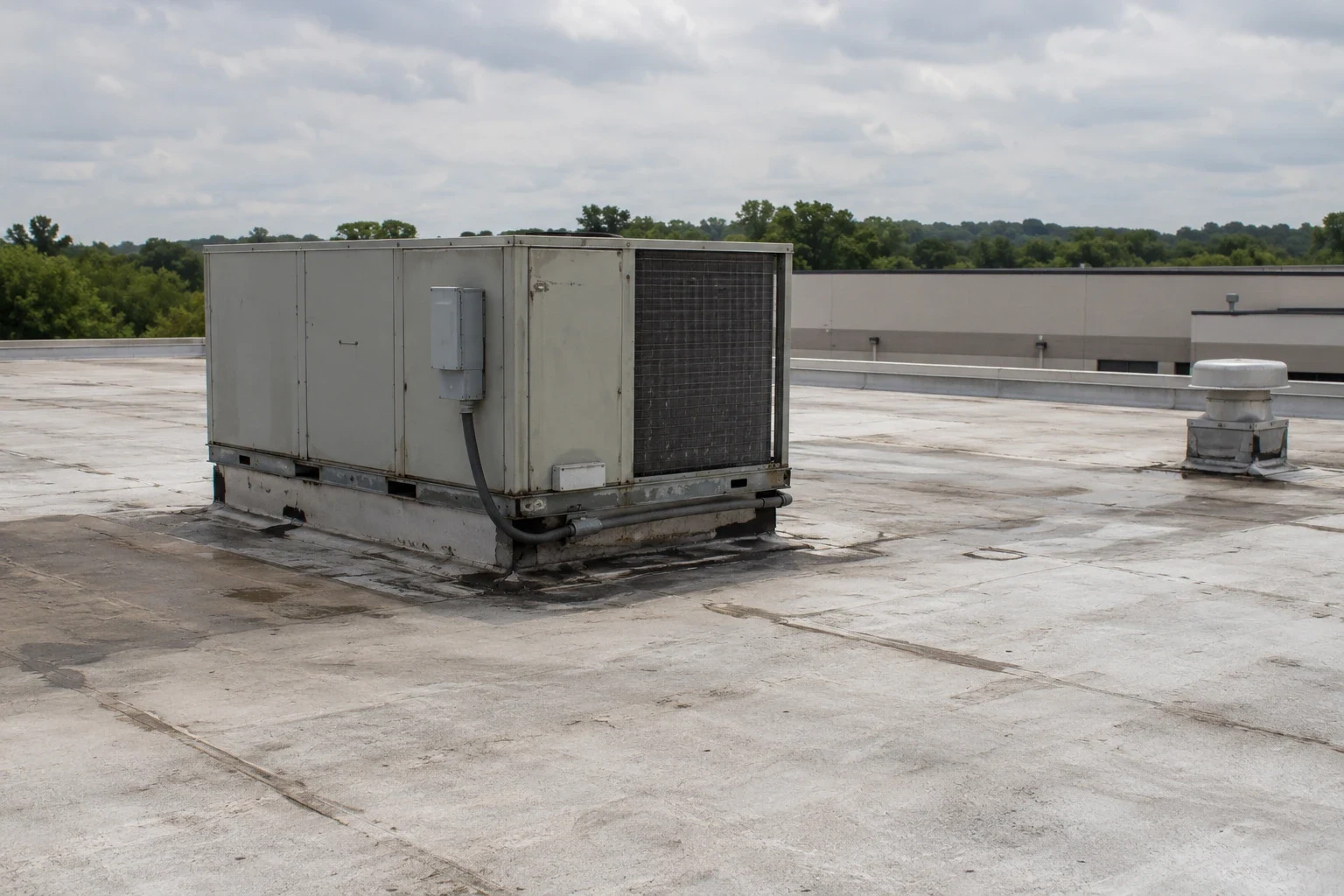
Manufacturing Plant Roofing
An unsuitable equipment mount can damage roofing at its contact points before the proposed installation is accepted. Removing that mount does not complete the assembly correction. Manufacturing plant roofing in New Braunfels, TX, starts with the damaged material and the support arrangement that will replace it. We examine the contact area and adjoining layers. The owner can then separate necessary rebuilding from serviceable roof material and fund the next equipment interface with a suitable base.
Commercial Roofing New Braunfels repairs and installs roofing over production, processing and related storage areas. Equipment work can reopen decisions about retained layers, flashing height and access. We assess those connections with the operating use beneath them. The useful scope identifies the roof work needed before the installation proceeds. It also distinguishes unrelated field deterioration that may require its own renewal phase.
Remove the damaging contact before rebuilding
A concentrated bearing point or moving support can deform roofing and damage the material below it. We inspect the surface, cover board and insulation where access allows. The repair boundary must reach suitable construction. A new patch over compressed or fractured support can preserve the defect beneath the fresh surface. The replacement support arrangement also needs appropriate assessment so the same load or movement does not return to the repaired area.
We coordinate equipment support and curb corrections with the proposed roofing assembly. Equipment loads require appropriate structural review where the installation changes them. The weatherproofing interface needs its own complete detail. A workable installation gives the roofer access to finish that connection before equipment conceals it. The owner should approve those quantities together rather than release the equipment while its roof interface remains unresolved.
Locate the work above the production dependency
An opening over an active process can require protection beyond the immediate floor area below it. We identify the production use and the equipment served by the affected roof connection. The building operator establishes the operating release, while the roofing scope defines removal, handling and closure. A smaller opening may reduce exposure but create extra transitions. Its usefulness depends on whether the damaged material can be completely rebuilt within that boundary.
Shared manufacturing warehouse space and distribution activity can have different protection and movement needs. We assess those adjacent uses before setting a work route. New roofing material and removed debris need suitable handling positions. The released area should accommodate those tasks without relying on an unresolved production passage. The owner can compare the operating interruption with the full rebuilding quantity, not just the visible opening.
Identify what the field can still support
Sound membrane between damaged equipment details can remain useful. We examine the field, its securement and the condition of the receiving layers. Suspected moisture needs investigation where it changes retention. Damaged insulation or weak support can enlarge the removal decision. The proposal should distinguish a local equipment-related correction from broad deterioration that affects the entire assembly's suitability.
A hands-on production roof assessment connects these findings with repair options. Test openings may be needed to establish concealed construction and material condition. We restore the openings appropriately after the examination. A retained layer must suit the selected repair or renewal assembly. The useful comparison identifies its condition and the material to be removed, rather than assume that a firm-looking surface provides a suitable base for another layer.
Evaluate the manufacturing interface on its actual building
Its facility is at Titan Industrial Park, with access from the FM 1101 area. Manufacturing roofing decisions connect the production use with the examined building assembly. We assess equipment interfaces, roof access and the area requiring repair. A planned unit change should include the supporting and weatherproofing work needed at that property before its installation is released.
Seguin's manufacturing economy includes Caterpillar, CMC Steel and Hexcel. A plant in Seguin can have different roof layers and process dependencies from one in New Braunfels. We examine those conditions for the building under consideration. The renewal decision should identify the material available for retention and the work needed at altered equipment connections. San Marcos also combines manufacturing and light industrial uses. We connect the examined assembly with the operating release needed for its repair.
Select the assembly after checking its exposure
Process exhaust, service traffic and equipment maintenance can expose roof details to different conditions. We review the relevant use with the building operator and examine affected material. The proposed assembly needs compatible materials and suitable protection at those interfaces. Mechanical repairs may be necessary where discharge or support problems are damaging roofing. A replacement surface alone does not correct an unresolved equipment condition.
A KEE roofing assembly is one available option where its specified construction suits the exposure. We also install other low-slope and metal systems. The choice should follow the deck, retained layers, attachment and detailing requirements. Material compatibility needs assessment at repairs and transitions. The owner receives a complete assembly comparison, including the local corrections required to support the selected field roofing.
Fund equipment preparation and field renewal separately
An immediate support correction can be necessary even where wider roof replacement is not yet justified. We measure the damaged area and identify the roof connection needed for the equipment change. That quantity can be compared with the remaining field's condition. Broader moisture or repeated material failure may favor a larger renewal phase. The decision should make the retained construction and removal extent clear for each option.
We connect production roof investment planning with equipment installation and repair dates. Preparing a detail now may avoid reopening a newly completed assembly later. The comparison includes the work itself, operating release and suitable weather closure. Future process changes should remain visible where they affect the planned interface. Your next allocation should restore useful roofing over the production area while separating work needed now from a later field renewal.
Commercial Roofing Questions
Must damaged roof material be replaced after an unsuitable mount is removed?
Examine the contact area and the construction beneath it before deciding retention. Surface abrasion may need a compatible repair, while fractured board or compressed insulation can require deeper rebuilding. We identify those different quantities. The replacement support also needs a suitable arrangement. Removing the damaging component should be followed by correction of the roof layers and interface it affected.
Can equipment installation proceed before its flashing is finished?
The proposed sequence needs enough access to complete the weatherproofing connection. A housing or support may conceal the remaining work once placed. We coordinate the roof detail with the equipment installation and appropriate design review. Where necessary, the interface should be built before final positioning. The owner should release a sequence that leaves the roof connection complete rather than inaccessible beneath the new unit.
How should production shutdown timing influence the removal boundary?
Match the available release with the material that needs rebuilding. We examine a practical opening and closure sequence for that area. A short window may require another phase or more temporary protection. It should not force unsuitable material to remain within the finished repair. The comparison includes operating separation, handling and transitions as well as the main roofing quantity.
What if process discharge is damaging the proposed repair area?
Resolve the equipment-related exposure with the relevant trade before treating the roof surface as the only defect. We examine affected roofing and the material compatibility needed for rebuilding. The selected assembly must suit its actual use. Where discharge or support remains damaging, a new membrane alone can leave the same repair demand in place. The scope should connect both corrections with a workable installation order.
Should a local equipment repair trigger replacement of the whole manufacturing roof?
Assess the field outside the damaged contact area independently. Suitable roofing may support retention with a complete local correction. Wider moisture, weak attachment or repeated failure can justify comparing a larger phase. We identify those conditions and the layers each option keeps. The next investment should follow the actual assembly, including the operating release needed to rebuild it.

Manufacturing Plant Roofing