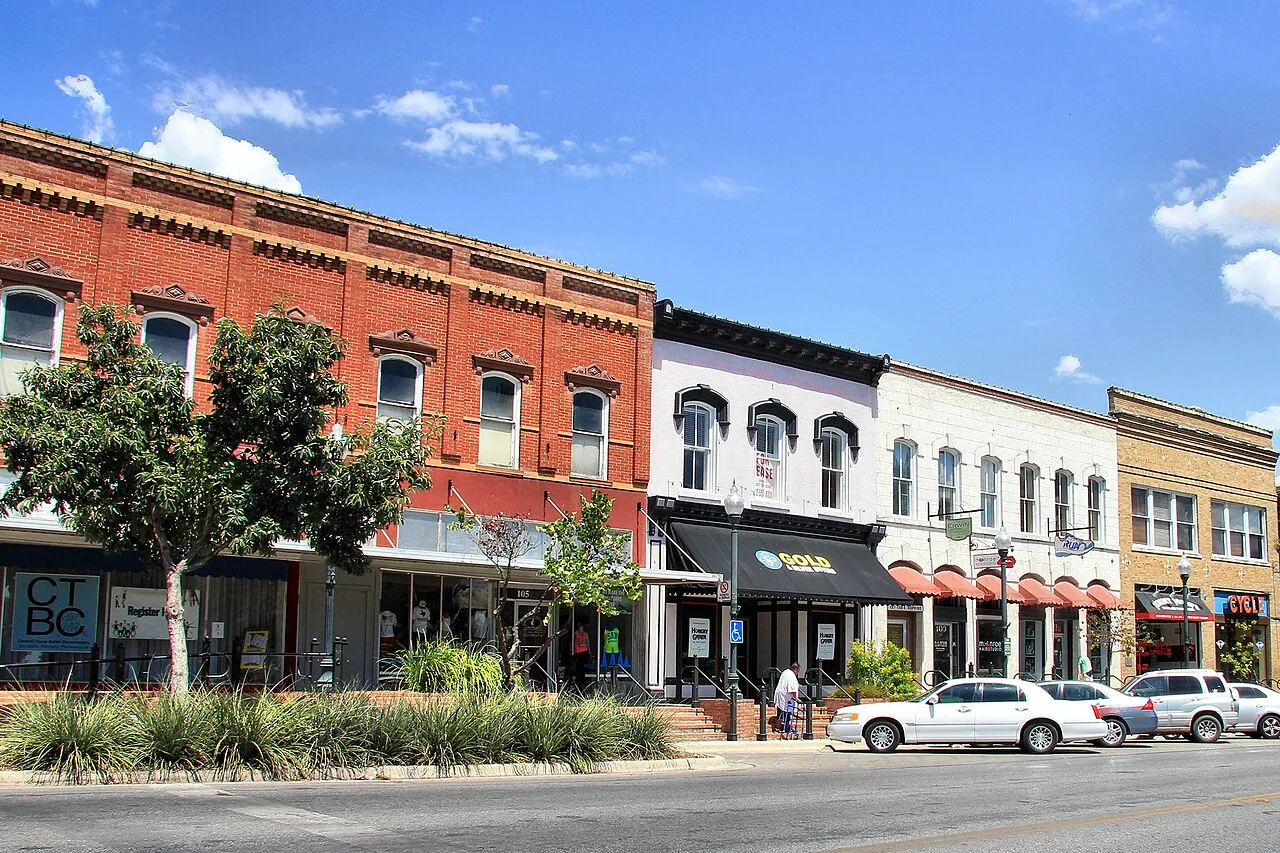
San Marcos
A failed equipment curb on an I-35 industrial building can turn a small leak report into a question about the receiving deck. We inspect the roof connection and lower layers before defining repair. San Marcos lies on Interstate 35 between Austin and San Antonio, with manufacturing and light industrial activity alongside educational institutions. That mix makes the building's actual use central to staging, access and release. The citywide profile does not tell us what membrane, metal or insulation sits on the property being reviewed.
Its presence is a local institution, not a claim about any particular campus roof or a service history. We identify the requested building and follow its roof records and conditions. New Braunfels lies about nineteen miles northeast of San Marcos, placing the two cities in a nearby service corridor with distinct property decisions. A roof in San Marcos still receives its own inspection, repair boundary and schedule based on the assembly in front of us.
Trace the reported condition to the roof
The interior symptom gives us a place to begin, not a repair dimension. We compare it with roof penetrations, seams, parapets, drains and prior patches. Along a commercial corridor, equipment service routes and repeated access may matter on the specific building; we verify those routes instead of assuming them from nearby industry. A loose panel fastener differs from a wet insulation bay beneath a membrane. We record which connection changed and whether adjoining material can accept a lasting repair.
For suspected moisture below an intact surface, an infrared moisture survey can guide where to investigate, while test openings confirm the assembly. Our roof inspection records the roof zone, finding and next action. When multiple buildings are included, the condition report keeps each roof's findings separate. A common ownership group does not make their systems alike. Each repair quantity follows what was examined at that address, with the owner's approval controlling any added removal.
Fit the work window to the building
San Marcos' educational and industrial activity creates different operating requirements, so we confirm the property use before choosing the shift. The owner identifies occupied rooms, production lines, equipment that must stay live, delivery windows and access control. We place material at an agreed staging area and protect the interior beneath an opening. If removal cannot finish within one shift, a temporary weather boundary must be secure and capable of handling the forecast until permanent work resumes.
For active buildings, occupied-building reroofing can proceed by drainage zone when every stage ends at a complete tie-in. Noise, vibration and roof access can affect which zone goes first. The property manager approves the release time. If a leak threatens an interior, we can make an emergency response to secure conditions while the full repair is measured. That response documents temporary protection separately, giving the owner a durable correction to approve rather than treating the first visit as completion.
Match membrane repair to the installed system
Material selection follows what is on the roof and whether its surface can receive a compatible connection. A thermoplastic sheet may be welded to clean, sound material; a repair that lands on contamination or a damaged substrate may separate again. EPDM requires a compatible prepared surface and secure seam detail. Standing-seam metal needs attention to clips, fasteners and panel movement. We identify the existing system first, then choose the repair method that reconnects with it.
Replacement becomes a separate comparison when the roof has repeated failures, broad moisture or attachment that no longer supports local patches. A TPO assembly or another membrane option is evaluated against insulation, deck, drainage, edge height and equipment transitions. If the existing material is stable, a recover assessment can consider retention. It does not skip test cuts or the need to rebuild curbs, drains and perimeter details. The scope states what remains and the layer that has to be removed, so the owner's investment follows the actual roof rather than the name of a system.
Include drainage and finished elevation
Water needs an uninterrupted route from the field to the discharge. We check slope, drain bowls, scuppers, overflow points and downspout connections. An outlet can be clear but still leak where its flange meets the membrane. A new layer can raise the roof surface and leave a drain or curb too low for proper termination. We measure finished elevation before installing insulation or cover board. That measurement can change the selected assembly and the amount of edge metal required.
New Braunfels has hot, humid summers. We attribute that climate context to the New Braunfels area rather than presenting it as a San Marcos measurement. At the property, we check actual substrate and forecast conditions before welding, adhering or applying a coating. Drain and scupper repair belongs in the roof scope when the membrane connection or outlet path is compromised. A coating option stays separate until we have confirmed surface compatibility, dry material and workable drainage. Each correction needs its own closure inspection.
Put the next phase against a measured record
A local repair is suitable when the failure can be isolated and its boundary lands on sound material. Broader renewal deserves consideration when multiple openings show wet board, detached sheet or a failing base. Each option is priced against the same marked zones, so the owner can see which condition a patch retains and which a full tear-off removes. Cost changes with removal depth, deck repair, staging, equipment relocation, edge work and how much interior activity needs protection. Timing changes with access, weather and the owner's release window. We put those drivers in the scope before work begins.
At closeout, photographs show the exposed condition and completed interface. The roof record names the building, zone, material, quantity and date, with open items assigned a next decision. San Marcos I-35 businesses can compare local work with New Braunfels roof service and commercial roofing in Seguin when ownership spans the corridor, but the findings remain property-specific. A repair history helps the next inspection see what changed, whether an area remains serviceable and when a renewal phase must return for funding. Share that record with the operating contact and align the next date with the building's capital calendar.
Commercial Roofing Questions
Can an I-35 property stay open during roof work?
The work area, interior activity and weather window determine the sequence. We can isolate a roof section when access and a complete closure are available within the shift. An occupied or production area may need added protection or a different release time. The owner confirms the operating limits, and we show how each phase will return to service before opening the roof.
How does regional access affect roof-service planning in San Marcos?
Regional travel can shape crew arrival and material deliveries, but it does not establish a roof's age, assembly or service need. We confirm access at the property, inspect its drainage and transitions, and set a work boundary that fits the actual building and owner release.
What should happen before a recover is approved in San Marcos?
The decision rests on field observations: moisture state, attachment security, drainage and clearance at each termination. Test openings help establish the condition below the surface. We also check finished height at drains, curbs and edges. If those conditions do not support retention, the scope compares removal and replacement against a recover that would carry unresolved material forward.
How do you prioritize multiple roofs under one owner?
We record each building's condition separately, then group work by urgency, access and the owner's release dates. An active leak or failed edge can require immediate protection, while a stable roof may fit a later renewal phase. A shared report can compare repair quantities without treating every site as the same system or risk.

San Marcos