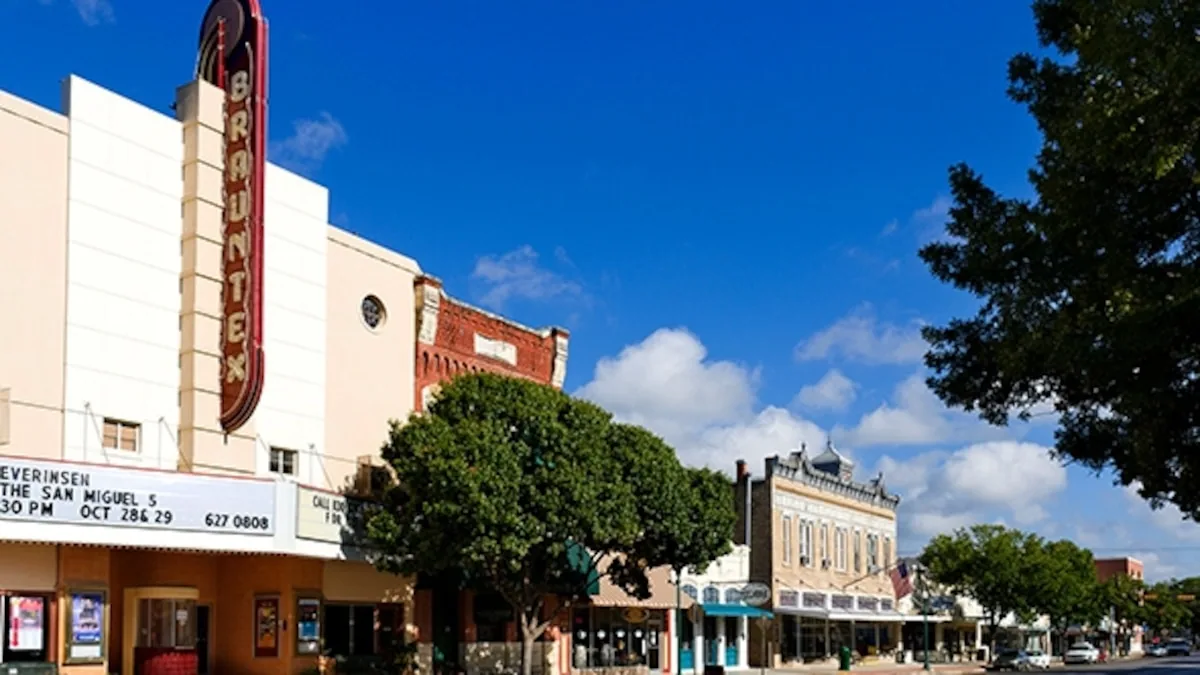
Downtown New Braunfels
A flashing replacement beside an active entrance needs a defined boundary and a workable release time. In downtown New Braunfels, the roof decision sits above properties serving boutiques, cafes, galleries and music venues. That commercial activity makes access and staging part of the scope. We inspect the actual roof, identify what must be removed, and build a weather-tight closure around the property's schedule. The district's character does not reveal a roof assembly. The receiving layer has to be checked before we promise a repair method.
Main Plaza serves as a central gathering area downtown, and the area includes nineteenth-century German-influenced architecture. We use those facts to understand how work may intersect with public activity and property operation, not to assume a building's age or construction. A roof inspection begins at the changed detail, follows water and attachment into adjoining material, and records the boundary that can support repair. New Braunfels' hot, humid summers also make surface condition and application weather relevant to release planning.
Locate the detail behind the interior mark
A leak reported near a storefront does not set the roof-side repair dimension. Water can enter at an up-slope curb, track beneath a seam, then appear above a ceiling several bays away. We compare the reported area with drains, penetrations, parapets and transitions. The walk follows the likely route until the failed connection is visible or a test opening is warranted. We note whether the membrane remains attached, whether insulation is firm and dry, and whether the substrate can receive a new termination.
Main Plaza helps orient the district's public center. It does not prove that every nearby property has a shared operating schedule or roof detail. We confirm access with the owner and inspect each roof section separately. A commercial roof inspection can document photographs, symptoms and existing repairs in sequence. A written roof condition report then gives the owner a measured basis for approving the current work or carrying another area into a later budget.
Protect entrances while the roof is open
Downtown cafes and music venues may have customer periods that conflict with lifting, tear-off or noisy fastening. We ask where employees, deliveries and visitors enter, which areas remain occupied, and when the work zone can be isolated. The owner confirms the schedule. We translate it into roof sections that can be opened, rebuilt and closed without leaving an unfinished edge through the next operating period. Weather protection below and a secured temporary tie-in above are part of that plan.
The route from staging to the roof must also protect the finished property. We identify the lift point, material laydown and debris path before mobilization. If a narrow roof area meets a shared wall or public-facing entrance, we protect the wall connection and keep falling material away from access. Our occupied-building roofing work can be sequenced by complete drainage areas, but a section only returns to use when its membrane, flashing and edge are closed. Downtown's public gathering role and the property's own hours both belong in the release decision.
Measure removal before choosing the finish
A sound field beside one wet penetration can support a local correction. The same patch over saturated insulation would conceal a material problem. We distinguish the two by checking the layer below and the attachment at the repair edge. Where a roof has multiple existing surfaces, we record their sequence and identify which one is bonded, which one is loose and where moisture changes the assembly. The removed area follows the demonstrated condition. It does not expand by assumption from one interior stain.
Downtown New Braunfels includes older architecture, but the fact does not establish a particular roof's age, deck or membrane. We inspect the individual property and test the actual receiver before selecting material. A compatible PVC repair needs clean, suitable sheet for welding. A modified bitumen correction needs stable plies and a sound base. Where the existing surface cannot accept an effective connection, we price removal and reconstruction as a separate option rather than dress an unsuitable boundary.
Keep the discharge route in the work
Drainage is a connected detail from roof surface to discharge point. We inspect slope, sumps, strainers, drain bowls, scuppers and downspout transitions. Debris at an outlet can hold water against a seam; an open bowl can still leak at the membrane clamp. Correcting the membrane without correcting its termination leaves the entry route available. Our drain and scupper service ties the roof connection to the outlet condition. We document the path that is clear, the part that needs rebuilding and any plumbing item that requires separate coordination.
Humidity and heat in the New Braunfels area make timely drainage and secure closures important, but we do not infer a condition from the season. The roof walk supplies the finding. If an inspection identifies ponding, we check whether it follows a depression, an obstructed outlet or a broader slope issue. A coating will not correct a low area that holds water. Before selecting coating restoration, we verify drainage, adhesion and the underlying assembly. That keeps the finish decision tied to work the roof can support.
Close each area with an identifiable record
Before the first shift, we confirm the owner contact, entry limits, staging location and next decision date. Each section receives a start condition, removal boundary and closure detail. The work includes base repair where needed, compatible insulation or cover board, membrane or metal connection, flashing and edge termination. We photograph covered conditions and completed interfaces so a later visit can distinguish what was corrected from the work left outside the approved scope. The record follows the building and roof area, not an undifferentiated project total.
At closeout, we inspect laps, corners, drains and perimeter details, then walk the interior areas tied to the reported leak. If a concealed condition changed quantity, we show it before expanding work. The owner can compare the completed local repair with a broader renewal phase and assign the remaining item a date. For neighboring properties in the same municipality, commercial roofing across New Braunfels uses the same inspection discipline. A separate Gruene district roof plan reflects its own shop and restaurant context. We carry forward only the finding that applies to the property inspected.
Commercial Roofing Questions
Can roof work be scheduled outside downtown customer hours?
We can compare the owner's available window with the area that needs removal and closure. A defined roof section may fit an evening or early work period when access, material handling and weather protection remain workable. Main Plaza and nearby businesses are local context, not a substitute for the property's schedule. We confirm the operating hours and release time with the owner before finalizing the sequence.
Does an older downtown facade mean the roof needs a special replacement?
The district's nineteenth-century architectural influence says something about the area, not the roof layers above a particular business. We inspect the deck, insulation, membrane, flashing and edge condition first. If an existing roof has a stable receiver, a local correction may be possible. Where the concealed material is damaged or incompatible, the scope names that removal and the reconstruction needed to finish the connection.
What can keep water from returning after a storefront repair?
We trace the entry path rather than stopping at the interior mark. The inspection checks uphill transitions, penetrations, seams and drainage, then tests suspect material when the visible surface is not conclusive. We record the changed layer and connect the repair to sound material. A return visit can compare new conditions with the original photographs and identify whether another roof area has changed.
What information helps price a downtown New Braunfels roof project?
Provide the building use, roof access limits, prior repair records and the date the area must be released. Cost changes with removal depth, substrate repair, finished elevations, perimeter details, staging and occupied-area protection. We set quantities from the roof walk and call out conditions that could alter them after opening. That lets the owner compare repair and renewal on the same measured basis.

Downtown New Braunfels