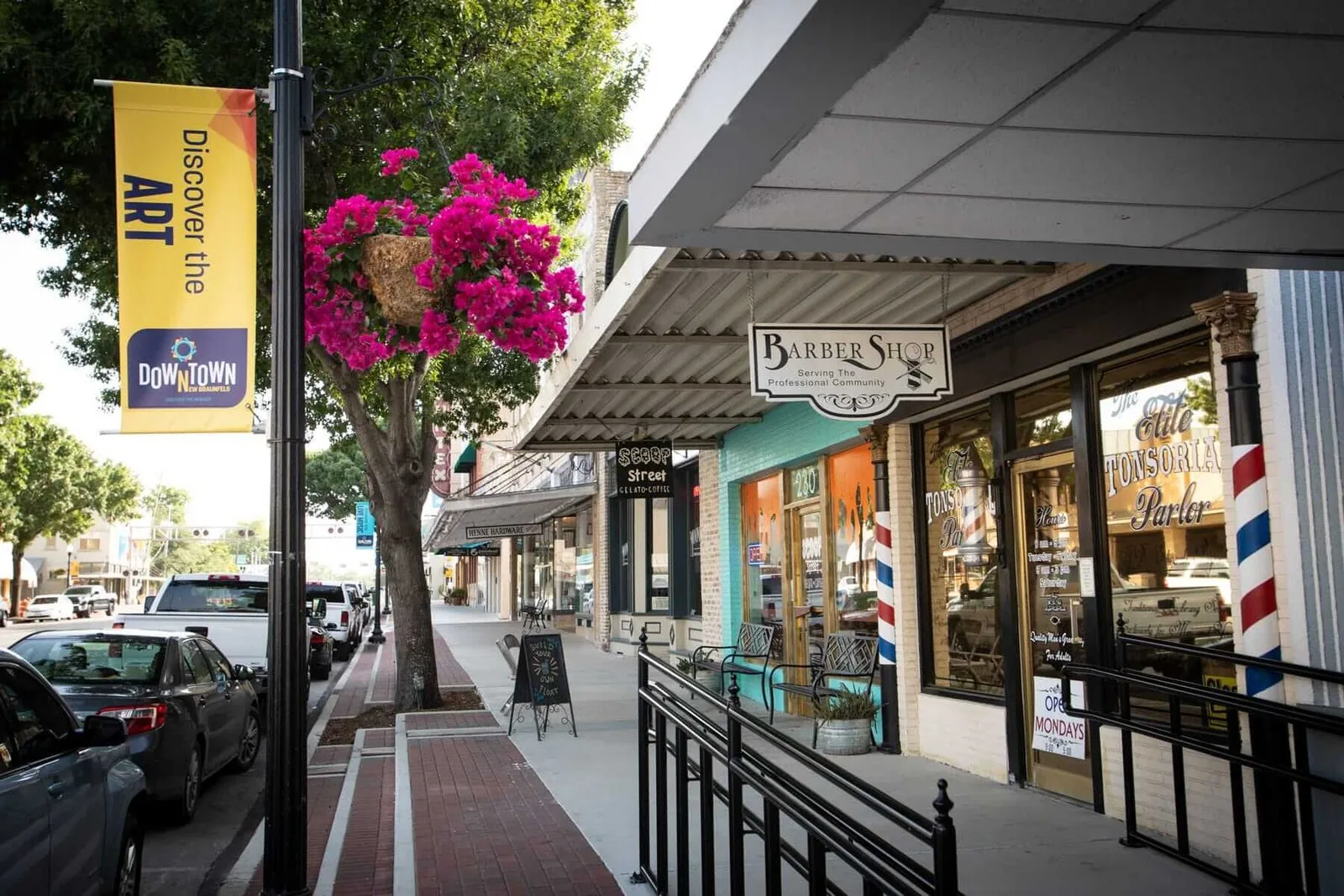
Gruene Historic District
A loose flashing termination above a dining area can make a small roof repair a scheduling decision. In Gruene Historic District, restored central buildings operate as shops and restaurants, so a roof opening must be coordinated with the property's actual service hours. The district is within New Braunfels city limits. We inspect each requested building and determine whether the membrane, flashing receiver and material below can support a local correction before pricing broader work.
A historic family residence now serves guests as the Gruene Mansion Inn, adding a hospitality use within the district. Its presence does not establish the roof construction of neighboring businesses. Our walk records the assembly at the property under review, traces the reported water path and marks the material that can remain. New Braunfels has hot, humid summers. We check surface moisture, substrate temperature and the forecast when installation conditions affect a coating or membrane detail, then set a release based on the confirmed site rather than a promised date.
Read the connection before selecting repair
Historic character belongs to the district's buildings, but it cannot tell us what layers sit below a particular roof covering. We begin where the condition changed. A separated lap, open edge, punctured field or failed curb may be the entry point. We inspect adjoining sheet, attachment and substrate so a new flashing can bond or weld to sound material. If the visible opening is a few feet from the leak, we follow the path through transitions and drainage before setting a boundary.
Restored shops and restaurants in central Gruene operate as active commercial spaces. We identify customer access, deliveries, kitchen exhaust and occupied areas with the owner, then isolate the roof work from those routes. A roof inspection records the detail and adjacent assembly. When water has moved beyond the apparent repair, an infrared survey may help locate a pattern for confirmation openings. The opening itself still decides what material is wet and what removal the scope should carry.
Fit roof access to the business rhythm
Restaurant service and retail deliveries create different access windows. We ask when staff need the route clear, which doors remain in use and where equipment can be staged. The lift path should not cross an occupied entrance without an agreed protection plan. Release one roof zone at a time, completing its specified temporary or permanent closure before moving the crew to the next area. An unfinished tie-in across a parapet or transition is not a complete phase, even when the field membrane is down.
The district's restored buildings and the nearby Main Plaza area give local context for public activity. We do not infer event schedules or access conditions from those facts. The owner identifies the affected operation. We place material and debris handling against that schedule and keep a safe route for occupants. Our occupied-property reroof sequence defines which roof area is open, who controls access, and the point at which the work can be released. For urgent interior protection, emergency repair can secure the opening while the permanent assembly is assessed.
Keep water moving past every repair
A repaired field that leaves a clogged or misconnected outlet can direct water back to the same weak point. We inspect the whole drainage route: roof slope, sump, strainer, drain bowl, scupper and discharge connection. On a low-slope roof, small elevation changes can hold water at a seam or curb. We note whether the issue is debris, a deformed surface, a failed bowl connection or a larger slope condition. Each cause has a different work quantity and should not be hidden inside a coating allowance.
Comal County's humid summer conditions make trapped moisture worth checking before the assembly is closed. That regional climate fact does not prove the roof is wet. We use test cuts or other suitable confirmation when the inspection indicates concealed moisture. If the substrate is sound and the existing coating is bonded, restoration may remain an option after preparation and detail correction. If water is retained below the surface, removal and replacement become a separate comparison. The owner sees the condition that changes the choice, not a finish recommendation detached from the roof underneath.
Separate retained work from new construction
Once a test opening shows the layer sequence, we mark what can stay and what must come out. Dry insulation with stable attachment may remain if the proposed assembly and edge details can receive it. Wet board, loose membrane or a weak curb receiver changes the repair boundary. Additional layers raise finished roof height and can affect drains, metal edges, door thresholds and equipment supports. We measure those interfaces before selecting a recover or replacement assembly.
Gruene is a district within New Braunfels, so city-level building rules apply to work inside municipal limits. The city adopts the 2021 IBC, IEBC and IECC with local amendments, and its Building Safety division handles permits and inspections. We identify the jurisdiction and permit path before the scope is released. System choices such as standing-seam metal or a TPO membrane depend on the actual structure, drainage, penetrations and operating needs. Neither the district label nor a neighboring property determines which system belongs on the roof in front of us.
Leave the next roof decision measurable
We close each work area with a continuous weather boundary, then inspect seams, corners, flashing and drainage before removing protection. Photographs show the opening and the material placed back into the assembly. The repair record identifies the building, roof zone, condition, quantity and date. If a concealed layer changed the approved work, the owner receives that finding before the scope expands. Remaining items receive their own next decision date rather than being folded into a broad statement that the roof was repaired.
For a larger property plan, the condition report can separate immediate protection from a future renewal phase. A roof capital plan tracks which areas are serviceable and which require funding, while downtown New Braunfels roof work may require a different access sequence around its central gathering area. We apply the same measured inspection to each building and release only the work that has reached a complete, inspected boundary. Owners can share the affected area, prior repairs, operating window and decision date to start that review. Across New Braunfels commercial properties, the same finding-first approach keeps each building's condition separate.
Commercial Roofing Questions
Can roofing be repaired without interrupting a Gruene restaurant?
We identify the roof section and customer routes first. If access, noise and weather protection can be contained, the work may be sequenced around service hours. A section must still close completely before the property returns to its normal schedule. The owner confirms operating periods, deliveries and any limits on staging so the release plan follows the actual business.
Does a restored historic building require replacement instead of repair?
No roof decision follows from the historic label alone. We inspect the current assembly, expose a test area when necessary and determine whether the receiver and adjoining layers can accept a local correction. A stable base may allow repair. Wet insulation, failed adhesion or unsuitable transitions can move the scope toward removal. We document the finding and the boundary that supports each option.
What happens when the leak is away from the failed flashing?
We trace from the interior report across the roof to likely entry points, checking uphill seams, curbs, edges and drainage. Water can move beneath roofing before it appears inside. Photographs and test openings help separate a direct entry from concealed travel. The repair quantity follows the confirmed condition and includes rebuilding the connection to sound material.
Which records help plan a Gruene roof renewal?
Provide prior inspection notes, repair invoices, roof plans and the timing of any active leak. We compare those records with visible conditions and confirm the actual layer sequence at the property. Include operating hours, delivery constraints and the next decision date. The resulting scope distinguishes retained material, removal, new assembly and the interfaces that need coordination.

Gruene Historic District