New Braunfels
A roof opening beside a repair can change what New Braunfels building owners fund next. We inspect the exposed assembly before setting the removal boundary. The wet area, the entry detail and the material that can remain are separate findings. Each needs a measured quantity. That keeps a local correction from quietly becoming a larger renewal, or a broader replacement from carrying a failed connection into the next service life.
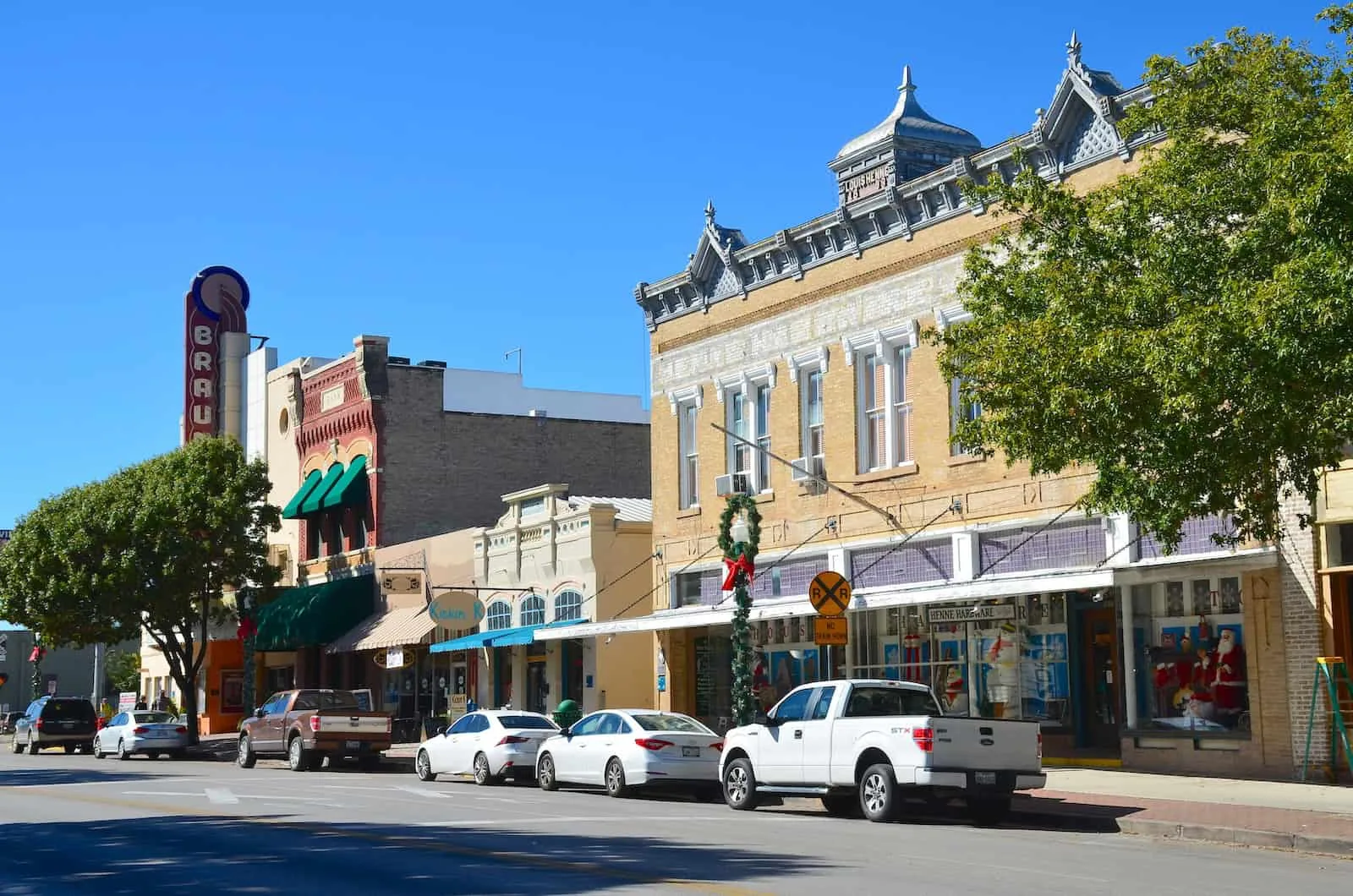
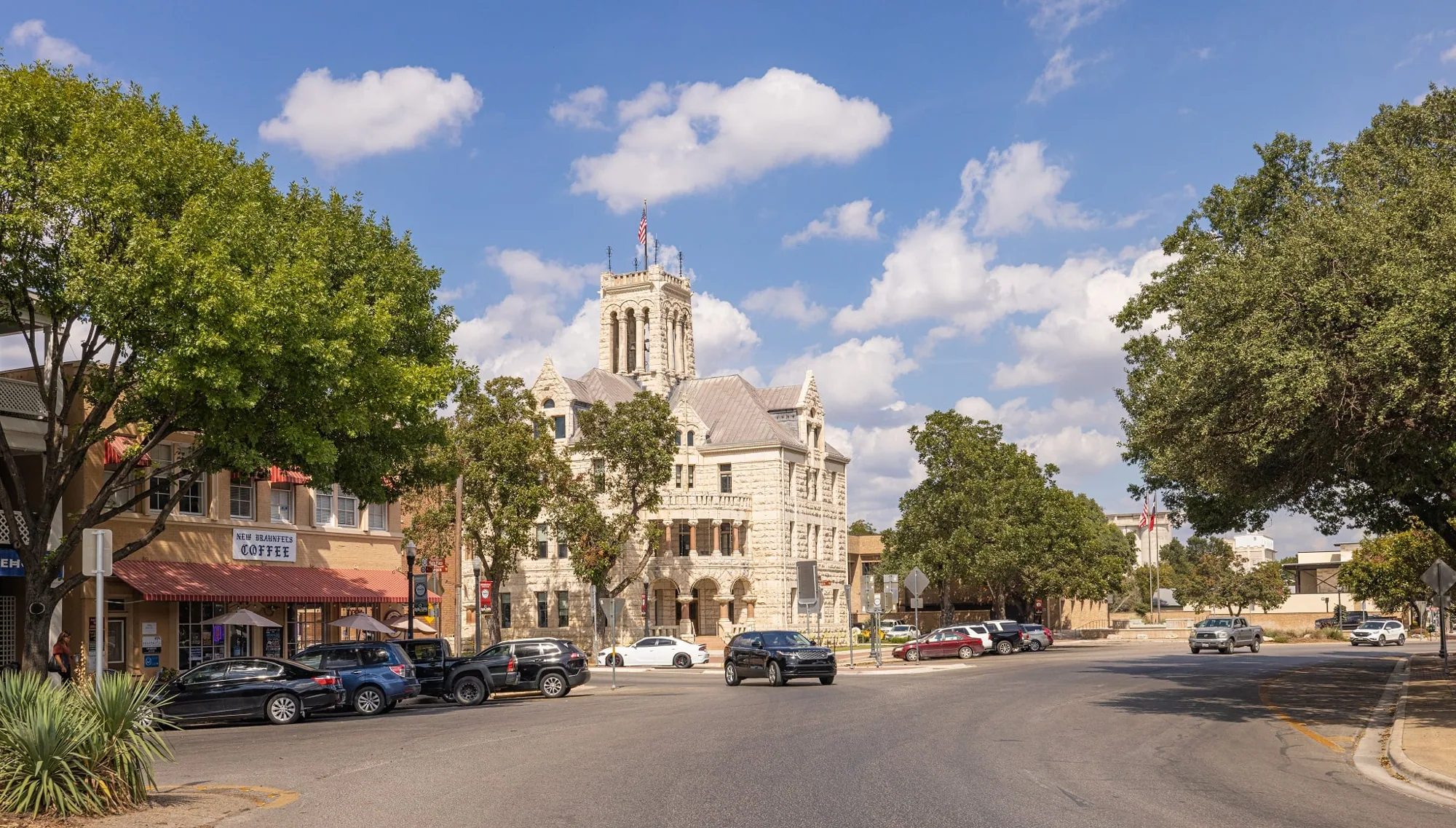
Downtown New Braunfels includes Main Plaza and nineteenth-century German-influenced architecture. Gruene Historic District also sits within city limits, with restored central buildings in shops and restaurants. Downtown retail and Gruene hospitality require work windows that fit each property; we inspect that roof before setting its repair quantity. We examine the requested property, identify its installed layers, and set access around the actual operation. New Braunfels, TX, has hot, humid summers, so surface condition and installation weather matter when deciding when a membrane, flashing or coating can be released.
Open the condition that changes the scope
The stain gives us a room and a date, not the repair square footage. We plot that spot against roof elevations and inspect the connections above it, including nearby drains and equipment bases, before identifying any material for removal. A drain bowl may be sound while its clamping connection has shifted. A membrane lap may look closed while a puncture or poorly bonded patch sits several feet away. The repair boundary follows the failed material we can establish, not the stain alone.
Where a test opening helps, we record each layer and its condition before closing it. Dry, attached material may remain if the assembly supports that choice. Saturated insulation, deteriorated cover board or a loose receiving surface changes the work. Our commercial roof inspection pairs photographs with locations and findings, while a condition report can separate immediate repairs from items that belong in a later capital phase. The owner receives quantities tied to actual roof areas rather than a general allowance. Work near the civic core can use the same downtown New Braunfels access considerations, while roof planning in Gruene accounts for the district’s restaurant and shop activity.
Keep roof decisions tied to building use
Main Plaza is a central gathering area downtown. Nearby boutiques, cafes, galleries and music venues put public activity beside commercial property operations. Roof access, staging and noisy removal need a sequence that accounts for the building's own hours and entry paths. We confirm where materials can be lifted, how occupants are protected below, and which areas can be isolated while work proceeds. If a property includes food service, stored goods or active offices, the protection plan follows that use instead of relying on a generic closure.
Gruene's shops and restaurants make a different operating schedule possible from an office or warehouse, but each owner supplies the actual access limits. For an occupied-building reroof, we assign each work area its own weatherproof stopping edge and return date. A temporary overnight tie-in is not a finished edge. We close each exposed section, inspect the connection and record what remains for the next visit. The schedule should state when the area can return to normal use and which open decision could move that date.
Trace water through the complete assembly
New Braunfels lies about nineteen miles southwest of San Marcos. The wider corridor includes distinct property uses, yet a location alone does not establish a roof type. On each building we inspect seams, penetrations, parapet transitions, edge metal and drainage as connected details. A failed pipe boot can wet insulation below an otherwise stable sheet. A blocked outlet can hold water against a lap that was not the entry point for the original water intrusion. We map the route before choosing the correction.
When a leak is active, our emergency roof response can protect the interior while we establish the permanent repair quantity. Temporary covering must be secured to the actual roof and wind exposure. We then return to the failed connection, remove material as required and rebuild the base, flashing and membrane termination. For recurring moisture, an infrared moisture survey may help identify patterns for test cuts, but thermal readings need confirmation at the roof. The final boundary follows what the openings show.
Compare repair with the next renewal phase
The investment choice depends on the condition below the visible surface. A local patch fits when surrounding sheet, attachment and substrate can receive a durable connection. If several openings reveal wet insulation or failed adhesion, repeated patches may preserve a larger liability. We can compare targeted removal, a recover over suitable retained layers, and full replacement. Each option names what stays, what comes out, how edges finish and which unknowns could change the quantity.
Coating is another distinct decision. It adds a renewable surface layer only after defects are repaired; trapped moisture and weak substrate require separate correction. We inspect adhesion, existing treatments, seam condition and drainage before evaluating roof coating restoration. New Braunfels' summer heat and humidity affect preparation and application windows; we check the substrate and weather at release rather than promise a calendar date before conditions are known. A capital plan can place urgent corrections first and assign a later renewal phase to stable areas whose remaining service can be documented.
Set the removal and release boundaries
Removal quantity is affected by wet-material extent, deck condition, existing layers, edge height, penetrations and disposal requirements. Added insulation changes finished elevations at drains, curbs and parapets. The new assembly must preserve positive drainage and leave enough height for the flashing termination. If rooftop equipment, conduit or a skylight interrupts the field, we define how the roofing reconnects to each receiver and coordinate the trade responsible for that component.
Before mobilization, we verify roof access, material staging, occupant routes and weather protection for exposed areas. Work proceeds by an area that can be made watertight within the agreed shift. At each closure we inspect the seam or flashing, photograph the completed detail and record remaining items. The repair ledger identifies the building, roof area, finding and date, giving the next inspection a specific baseline. For multi-building ownership, roof asset management can tie condition changes to the next investment, while a TPO assembly or another system is selected only after the receiving construction and operating needs are known.
Commercial Roofing Questions
Can a leak near downtown New Braunfels be repaired without closing the whole property?
We first locate the affected roof area and determine whether access and weather protection can be isolated. A measured section may allow adjacent operations to continue, while removal over an active interior may require a tighter schedule. Main Plaza and downtown activity are context for planning, not proof of any one building's hours. We confirm entry routes, staging and the owner's release date before setting the work sequence.
Which roof conditions can expand a commercial repair scope in New Braunfels?
The repair boundary, lower-layer condition, roof access and number of transitions drive the quantity. A small puncture over dry insulation differs from a seam failure that has wet cover board and a curb requiring reconstruction. The estimate lists membrane, wet insulation, deck and curb work as separate quantities. If an approved opening exposes another layer condition, we show the adjustment before concealing it.
When does a coating make sense for a Gruene-area building?
A reflective coating may be suitable on an inspected roof where adhesion tests pass, seams are sound and drainage works. Gruene’s restored shops and restaurants explain the district’s commercial setting, not the assembly on a specific building. We test the existing finish and repair defects first; coating does not dry insulation or secure a loose base.
What should we provide before the New Braunfels roof inspection?
Send the affected building, known leak locations, prior repair records and the next decision date. Include access limits, equipment activity and the operating hours that matter. If you have roof plans or photographs from a prior opening, we compare them with current conditions. We then inspect the surface and identify whether a repair, moisture testing or a broader renewal comparison will answer the funding question.
New Braunfels