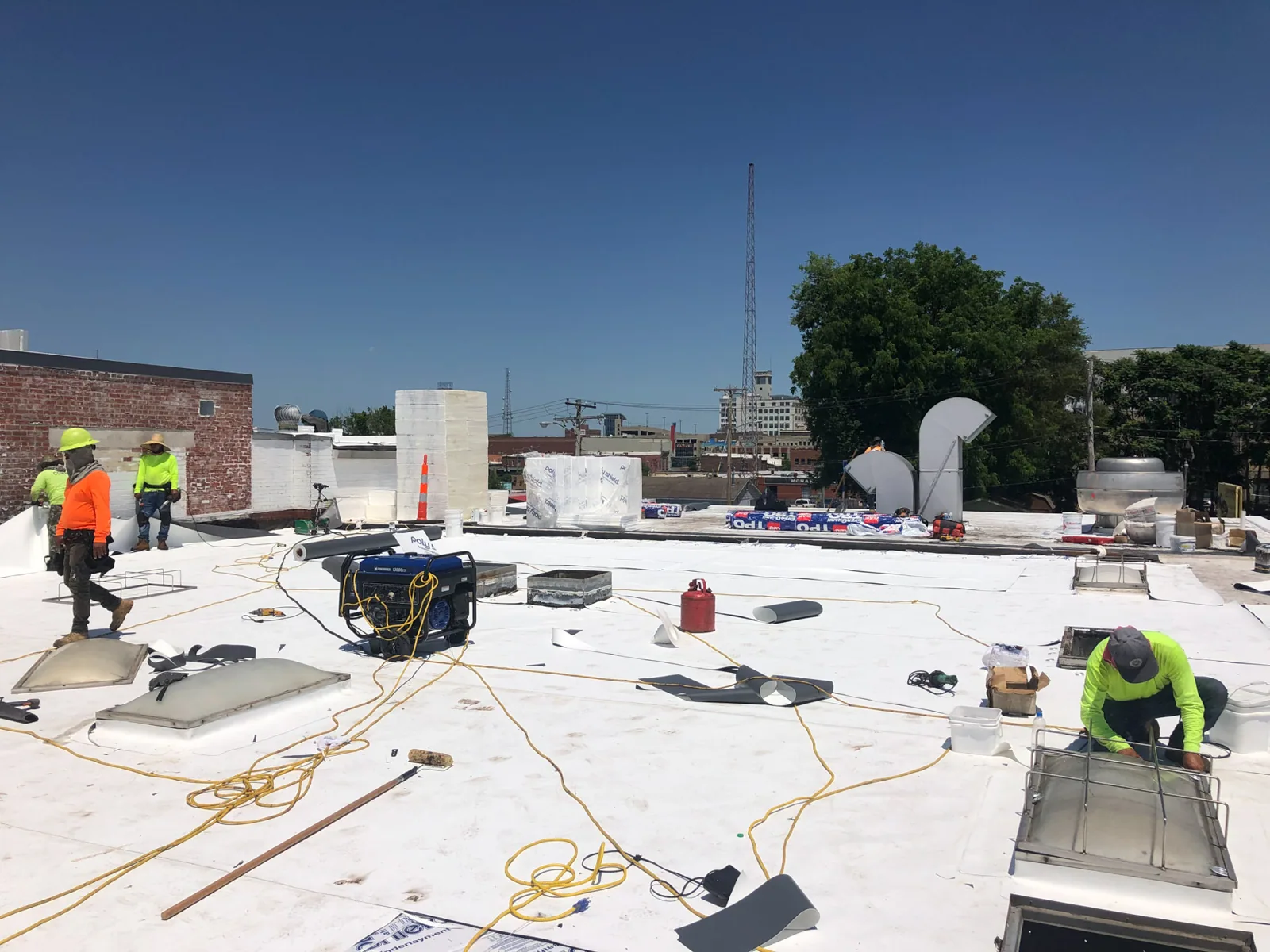
Commercial Roof Replacement
Separated patches made from incompatible materials can leave several repair boundaries failing at once. Another patch needs sound material to meet. Finding none changes the renewal decision. For commercial roof replacement in New Braunfels, TX, we examine the membrane, insulation, deck and perimeter before selecting the new assembly. A worn surface and a failing support layer call for different work. We separate those findings. Your next investment should remove the conditions that defeated the existing roof, then provide a suitable base for its replacement.
Commercial Roofing New Braunfels replaces low-slope and metal roofs on operating buildings. We compare the removal scope with the condition of the material beneath it. Where a smaller correction remains useful, targeted roof repair belongs in that comparison. Where deterioration is widespread, another patch may leave the larger expenditure unresolved.
Expose the failed layer
Waterlogged insulation can remain hidden beneath a membrane that looks intact. We assess suspect areas and use openings where needed to establish the assembly. Deck corrosion, damaged wood, deteriorated insulation and loose attachment each change the rebuilding scope. A full tear-off removes the existing roofing layers included in the work. The deck then receives a closer examination. Damaged supporting material must be addressed before the replacement assembly conceals it.
Removal quantities affect disposal, labor and weather exposure. They also affect your comparison with a recover over retained roofing. Recover requires an eligible existing assembly. It cannot serve as a shortcut over trapped moisture or unstable layers. We identify where replacement offers a clean rebuilding boundary and where a limited removal may remain technically useful. The recommendation follows the actual roof condition, not its appearance from the parking area.
Choose the support before the surface
A new membrane still depends on the deck beneath it. We assess deck type, attachment condition and the proposed insulation layout. Insulation thickness, cover board and fastening must suit the selected assembly and applicable requirements. A harder cover board can improve resistance to certain impacts and provide a suitable installation surface. It does not correct a weakened deck. Those are separate decisions with separate work quantities.
Material selection follows building use. A roof exposed to kitchen exhaust needs a different compatibility review from a roof above ordinary offices. Heat-welded TPO membrane construction and other roofing options have their own detailing and attachment requirements. We consider rooftop traffic, service access, chemical exposure and the existing equipment layout. The lowest initial material expense is only one part of the comparison. Difficult future repairs and unresolved interfaces can consume the apparent saving.
Rebuild the water route
A depression beside an outlet deserves attention while the old roof is open. Replacing the membrane without correcting the underlying slope can retain the same ponding condition. We examine drainage paths, outlet elevations and obstructions. Tapered insulation may improve the route to an outlet. Drain replacement, sump detailing or another correction may also be needed. The solution must match the geometry rather than merely hide the low area.
The same review includes drains and scuppers that discharge roof water. Their connections must remain serviceable after insulation heights change. We also check overflow provisions and the relationship between finished roofing and adjacent openings. A curb that stood well above the previous surface may sit too low after rebuilding. That makes curb height a replacement decision now, rather than a leak repair charged to the building later.
Match the renewal to the building use
Downtown New Braunfels combines boutiques, cafes, galleries and music venues with nineteenth-century architecture. The Gruene Historic District also has restored shops and restaurants. Replacement planning for an occupied downtown property should account for entrances, adjoining walls and the activities beneath the removal area. We examine the actual roof connections. We examine deck material and current layers at accessible edges or test openings before pricing the rebuild. The exposed condition gives the owner a firmer rebuilding quantity.
FM 1101 supports a different operating context. For roof work above manufacturing operations, falling debris, temporary exposure and equipment protection can affect the release of a work area. We plan the removal boundary against the operation beneath it. Buildings in the downtown district and industrial properties need the same sound assembly decisions, with different constraints on carrying out the work.
Limit the exposed work area
Comal County summers are hot and humid. Roof surface conditions affect preparation, adhesive use and installation timing. Rain risk also matters once existing material is removed. We divide the roof into workable areas and plan temporary closures at exposed transitions. A removal phase should have a practical path to dry-in. Leaving a larger open area than the available installation window can support adds avoidable schedule risk.
Lift positioning, delivery access and debris removal influence the sequence. So do tenants beneath the work and rooftop equipment that needs continued service. We coordinate the specific interruption, not a blanket closure of the property. During replacement on an occupied building, the useful question is which activity needs protection during each removal phase. That lets an owner compare shorter work releases with the handling effort of a larger phase.
Fund the complete rebuilding scope
Deck repairs discovered after tear-off can change the expenditure. So can wet-layer removal, insulation upgrades, difficult lifting and replacement of unsuitable edge details. We distinguish those drivers from the cost of installing the main roofing surface. An owner deciding between buildings needs to see the complete assembly scope. A membrane-only comparison can leave substantial removal and rebuilding work outside the decision.
New Braunfels uses the 2021 IBC, IEBC and IECC with local amendments. The proposed roof work needs review against the applicable requirements, including those affecting insulation and the existing building. We connect those requirements to the scope before installation. A planned equipment change also deserves attention. Rebuilding a curb now may avoid reopening the new assembly when the equipment arrives. The next investment should close the roof decision you are making, while leaving future service connections workable.
Commercial Roofing Questions
Should I replace the whole roof if the wet insulation is concentrated near one drain?
Map the affected material before funding a full removal. We examine the wet boundary, the surrounding attachment and the rest of the roof. A localized rebuilding scope may be useful where adjoining layers remain suitable. Widespread deterioration elsewhere changes that comparison. The drain finding establishes a removal area; the remaining inspection establishes whether the building needs a broader replacement.
Can the new insulation leave my existing equipment curbs in place?
Curb height must be checked against the proposed finished surface. Added insulation can reduce the available flashing height. We evaluate each affected curb and its connections before choosing a retained detail. Extending or rebuilding a curb may be necessary. Equipment service requirements also matter, because a suitable roofing connection still needs access for maintenance and eventual equipment replacement.
What makes two replacement proposals materially different?
Compare what each proposal removes and rebuilds. Deck correction, wet insulation, cover board, attachment, drainage work and perimeter details can differ substantially. Disposal and access provisions also affect the work. We make those differences explicit so the main membrane does not conceal an incomplete assembly comparison. Material names alone do not show whether the same roof problem is being resolved.
Is a planned property sale a reason to choose replacement over repairs?
A sale date changes the decision window, but roof condition still determines the useful scope. We identify unresolved moisture, active failures and assembly limitations. Replacement may remove a substantial condition liability. A defined repair may address a narrower problem without a full renewal. The choice should reflect the actual findings and your transaction timing rather than an assumed benefit from a new surface.

Commercial Roof Replacement