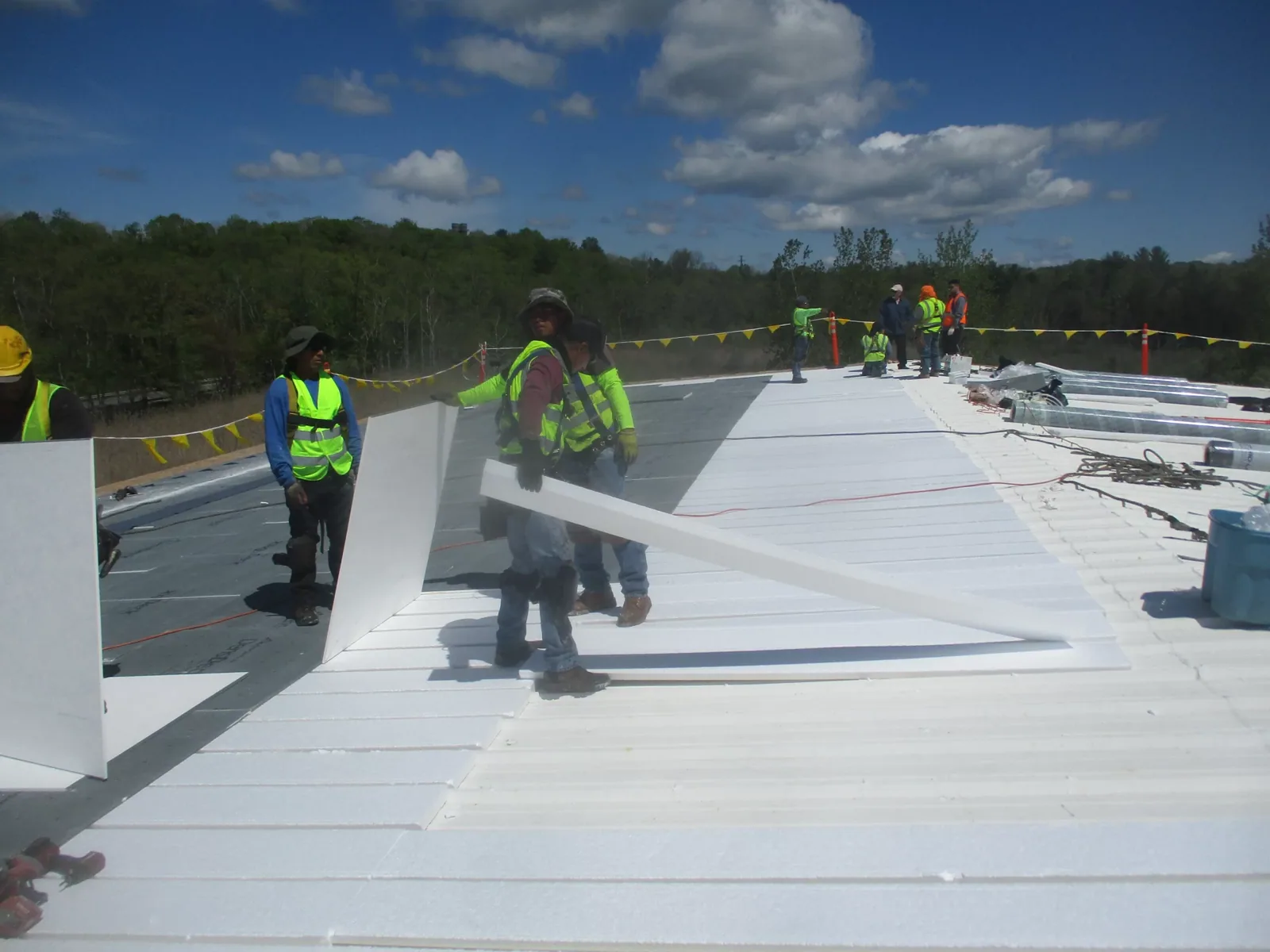
Commercial Roof Recover
Dry, firmly attached material exposed at a test opening can put retention back into the investment comparison. The rest of the assembly still needs examination. Roof recover work in New Braunfels, TX, installs a new roofing assembly over eligible existing roofing. It can reduce removal work where the existing construction, moisture condition and applicable requirements allow retention. We establish those conditions before treating an overlay as the less disruptive choice.
Commercial Roofing New Braunfels evaluates the layers that would remain beneath the new work. A dry surface alone is insufficient. Wet insulation, weak attachment or an unsuitable number of existing coverings can change the removal decision. We compare recover with removing and replacing the roofing on the same building. Your decision should account for the new assembly and the material it will conceal, not just the difference in debris hauling.
Test the layer you intend to keep
Loose insulation beneath an intact membrane weakens the retention argument. We examine the assembly, check its attachment and investigate moisture indications. Existing roof records can identify earlier work, but openings may be needed to establish the actual layers. The deck condition and existing coverings matter. So does the proposed fastening or bonding method. Each retained component must have a suitable role in the new construction.
New Braunfels has adopted the 2021 IBC, IEBC and IECC with local amendments. Roof recover eligibility needs assessment under the applicable provisions and the condition of the existing building. Insulation requirements and loading considerations also enter the comparison. We identify a recover limitation before it becomes a costly installation problem. The useful outcome is an eligible assembly, a defined removal correction, or a replacement recommendation where retention cannot support the proposed work.
Remove the concealed water first
A damp test opening changes the recover scope immediately. Covering wet insulation retains a damaged layer and can interfere with the new assembly. We map suspect areas and use suitable testing to define removal. An infrared assessment with moisture confirmation can help locate patterns across a roof. Its usefulness depends on weather, assembly characteristics and adequate thermal conditions. Physical examination resolves the material condition where findings need confirmation.
Localized removal does not automatically disqualify the rest of a recover. The remaining roof must still be evaluated. We rebuild damaged areas to a suitable level before introducing the new layers. Broad moisture distribution can make the correction expensive enough to favor replacement. That comparison should include the labor of scattered openings, disposal and rebuilding. Keeping more old material has little value if the retained areas remain unreliable or the correction work dominates the expenditure.
Recalculate the finished roof height
A new cover board or insulation layer raises the roof surface. That can reduce flashing height at equipment, walls and openings. We inspect the available height before choosing the added assembly. Short curbs may need extension or replacement. Edge profiles may also need changes. The transition must protect the full new build-up rather than leave its upper layer dependent on an old detail.
Drainage connections need the same attention. Raising the field without a suitable connection at an outlet can obstruct discharge. We evaluate outlet and sump corrections alongside the new surface. Tapered insulation may help with a defined low area, but it needs a workable drainage path. A recover proposal that omits these interfaces can appear economical while leaving the owner to fund curb, edge and drainage changes during installation.
Separate the old surface from the new assembly
An existing membrane may need a separation layer before receiving different roofing. Material compatibility and the manufacturer's assembly requirements control that detail. Existing contaminants and deteriorated coatings can interfere with adhesion. We assess the proposed surface preparation and attachment. A recover must transfer loads through a suitable assembly to the supporting construction. Merely placing a new membrane over the old one does not establish that connection.
The choice between PVC membrane installation, another membrane and a metal retrofit follows the roof condition and building use. Equipment traffic, exhaust exposure and future service needs influence the choice. We compare those demands with the retained layer and the new support surface. Where structural questions arise, the appropriate design review belongs ahead of installation. Extra roofing material adds load, and its acceptability should be established rather than assumed from an unchanged building interior.
Retain useful material without retaining the problem
Restaurants and shops occupy restored buildings in the Gruene Historic District. Above an operating property, reduced tear-off can make a recover worth examining. It still needs suitable perimeter, wall and penetration details. We inspect those connections before selecting retention. The value lies in reducing eligible removal work while rebuilding the failed weather protection. It does not lie in leaving unsuitable flashing buried beneath a second assembly.
Downtown New Braunfels also includes cafes, galleries and music venues. Work releases for a roof above food service need to account for exhaust equipment and protected customer access. A recover may reduce some handling and exposure, but deliveries, rooftop work and curb corrections remain. For properties in the Gruene district, we compare those actual activities with the demolition and rebuilding required by replacement. Operating benefits belong in that specific comparison.
Price the retained layer as a responsibility
Scattered wet areas, extensive flashing alterations and poor drainage can erode a recover's cost advantage. So can difficult attachment through the old assembly. We distinguish those corrections from installation of the new surface. Set the proposal out by removal, added substrate correction and retained layers; that breakdown shows what the overlay actually changes. A lower removal quantity is useful only if the remaining construction is suitable.
Hot, humid summers in Comal County make installation conditions a practical scheduling issue. Surface dryness and material requirements affect preparation and adhesive work. We schedule recover phases around those conditions and the building's operating needs. The remaining investment decision includes future equipment changes. An imminent replacement of rooftop machinery may favor rebuilding its connections now. That can be more useful than preserving an old curb and reopening the newly installed roof soon afterward.
Commercial Roofing Questions
Does a recover make sense if I have already paid for several patch repairs?
Previous repair spending does not establish retention eligibility. We examine the condition and compatibility of the patched areas, then assess the underlying layers. Stable repairs may remain within a suitable assembly. Loose, wet or incompatible material needs correction. Compare that correction quantity with replacement before treating the money already spent as a reason to keep the existing roof.
Can insulation be added during a recover without rebuilding every curb?
Available flashing height sets the curb review. Added insulation may be workable at some equipment and unsuitable at other units. We measure those interfaces against the proposed roof elevation. The scope can retain eligible curbs and rebuild the ones that need height or connection changes. That measured approach is more useful than assuming every existing curb remains acceptable.
What should happen where moisture is confined to one corner?
The affected corner needs a defined removal boundary and examination of the material beneath it. We then evaluate the remaining roof separately. A localized correction may support a broader recover where dry, stable layers remain eligible. Widespread attachment or drainage problems elsewhere can change the result even when the confirmed wet material is limited.
Would an overlay avoid all interior disruption at my shop?
Reduced tear-off can limit certain exposures, but rooftop work still needs coordination. Equipment connections, deliveries, fastening and curb alterations can affect the occupied space. We identify the specific activities over your shop and discuss any interruption needed for those tasks. Choosing recover should rest on the assembly findings and that practical operating comparison, rather than a promise of uninterrupted use.

Commercial Roof Recover