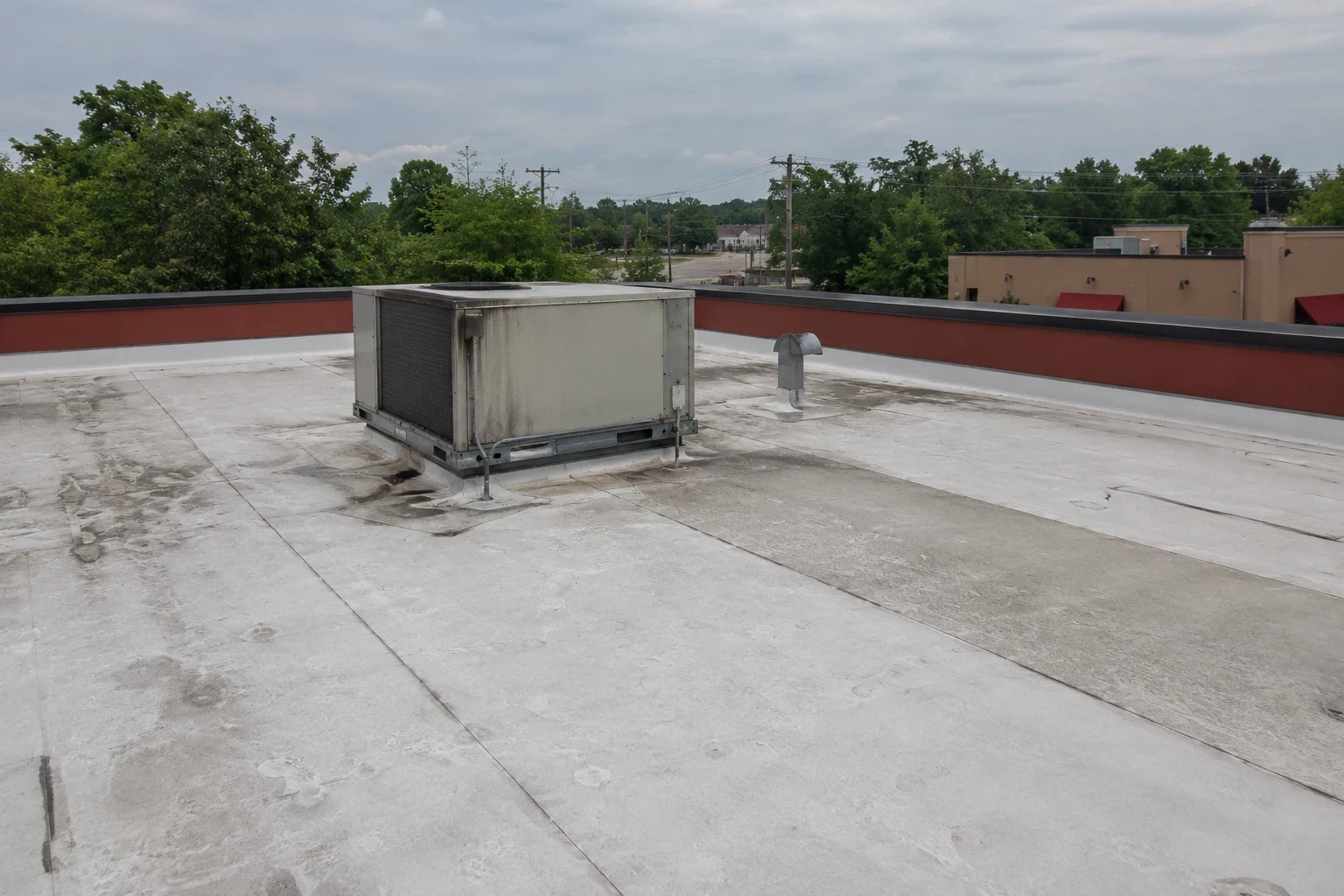
Restaurant Roofing
A failed connection at a rooftop grease-containment assembly can release discharge onto adjoining roofing and change the repair order. The containment defect needs correction before the receiving membrane is rebuilt. Restaurant roofing in New Braunfels, TX, connects that finding with the affected surface and support. We inspect the damaged boundary and coordinate equipment work with the relevant trade. The owner can then separate containment repair from compatible roofing reconstruction and assess what field material remains useful.
Commercial Roofing New Braunfels repairs and installs commercial roof assemblies serving restaurants. Exhaust equipment, supports and service access create interfaces that need direct examination. A coating or fresh membrane patch is not the entire correction where a physical equipment connection has failed. We identify those work quantities before recommending retention. The useful investment restores the roofing and establishes a suitable equipment arrangement at the damaged location.
Correct the failed containment connection before surface preparation
A cracked fitting, detached receiving component or leaking containment connection needs assessment by the appropriate equipment trade. We examine the roofing exposed beside it. Contaminated or degraded material may require removal rather than ordinary surface preparation. The selected repair must suit the remaining membrane and its condition. Equipment correction and roof rebuilding should have an installation order that does not leave the new surface exposed to the same failed connection.
We connect restaurant membrane rebuilding with the relevant equipment release. The interface should remain accessible for preparation and finishing. Damaged support beneath the membrane needs its own quantity. Suitable construction away from the affected contact may remain. The owner should compare complete containment and roofing corrections, rather than treat a new outer finish as the repair for every component at that location.
Assess the roof beside operating food-service use
Restored buildings in the Gruene Historic District accommodate shops, food service and hospitality. Roof work near an operating restaurant needs a suitable handling position and access to the affected equipment connection. We examine the particular roofing and supporting layers. The correction can be local where the receiving assembly remains useful. Equipment restrictions and exterior access should be assessed before the material preparation method is selected.
New Berlin has restaurants and a feed store, and historic Brietzke Station operates as a barbecue restaurant. For a property in New Berlin, the rooftop equipment and work approach may differ from a building in Gruene. We inspect that actual interface and coordinate its release with the building operator. The next investment should identify the roof material rebuilt and the related containment or support work needed at that property.
Examine the receiving layers beneath the damaged finish
Discharge or service contact can affect membrane beyond the most obvious stain or tear. We examine the condition at the proposed repair edge and support below suspect areas. Deteriorated board or wet insulation can expand removal. Useful lower construction may remain if it suits the selected assembly. The proposal should distinguish contaminated surface material from deeper assembly damage, with the rebuilding extent established before the repair closes those layers.
A hands-on assessment of restaurant roofing identifies the visible detail and concealed construction where access is necessary. Test openings are restored appropriately after examination. We assess attachment as well as material condition. A repair should connect to suitable remaining roofing. A fresh surface laid over unsuitable receiving material can leave another separation or damaged support beneath the completed-looking correction.
Preserve access to exhaust and roof details
Equipment service requires a practical path that does not repeatedly damage roofing. We examine the route to exhaust equipment, containment components and adjoining details. Compatible protection may be useful at contact or traffic areas. Its placement should leave drainage and repair connections reachable. Moving a support or changing equipment can reopen the local roofing decision even where the field had previously remained useful.
We coordinate exhaust curb and support interfaces with the equipment installation. Structural or design review may be needed for changed loads and support arrangements. A building sharing retail tenant roof areas or hospitality use can have additional service and operating dependencies. The relevant connection needs assessment before equipment positioning conceals it. The roofing detail should be complete when the altered assembly is released.
Select compatible reconstruction for the actual exposure
Roof material selection needs assessment of the operating exposure and the construction it meets. Some materials can be damaged by oils or other discharge. Equipment containment remains necessary even where a selected system offers useful resistance. We examine the existing roof and relevant product requirements before choosing repair or renewal. The detail should include compatible flashing and suitable support, not only a new field sheet.
A KEE membrane assembly is one available construction where suitable. We also install other low-slope and metal roof systems. The comparison follows the deck, material compatibility and complete interface requirements. Restaurant roof drainage corrections may be needed where retained water exposes affected details. The owner should compare that complete work quantity with the field option, rather than select a material while leaving containment or drainage defects unresolved.
Compare the local repair with the operating work period
An equipment-related repair can need a coordinated release even when its roof area is small. We identify the handling, preparation and closure tasks with the building operator. A narrow opening may reduce exposure but still require enough access to rebuild all damaged material. Another work period may be necessary where equipment or restaurant operation limits completion. The useful sequence should be settled before removal creates an exposed detail.
We connect restaurant property roof investment with planned equipment changes and the retained field's condition. Defined damage may support a local correction. Broader deterioration or concealed moisture can favor renewal. The owner should see the remaining material and complete rebuilding quantity for each option. The next allocation restores useful weather protection while keeping any related equipment correction identifiable, rather than fund another roof surface over a failed physical containment connection.
Commercial Roofing Questions
Should the containment assembly be corrected before membrane replacement beside it?
Assess the failed connection with the appropriate equipment trade and set its correction beside the roofing sequence. We examine the exposed material and identify compatible rebuilding. Immediate protection may be needed while the permanent work is arranged. A new sheet should not be left beneath continuing discharge from the same failed component. The investment should distinguish both corrections and provide suitable access to complete them.
Can contaminated roofing remain if it is covered with a new coating?
Determine whether the material can support the proposed system after appropriate preparation. Damaged or unsuitable membrane can require removal. We assess compatibility and the support beneath suspect areas. A new finish does not rebuild deteriorated layers or correct a failed equipment connection. The owner should compare complete preparation and reconstruction rather than assume that another surface makes all affected material suitable for retention.
How should exhaust equipment changes affect the local roof detail?
Review the proposed housing, curb and support arrangement before installation. Changed geometry can limit access or alter the weatherproofing connection. We identify the roof and appropriate design requirements at that junction. The detail should be completed before equipment conceals it. Related preparation belongs in the comparison where it prevents reopening new roofing during the subsequent installation.
What if the restaurant cannot release the proposed repair area during service?
Assess another work period or a phase that permits complete removal and closure. We coordinate the affected operation with the building operator. Smaller phases can add transitions and handling. The material boundary must still reach the damaged assembly. The useful sequence should reconcile those requirements before the roof is opened rather than retain unsuitable construction solely to fit a convenient operating window.
When does localized discharge damage justify wider roof renewal?
Examine the field away from the equipment exposure and identify what local repair would retain. Suitable material may remain with a complete containment and roofing correction. Broad deterioration, weak attachment or lower-layer moisture can change the removal decision. We separate those findings. The next investment should follow the actual assembly rather than either minimize the work to a stain or enlarge it without supporting material evidence.

Restaurant Roofing