New Berlin
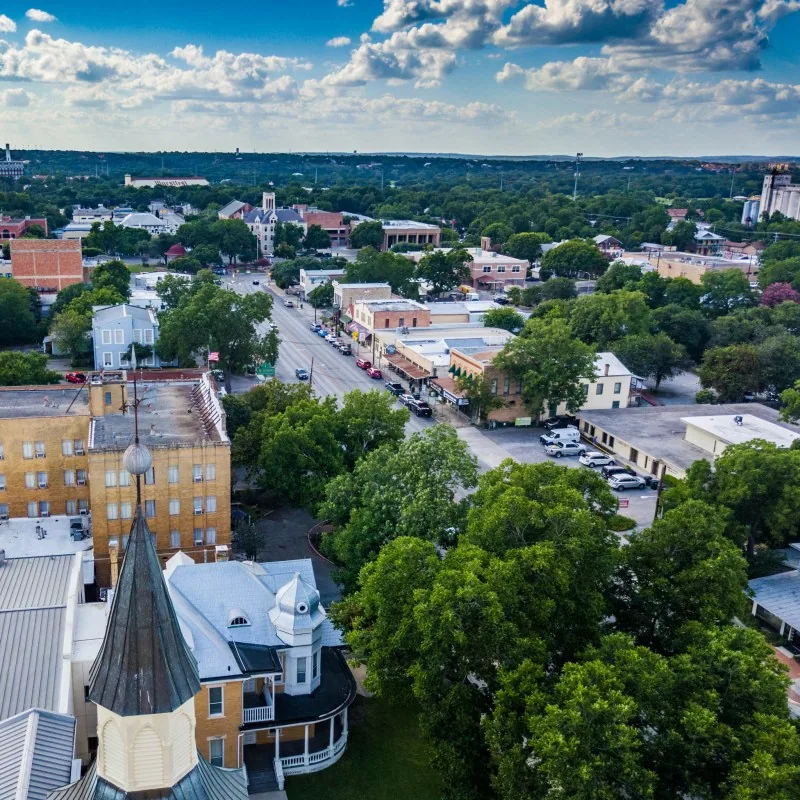
A roof over a restaurant needs more than a patch at the visible ceiling mark. Exhaust, equipment supports and the adjoining membrane can all affect the repair boundary. New Berlin lies in southwestern Guadalupe County, about thirteen miles southwest of Seguin. Its local business references include restaurants and a feed store; historic Brietzke Station operates as a barbecue restaurant. Marion Independent School District serves residents. We use those places to orient the work, then inspect the owner's actual roof before recommending material or removal.
We identify the membrane, attachment, penetrations and earlier repairs. If an opening is needed, we check the layers below it before setting a quantity. A clean, dry area can remain when the new repair can tie in. Wet insulation or a separated curb changes that decision. Our commercial roof inspection separates the confirmed correction from a broader renewal phase, with each work area tied to a schedule and release point.
Inspect the exhaust and flashing path
Kitchen exhaust and other rooftop equipment can create several connections in one small zone. We inspect curb corners, counterflashing, nearby seams and the path where condensate or service lines cross the membrane. Grease or residue near a fan can affect preparation for a repair. We identify the surface condition and material type before selecting a patch or replacement detail. If the equipment needs adjustment, we coordinate the trade responsible rather than cover a moving or poorly supported connection.
Where food service is part of a property's use, exhaust and equipment interfaces can affect the roof detail. For any requested building, we verify the layers and connections directly before assigning repair or removal quantities. Our curb and equipment support work addresses the roof connection and its attachment. When the issue is a failed sheet joint, seam failure repair checks the lap and adjacent membrane so the repair closes on stable material. We document the work boundary before closing the detail.
Sequence work around service hours
Food service and retail operations can continue while a roof is repaired when access and protection are planned. The owner tells us which rooms, entrances and delivery paths need to remain available. We set a staging area, limit the open section and protect the building below it. At the end of each shift, the roof boundary is checked and secured. If exhaust equipment must be isolated or a service opening moved, the timing is agreed with the owner and the responsible trade.
Historic Brietzke Station operates as a barbecue restaurant, alongside New Berlin's other restaurants and feed store. For an owner-authorized property, we confirm its use, operating hours and access rules before setting the work sequence. Occupied-building reroofing divides a larger scope into areas that close in sequence. The owner can see when a section starts, what activity affects the interior and what must be complete before an area returns to service. That sequence reduces ambiguity around deliveries and tenant notifications.
Check water at the lower edge
A roof can shed water across the membrane and still fail at a blocked outlet or weak perimeter. We look for debris, separated drain flashing, ponding and metal joints that no longer direct runoff away from the wall. On a low-slope assembly, we follow the flow to the outlet and check its connection. A surface patch will not correct a drainage restriction or a low area caused by substrate movement. We state each condition separately so the owner can see the next required work.
Our drain and scupper repairs include the bowl or outlet, adjoining membrane and any transition that must be opened to close the connection. We also distinguish immediate water entry from maintenance that can be scheduled later. That keeps a feed-store or restaurant owner from paying to treat an entire roof when the inspection confirms a narrower boundary, while still avoiding a patch that leaves the next weak detail untreated.
Set the next investment
Repair makes sense when the failure is isolated and the surrounding layers are dry, secure and compatible with a new termination. A second leak area or a change in board and deck condition may expand the measured removal boundary. We measure what must come out and identify what may remain. The owner can compare that quantity with a recover or full removal, using the same roof sections rather than a different estimate basis for each option.
Cost follows removal depth, insulation and cover board, deck work, curb changes, metal and interior protection. A workable daily phase accounts for delivered material, lift access, surface conditions and the roof area the crew can seal before leaving. A recover assessment checks existing layers and attachment before new material is placed. If the assembly cannot support retention, commercial roof replacement describes the tear-off, new system and transition details. The written scope keeps immediate work distinct from any future condition that remains outside the repair boundary.
Keep the work record tied to the building
New Braunfels lies in Comal County, where summers run hot and humid and winters stay mild and warm. That climate context belongs to the market city and affects preparation for a roof phase coordinated there. We confirm surface and substrate conditions before applying a material. If humidity or moisture delays preparation, the sequence changes so the repair is not closed over a surface that cannot accept it. The planned work date and release point follow the assembly's readiness.
New Berlin's location southwest of Seguin can help a manager coordinate area vendors, but a regional schedule does not replace a property record. We identify the building, roof section, observed condition, measured quantity and completed correction. If a portfolio also includes commercial roofing in Seguin or roof service in Marion, each roof receives its own inspection and cost basis. Send prior repair dates, operating hours, equipment constraints and the next decision date. We will return a measured scope the owner can fund, phase or defer with the remaining condition clearly recorded.
Commercial Roofing Questions
What roof conditions should be checked near a commercial exhaust fan?
We inspect the curb, corner flashing, fasteners, adjacent seams and membrane condition where service lines cross. Residue and movement can affect how a repair is prepared and attached. If the equipment support is loose or a trade change is needed, we identify that before closing the roof detail. The scope names the materials and connections that must be restored around the opening.
Can roof work be phased around a restaurant's operating hours?
Yes, when the access plan protects the building and lets each section close at the end of a shift. We coordinate the hours for lifting, noise and any equipment interruption with the owner. The sequence identifies the open area, interior protection and daily watertight boundary. If a repair requires a longer window, we state that constraint before the work is released.
How do you decide whether the roof needs a repair or a larger replacement?
We measure the failed detail and inspect the surrounding layers. A local correction can fit when the material around it remains dry and sound. If moisture, loose attachment or deck problems extend past that spot, we compare the removal quantity with recover and replacement. The owner receives the conditions behind each option instead of a conclusion based only on the age of the roof.
Does a drain problem belong in the same proposal as a roof leak?
It does when the outlet is part of the water path or has a failed flashing connection. We check the bowl, membrane, overflow route and lower edge to see whether the drain is blocked, separated or simply near another failure. Each cause gets its own line and quantity. That makes it clear whether clearing, repair or a broader drainage correction is required.

New Berlin