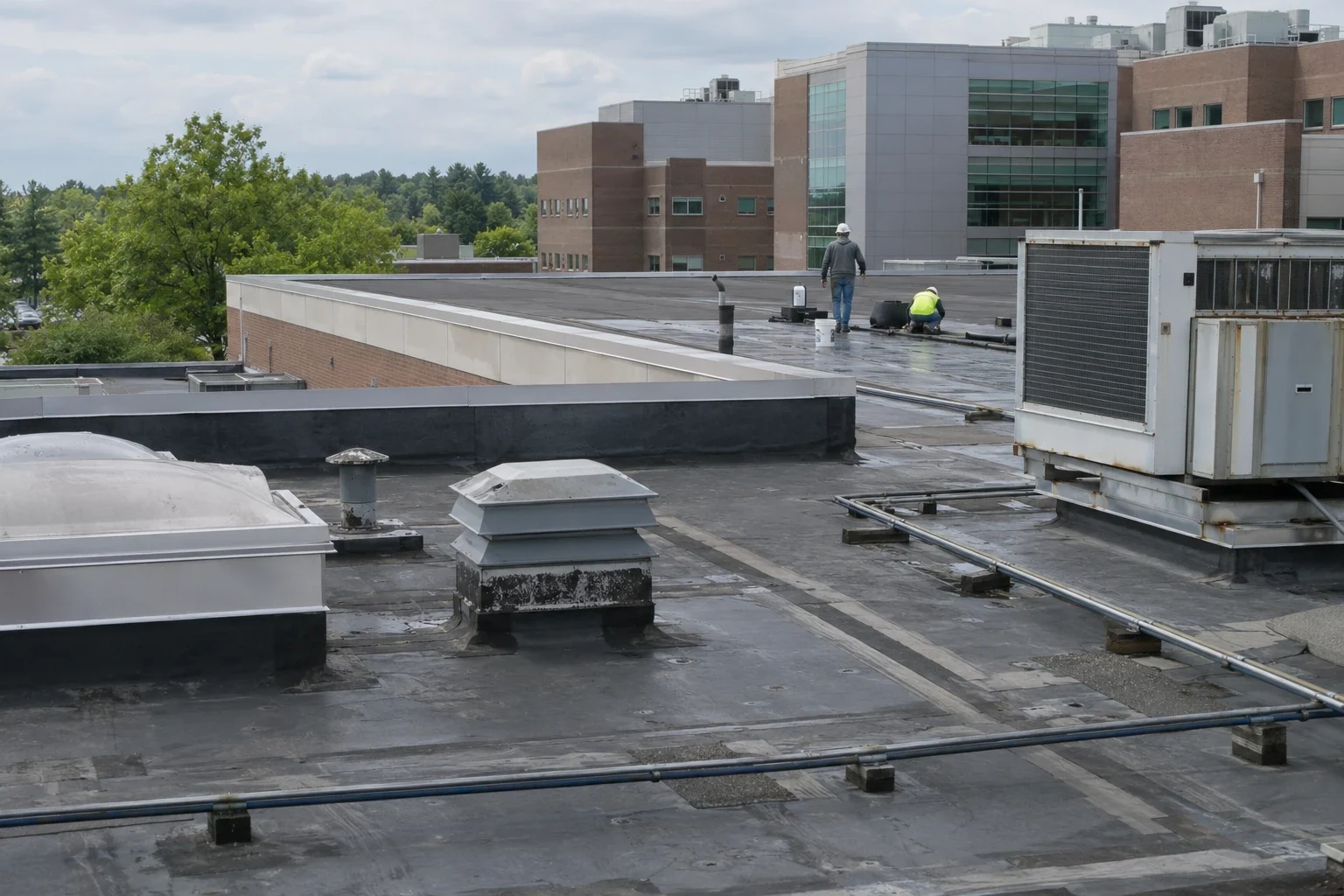
Healthcare Systems
Torn membrane stretched across a structural movement gap can require a complete joint detail before another field patch is useful. The connection must accommodate the movement its design requires. Healthcare system roofing in New Braunfels, TX, ties that finding to the assembly at the affected building. We inspect the gap and adjoining layers. The owner can then compare proper junction reconstruction with the material retained on either side, while setting a suitable release for the clinical use below.
We repair and renew commercial roofing above medical operating areas. Different buildings can have different joints, equipment and care requirements. Each roof needs its actual construction assessed before a repair is assigned. The useful investment distinguishes local movement-detail work from broader field renewal. Access and protection should follow the affected operation and material boundary, so complete reconstruction can proceed without leaving another rigid closure over the same moving interface.
Restore the joint's required function before closing the tear
A membrane stretched across a gap may be unable to accommodate its intended movement. Repeated tearing can continue where another surface repair leaves that mechanism unchanged. We examine the joint and the roofing on each side. Appropriate design review should establish the suitable connection and movement requirements. Damaged receiving construction needs rebuilding before the selected detail is installed. The repair should provide complete weatherproofing at the joint and its terminations.
We connect reconstruction of the separated roof connection with the actual assembly. One field can have different layers or material condition from the other. A joint cover needs suitable support and compatible interfaces at both sides. The owner should compare those local quantities with the fields they meet. A common surface patch method should not be assigned before the structural gap and its receiving layers have been assessed.
Establish the work area above the affected clinical use
Roof reconstruction can affect medical equipment or occupied areas beyond the space directly below the gap. We identify the actual dependency with the building operator. Protection, handling and permitted methods need a suitable release. The roofing boundary must still reach damaged support and receiving material. A limited operating area should be fitted to complete reconstruction or another practical phase, not leave an unfinished joint edge concealed beneath new sheet.
For hospital roof assemblies and outpatient building roofs, the releases can differ. We assess each roof task and its clinical dependency. Shared equipment can connect areas that appear separate internally. The useful sequence provides material access and a practical path to weather closure. The owner should compare that complete work quantity with the operating protection required before removal exposes the movement junction.
Evaluate the roof within New Braunfels and Live Oak care use
Roofing above an equipment-dependent operation needs its particular work requirements assessed. We inspect the affected joint and receiving assembly. The building operator establishes the relevant operating release. Useful field material can remain where a complete compatible connection meets it, while damaged support receives its own rebuilding boundary.
For a property in Live Oak, the joint and equipment arrangement can differ from a New Braunfels clinic. We examine those actual conditions before recommending retention. Medical roof work for that type of building use needs a suitable release for its affected operation, with access requirements coordinated where applicable.
Define the material retained on each side of the gap
A torn movement connection can expose lower layers on either side to moisture. We investigate suspect construction where it changes the rebuilding quantity. Selected openings may establish board and insulation condition. Suitable layers can remain beyond the damaged boundary where the selected system permits it. Each new joint edge needs useful receiving material. A sound field surface does not rebuild lower deterioration found immediately beside the gap.
We use appropriate investigation of concealed roof moisture when the roof and available conditions suit the method. Suspect thermal patterns require physical confirmation where they determine removal. The owner should compare those lower-layer findings separately for each adjoining field. A PVC reconstruction assembly is one option where suitable. Its joint interfaces, attachment and support need complete review just as other selected roof systems do.
Select the connected renewal phase for the actual building
A serviceable roof on one side can remain while the other requires renewal. We assess what each field would retain and the new joint detail needed between them. Added layers can change height and termination clearance. Appropriate review should resolve the resulting geometry before installation. The investment includes the movement connection, receiving support and complete field interfaces, not only a different membrane surface on the damaged side.
For healthcare reroofing during continued operation, additional phases can reduce the released area but add transitions and handling. We compare those quantities with complete rebuilding of the joint. A health system's building management requirements need assessment at the property. The useful sequence serves both the material boundary and the affected clinical operation. A practical closure should be identified before roof construction is taken apart.
Separate the joint expenditure from wider system renewal
A defined movement detail may be the necessary immediate correction even where wider roof renewal remains a later decision. We identify its support and material quantity. Broad deterioration, weak attachment or concealed moisture can change the field comparison. The joint still needs a complete design and connection where a larger installation is selected. The owner should see those different tasks before funding the next surface.
We connect healthcare roof allocation with equipment and operating changes affecting each building. An owner managing investment-backed medical properties can need another funding date or release. The actual construction remains the basis for the work quantity. Your next expenditure should restore the moving interface appropriately and keep the retained fields' condition identifiable, so later renewal follows material examined beyond the local joint reconstruction.
Interstate 35 crosses northern Schertz with access from exits 174 through 180. A healthcare roof release still needs coordination with the building operator and the specific assembly under repair.
Commercial Roofing Questions
Will another membrane patch stop tearing across a movement gap?
Assess the joint function and required movement before selecting the repair. A rigid surface connection may remain exposed to the same mechanism. We examine support and roofing on both sides, with appropriate detail review. The useful reconstruction restores compatible weather protection at the gap. Another field patch should not conceal the structural interface without identifying how the new detail will accommodate it.
Can one medical roof field remain while the other is renewed?
Examine each assembly independently and establish the suitable junction between them. Useful material may remain where the selected detail can connect properly. Height and receiving-layer changes need assessment at the renewed side. We identify those quantities before recommending retention. The owner should compare complete fields and their shared movement connection, not assign both the same removal scope from one side's condition.
How should clinical equipment determine the repair release?
Identify the actual operating dependency with the building operator before material removal. Protection and permitted methods need appropriate review for the affected task. We compare those requirements with access to the complete joint boundary. Another phase or release period may be needed. The useful sequence permits suitable reconstruction and closure without leaving damaged receiving material beneath a connection chosen only for easier access.
What if moisture is found beneath only one adjoining field?
Define that lower-layer boundary through appropriate investigation. We assess useful construction on the other side separately. The new joint must meet suitable receiving material at both edges. One-sided damage can justify another rebuilding quantity without establishing the entire roof's condition. The owner should compare those specific layers with the movement detail and operating release required for complete correction.
Should one healthcare repair detail be repeated across every building?
Review each joint, material and operating use before choosing its construction. Different assemblies can require different movement capacity and compatible interfaces. We identify the roof quantity for the building under consideration. A common procurement approach does not make those receiving conditions identical. The useful investment provides suitable details and work releases at each actual roof, with retained material and remaining renewal kept clear.

Healthcare Systems