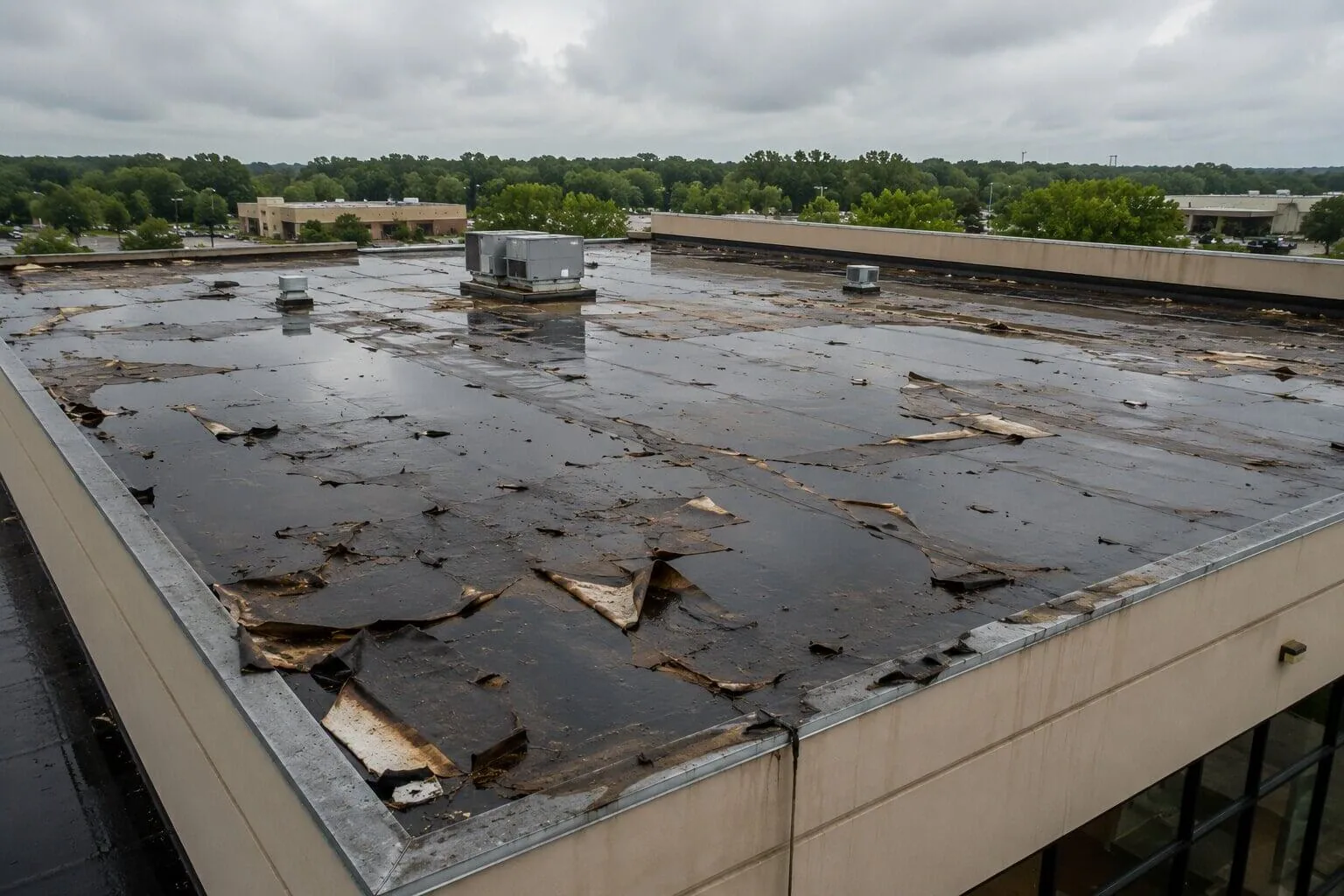
Commercial Roof Repair
A lifted seam beside stable roofing creates a local investment decision. Repair the connection. Check the adjoining material. Keep the useful assembly in service where its condition allows. Commercial roof repair in New Braunfels, TX, should resolve a specific failure without leaving the same movement, moisture or drainage problem beneath the new work. We establish the repair boundary before choosing the material that closes it.
Commercial Roofing New Braunfels repairs membranes, flashing, metal details and the layers those failures have affected. A surface patch may suit a sound, dry assembly. Damaged insulation or a weakened attachment needs more work. We examine those differences and separate urgent corrections from broader renewal needs. For an active interior leak, tracing the water entry takes priority over selecting a patch from the ceiling location alone. A serious leak can reach our roofing team around the clock, including overnight, weekends and public holidays, for prompt stabilization.
Correct the moving connection
A split at a curb corner can result from stress concentrated at that detail. Closing the split without correcting the connection may leave the same stress in place. We examine membrane securement, flashing height and the surrounding material. Movement between roofing and equipment needs a detail that accommodates the assembly. The repair may involve rebuilding the corner, adding suitable reinforcement or replacing deteriorated flashing rather than applying another surface seal.
Seam separation requires a different examination. We assess the joined material, its preparation and the quality of the remaining connection. A repair needs compatible material and a sound joining surface. Where an older repair obstructs that work, removal may be necessary. The boundary should reach material that can accept the repair. The condition of a failed membrane seam determines that boundary more usefully than the length of the visible opening alone.
Rebuild beneath the visible damage
A puncture can expose only a small opening while allowing water into a larger area of insulation. We inspect the surrounding assembly and investigate signs of concealed moisture. Soft material, staining and loose attachment deserve attention. Wet or damaged layers may need removal before the new membrane closes the opening. Leaving them in place can impair the assembly even after the surface no longer admits water.
Repairing a localized membrane puncture also requires attention to the remaining surface. Contamination, deterioration and incompatible coatings can limit a reliable bond or weld. We prepare the area to the requirements of the existing system and the repair material. A cover board or insulation correction may belong beneath the patch. Your repair expenditure should restore the affected assembly, rather than buy a larger piece of material over a still unsuitable base.
Keep the outlet in the correction
Standing water beside a repaired drain can make the surrounding detail the next failure point. We examine the outlet connection and the route water takes toward it. Debris removal may restore discharge where an outlet is obstructed. A low surface, damaged sump or poor transition needs a different correction. Repairing the flashing while leaving the drainage defect unresolved may keep that area exposed to the same stress.
Edge metal deserves similar attention. Loose sections can pull on adjoining roofing and admit water at concealed connections. We check attachment, joints and the interface with the roof surface. Replacement of a damaged section may require rebuilding its securement. We consider perimeter metal and gutter repairs together where they affect the same water route. Treating each visible symptom separately can leave a shared defect outside the repair scope.
Release repairs against the occupied use
The Gruene Historic District has restored shops and restaurants. Above an occupied shop, a local flashing repair can be a useful alternative to opening a broad roof area. We still inspect the adjoining assembly. A narrow work boundary should follow suitable material, not just the most convenient access point. Customer entrances and the activity beneath the repair affect how the work area is released.
Downtown New Braunfels includes cafes, galleries and music venues. Repairs over those uses can involve exhaust details, rooftop service routes or adjoining wall connections, depending on the actual building. We check curb height, flashing connections and the condition beside each affected service route. For repair work above occupied retail space, protection of entrances and goods belongs beside the roofing scope. Properties in Gruene need a correction that respects both the assembly and the occupied use.
Use the existing system to choose the repair
A welded membrane seam and a metal panel joint cannot use the same repair method. We identify the installed roofing and assess its condition. Thermoplastic material may accept a suitable welded repair after preparation. Rubber membranes require compatible primers, adhesives or tapes as the detail calls for. Metal work can require panel, fastener or flashing correction. A generic sealant application does not replace those system-specific choices.
Comal County has hot, humid summers. Surface moisture and installation temperatures can affect preparation and material use. We check the roof conditions before proceeding with work that depends on a dry substrate or a prescribed installation window. A repair that looks finished but lacks a suitable connection has not resolved the investment decision. Material selection, preparation and the adjoining condition all need to support the same local correction.
Decide what the repair leaves in service
Repeated openings across separate roof areas can signal a broader condition change. We compare the number and distribution of needed corrections with the condition between them. A roof with suitable remaining material may benefit from defined local work and continued preventive maintenance. Widespread deterioration can make scattered repairs a poor use of the next roof allocation. The comparison includes what each repair would retain, not just what it would cover.
Cost and timing follow access, material removal, wet-layer rebuilding and detail complexity. An equipment curb with limited working room can require more handling than a larger open-field patch. We separate those drivers when discussing the repair scope. Urgent water entry may need stabilization before planned work proceeds. You can then decide which corrections protect continued use and which larger renewal decision needs funding before additional local failures consume the repair budget.
Commercial Roofing Questions
Should a patch stop at the edge of the visible tear?
Sound adjoining material determines the useful patch boundary. We assess the tear, surrounding deterioration and any moisture beneath it. The repair must connect to suitable roofing and restore the affected layers. A patch sized only to the opening can miss damaged material or leave inadequate connection area. We define that boundary before describing the repair quantity.
Can I approve the leaking detail now and defer the other findings?
Prioritize active water entry, unstable components and damage that is spreading. Other corrections may fit a later work release where the remaining condition permits. We explain the consequence of each deferral so the urgent repair does not conceal a separate renewal need. A specific deferred detail and its condition are more useful than a general instruction to monitor the roof.
Why does an equipment flashing repair include insulation removal?
Moisture beneath the flashing can affect insulation beyond the visible defect. Closing the surface would leave that material concealed. We examine the affected layers and include removal where their condition requires it. The additional work restores the base for the repair. Its quantity follows the wet or damaged boundary, not an automatic requirement to remove the entire surrounding roof.
Is sealing exposed metal fasteners enough for a planned repair?
Loose or deteriorated fasteners need their own correction. We assess the fastening condition, washers, panel movement and surrounding metal. Sealant may belong in a suitable detail, but it does not restore a stripped connection or damaged panel. The repair method should address the mechanical failure as well as the path admitting water, with compatible materials at the finished joint.

Commercial Roof Repair