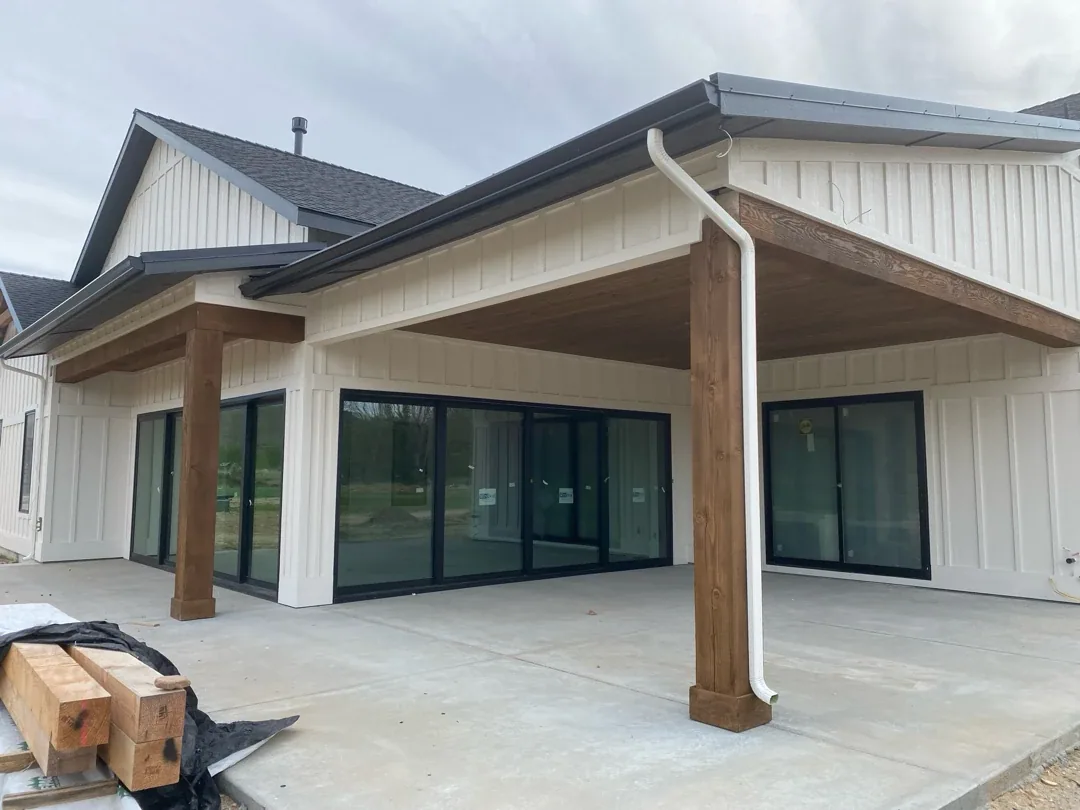
Commercial Roof Edge Metal and Gutters
Corrosion at a gutter hanger can turn a clearing task into an attachment repair. The exposed trough may remain usable while its support needs rebuilding. Edge metal, coping and gutter work in New Braunfels, TX, examines those separate conditions. We assess how the component is secured, how it meets the roofing and where its water discharges. Replacing the visible metal alone may leave a damaged supporting connection unresolved.
Commercial Roofing New Braunfels repairs and replaces perimeter metal, parapet coping, gutters and downspouts. We define the affected assembly before selecting a local replacement quantity. A loose connection may need suitable new securement. Damaged backing can require removal beyond the visible section. Your investment should restore the working perimeter detail, with attention to the material it retains and the drainage route it serves.
Examine the material behind the metal
A loose edge can conceal deteriorated blocking or an unsuitable fastening surface. We assess accessible support and the connections transferring loads into the building. Damaged material needs rebuilding before new metal can perform its role. A stronger exposed component does not correct weak backing. The scope should separate the metal quantity from supporting repair so the owner can compare the complete perimeter correction.
Perimeter systems also need suitable installation details for the applicable assembly and requirements. We evaluate securement, cleats, joints and the relationship to the roofing surface. Where a displaced component has pulled adjoining material, repair of the affected roofing may be needed beside the metal work. That boundary can extend beyond the section initially observed. The inspection establishes where the replacement can meet sound construction rather than leave an unstable transition at its end.
Close the parapet without trapping the defect
A coping joint can admit water into a wall assembly where its connection has failed. We examine the cap, joints, exposed fastening where present and the roof-side flashing. Movement and incompatible repairs can affect those connections. A suitable joint detail must account for the selected system and support. Adding surface sealant may be insufficient where the joint or attachment itself needs rebuilding.
Parapet conditions can also affect adjoining wall flashing repair. Deteriorated substrate or an unsuitable termination needs examination before the new coping conceals it. We assess those interfaces together where they serve the same vulnerable area. The useful correction may retain suitable wall material while replacing the failed connection. Broad deterioration can call for additional work by the appropriate trade, coordinated with the roof detail rather than hidden beneath another metal cover.
Restore the gutter's useful route
Overflow at a gutter can result from debris, poor alignment or a discharge problem. We examine the collection area and the route to the downspout. Cleaning may restore available flow. A distorted trough, failed joint or damaged outlet needs another correction. The gutter's supporting attachment must also remain suitable. Repairing a leaking seam while leaving sagging support can preserve the condition that stresses the new connection.
Downspouts need examination at joints, straps and discharge. Water should leave the collection system through a suitable route rather than return against the building. We coordinate these findings with roof outlet and scupper work where they share a connection. A replacement piece should fit the complete discharge arrangement. The owner can then distinguish debris removal, metal repair and route correction instead of funding them as though they were the same maintenance task.
Match the perimeter to the new roof level
Added insulation changes the height at which the roofing reaches the perimeter. Existing metal may no longer suit that build-up or provide a suitable connection. We examine the proposed finished level before retaining the edge detail. The new assembly may need altered profiles, rebuilding of backing or a different transition. Those quantities belong in the renewal comparison rather than appearing as an unexpected perimeter repair after the field is installed.
For a recover retaining eligible roofing, the same interface review remains necessary. Retaining field material does not automatically make the old edge suitable for the new assembly. We assess the height, attachment and weatherproof transition. A localized edge replacement may support useful retention. Extensive backing or flashing deterioration can make a wider removal boundary necessary. The scope should show those conditions alongside the work that remains in service.
Release exterior work against the approach
Pat Booker Road is Universal City's main commercial thoroughfare. For a commercial property with perimeter work above an occupied approach, exterior access and material handling need a safe release. We inspect the affected detail and identify the work area below. Entrances, loading and pedestrian movement can influence the sequence. The correction should reach the necessary supporting material while keeping the operating boundary clear.
Kirby's northern area includes Old Seguin Road, FM 78 and railroad tracks. At an occupied office property, edge and gutter replacement may need coordination with deliveries or exterior access. A building in Universal City needs its own work arrangement, just as one in Kirby does. We identify the access condition relevant to the repair rather than impose a broad closure where a narrower safe release is workable.
Compare a local section with the adjoining run
Repeated loose connections along a perimeter can make separate spot repairs inefficient. We examine the supporting condition and the material between the affected sections. Sound adjoining construction may allow defined replacements. A deteriorated run can justify a larger rebuilding phase. The comparison includes preparation, access and support, not just the length of metal that appears damaged. Those drivers determine what the repair would actually restore.
Comal County's summer humidity and heat affect preparation where repair materials have particular application requirements. Suitable conditions matter at membrane transitions and sealed connections. We include that work in the release plan. After repair, continued perimeter and drainage care can identify future changes. The next inspection should examine the repaired boundary and the retained adjoining material, so a local correction does not leave the remainder of the perimeter outside the renewal decision.
Commercial Roofing Questions
Should I replace a gutter if its brackets are failing?
Examine the trough and its support separately. Suitable gutter material may remain useful where the attachment can be rebuilt properly. Corrosion, distortion or failed joints can change that choice. We identify the backing and connection needed for the retained or replacement component. The repair scope should restore stable support as well as discharge, rather than treat the visible trough as the only affected material.
Can coping leaks be resolved with another bead of sealant?
Joint movement, attachment and the underlying flashing need assessment. A compatible seal may belong in a suitable detail, but it cannot rebuild an unstable joint or damaged support. We examine the full connection and identify the local correction. Where water has affected concealed material, additional work may be needed before the cap closes the parapet again.
Why would edge replacement include nearby membrane work?
The metal and roofing meet at a weatherproof transition. Displacement or removal can affect that adjoining material, and a new profile may need a different connection. We examine its condition before setting the boundary. Suitable membrane can remain where the new detail connects properly. Damaged or incompatible material needs rebuilding as part of the same perimeter correction.
What changes if new insulation raises the roof beside existing coping?
Compare the finished surface with the cap and roof-side flashing. Reduced flashing height or an unsuitable transition can require altered metal or rebuilding beneath it. We assess those interfaces before installation. Retaining the cap may remain practical where the connection is suitable. The renewal decision should include any necessary perimeter change rather than presume the old profile can accommodate the added build-up.
How should I compare several damaged edge sections?
Inspect the backing and joints between them. Isolated defects on sound support may suit local replacements. Repeated deterioration can favor a broader run of rebuilding. Access and handling also affect the comparison. We define what each option retains and restores, allowing you to fund measured work rather than choose a quantity solely from the visible damaged lengths.

Commercial Roof Edge Metal and Gutters