Commercial KEE Roofing
Residual incompatible sealant at a KEE detail can change the repair boundary. A new compatible flashing needs a suitable surface to meet. KEE roofing in New Braunfels, TX, requires examination of that earlier treatment and the membrane around it before another repair is applied. We determine what must be removed and which material remains useful. The investment should restore the connection, rather than cover an unsuitable interface with a larger patch.
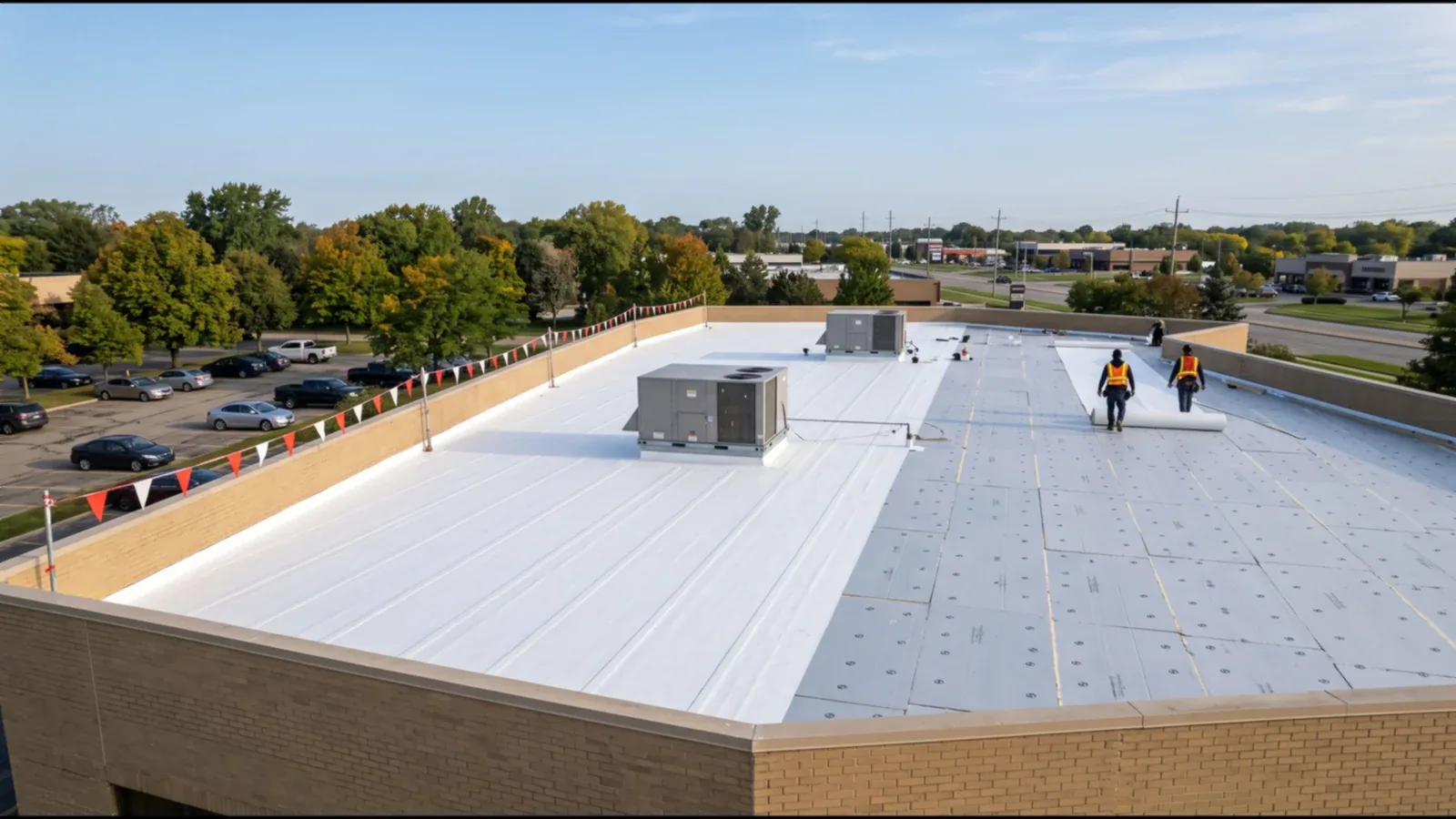
Commercial Roofing New Braunfels installs and repairs KEE thermoplastic roof assemblies. We assess the sheet, joining method and support alongside the roof's operating exposure. KEE membrane formulations have their own system requirements. Material identification and compatibility therefore belong ahead of the repair choice. The owner can compare a local correction, an eligible retained-layer option or broader renewal from the actual assembly condition.
Remove the treatment that obstructs the connection
An earlier repair can leave contamination or material unsuitable for the membrane's joining method. We examine the treated area and the sheet beside it. Cleaning may provide a suitable surface where the system requirements permit it. Degraded material or an incompatible repair may need removal. The useful boundary must reach roofing that can accept the new connection, rather than simply follow the visible outline of the old seal.
We assess local membrane and detail rebuilding against that boundary. Removal can expose damaged board or wet insulation requiring its own correction. Those quantities should remain distinct from the new flashing material. The owner needs to see what will be rebuilt beneath and around the connection. Adding another treatment over an unsuitable old repair can leave the same bonding or joining problem concealed within a larger work area.
Compare the formulation with the exposure
KEE membranes use a thermoplastic alloy formulation whose material properties and installation requirements need assessment for the proposed assembly. Operating exposure matters at equipment, exhaust and service routes. We examine contact materials and the conditions the roof is expected to receive. The chosen sheet and repair components must suit those demands. A general material preference cannot replace the compatibility review at the actual working detail.
We compare a PVC membrane option where it belongs in the same investment decision. A TPO assembly alternative also needs its own preparation and exposure assessment. The useful comparison includes installation, repair and support quantities for each method. It should not treat different formulations as interchangeable merely because their finished surfaces appear similar. Material identification can change the scope before removal or preparation begins.
Establish the seam before releasing field work
A heat-welded KEE connection needs appropriate preparation, compatible material and suitable installation conditions. We examine the receiving surface and joining area before defining a repair. Equipment can restrict access at corners or closely grouped penetrations. The detail may need alteration or local removal to provide a workable connection. A suitable sheet choice still requires sufficient access to install its seam and flashing correctly.
We assess trial preparation or joining where needed to evaluate the method. The adjoining assembly should also remain stable beneath the repair. A rebuild at a raised roof opening may involve termination, securement and height changes beyond the weld. The owner should compare the complete connection with the field work. Resolving only the visible lap can leave movement or an unsuitable termination outside the repair boundary.
Inspect the layer the new sheet would conceal
Soft support or suspected moisture can change a KEE renewal decision. We examine the layers where their condition controls retention. An intact surface may need openings or suitable further investigation beneath it. Wet insulation and deteriorated board require assessment of their removal boundary. The proposed membrane should receive a suitable assembly rather than close uncertainty that would have changed the owner's work approval.
We connect supporting layer replacement with attachment and drainage. A cover board must suit the installation method and material requirements. Added insulation can change heights at walls and curbs. Those interfaces need assessment before the field is completed. The rebuilding quantity should account for suitable support, the new surface and its connections, with eligible retained material identified separately from layers that have lost their useful condition.
Protect the occupied use during detail correction
Geronimo includes antique businesses and a VFW meeting and dance facility. For an occupied commercial property, goods and gathering areas beneath a roof opening can affect the release of repair work. We examine the relevant detail and the activity below it. A narrow correction may still need temporary protection and controlled material handling. The size of the patch alone does not establish the practical occupied boundary.
Marion's businesses include a hardware store and a meat market. For KEE work above retail use, equipment and entrance access can influence preparation and removal. A property in Geronimo needs a separate release from one in Marion. We define the receiving material and work boundary for the actual building. The roof investment should restore useful weather protection while keeping the operating consequences of that correction clear.
Choose the phase from the remaining construction
Repeated incompatible repairs can make field-wide retention less useful than the visible sheet suggests. We assess the condition between affected details and the work needed to establish suitable connections. Some areas may support localized rebuilding. Others may need a wider removal phase. The comparison should account for preparation, support correction and access rather than the new membrane quantity alone.
Where a broader roof replacement is appropriate, we identify the layers and interfaces that need rebuilding. Summer weather in Comal County is humid and hot, which affects preparation planning at the surface. Installation requirements still control the usable work window. Planned equipment changes can also alter the phase. The owner's next allocation should produce a suitable KEE assembly and accessible repair details, with older construction retained only where its condition supports the chosen method.
Commercial Roofing Questions
Why can a previous sealant repair make KEE work more extensive?
The old material may prevent suitable joining or conceal degraded sheet beneath it. We examine the receiving surface and determine whether preparation can restore a useful connection area. Removal may need to extend beyond the visible seal. Supporting damage can add another rebuilding quantity. The useful repair boundary follows compatible, suitable material rather than the dimensions of the earlier treatment alone.
Can I approve a KEE repair before the installed membrane is identified?
Material identification is important to compatible preparation and joining. Existing installation information and examination can help establish the assembly. We assess the repair components against it before proceeding. A similar-looking sheet may need different treatment. The work approval should connect the chosen material with a suitable receiving surface, so the correction does not introduce another incompatible layer at the same detail.
What matters besides the membrane formulation in a renewal comparison?
Compare attachment, support condition, drainage, raised details and preparation. The sheet must work within a suitable assembly. Wet layers or insufficient flashing height can change the rebuilding scope regardless of formulation. We identify those quantities alongside material selection. The owner's decision should reflect the construction that remains after the work, not only the stated properties of the exposed membrane.
Should scattered incompatible patches trigger full removal immediately?
Examine their distribution and the condition between them. Localized unsuitable repairs may be removed and rebuilt where the surrounding assembly remains useful. Broad contamination, deterioration or damaged support can move the decision toward a larger phase. We compare those removal and preparation quantities with renewal. The recommendation follows what each method can retain suitably, rather than a count of visible previous repairs.

Commercial KEE Roofing