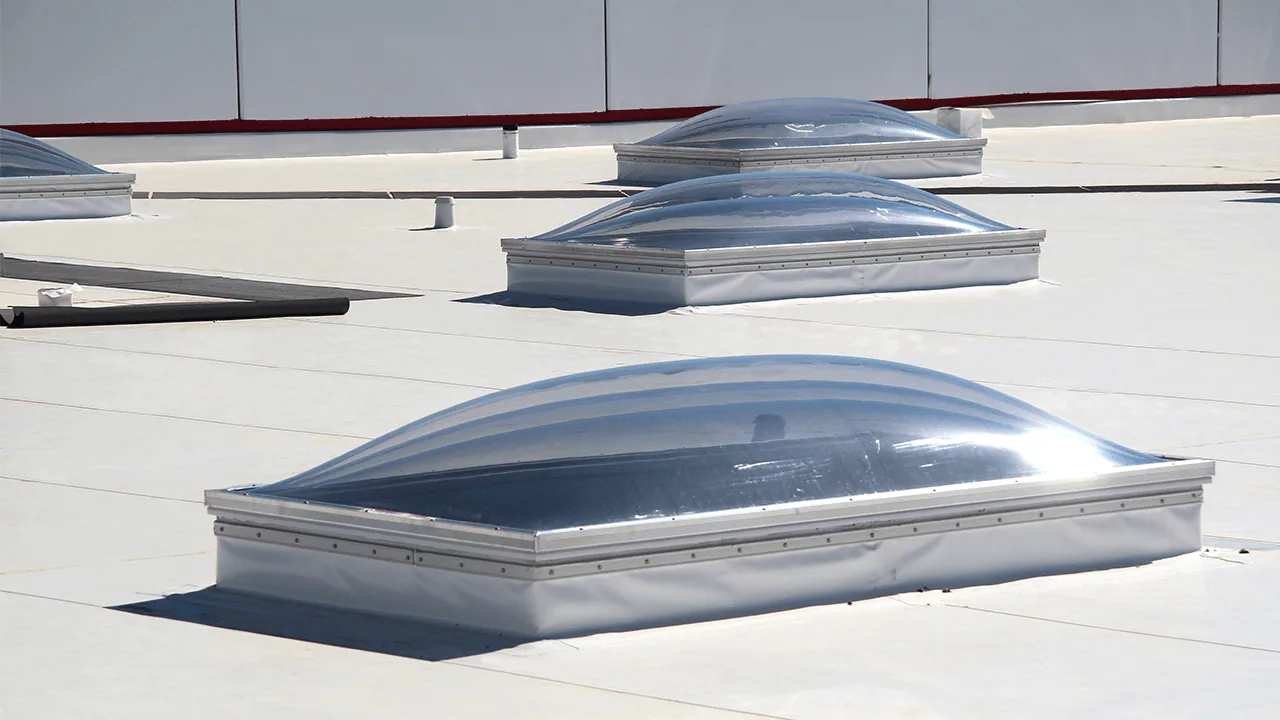
Commercial Skylight and Penetration Flashing
A cracked skylight dome changes the repair choice from membrane patching to the glazing assembly. The roofing connection may need examination, but it is a separate component. Skylight and penetration flashing work in New Braunfels, TX, identifies which part has failed before assigning a rebuilding quantity. We inspect the raised detail, adjoining material and exposed connections. The repair should restore the component admitting water and any affected assembly beneath it.
Commercial Roofing New Braunfels repairs roofing interfaces at skylights, equipment curbs, pipes and other penetrations. We distinguish glazing, equipment and roofing questions where they overlap. A suitable membrane patch cannot correct a damaged dome or an unstable support. The owner can then compare a local flashing rebuild, component replacement or another correction without funding an unrelated surface treatment at the nearest visible roof feature.
Separate the glazing from the roof connection
Water around a skylight can involve the glazing, frame, curb or membrane flashing. We examine accessible components and the pattern of entry. Cracks, failed seals and damaged frame connections need assessment in their own right. The raised curb must also provide suitable support and a workable roofing transition. We identify the affected component so the repair method matches the condition rather than treating the entire opening as one membrane defect.
The adjoining roof may also need rebuilding where water has affected underlying layers. We assess that area with targeted leak investigation where the entry remains uncertain. A skylight opening requires safe access and protection during examination. Occupied space below influences the work release. Suitable closure should address both the glazing or frame correction and the roof-side detail when both are affected, with each work quantity clearly separated.
Fit the flashing to the moving penetration
A pipe crossing the membrane creates a connection between components that can move differently. We examine the flashing method, termination and surrounding material. An incompatible or deteriorated repair can split where movement concentrates. The detail may need replacement with a suitable system component or compatible formed flashing. Surface sealant alone cannot restore damaged material or an unsuitable termination arrangement.
Closely grouped penetrations can complicate that work. Adequate access and suitable connection surfaces matter between the pipes as well as around their outer perimeter. We assess the specific configuration before choosing the repair. A TPO flashing connection and another membrane system have different joining requirements. The installed roofing determines material compatibility and preparation. The useful correction reaches sound material and accommodates the actual penetration arrangement.
Check the curb against the finished surface
A curb with limited flashing height can become unsuitable when insulation is added. We compare the proposed roof elevation with the equipment or skylight connection. A curb extension or replacement may be required before the new roofing is installed. The detail should also preserve service access and a suitable termination. Retaining the old component is useful only where it can support the finished assembly properly.
We coordinate equipment curb and support work with the roofing correction where needed. An equipment lift or interruption can affect timing and handling. Those tasks belong in the investment comparison before a roof release is agreed. Altering the surrounding surface first can leave the owner facing another opening to rebuild a curb that no longer has adequate height for its new connection.
Examine the uphill side of the opening
Water collecting behind a broad curb can stress the adjoining flashing. We assess the roof slope and the route toward discharge. A cricket or tapered correction may direct water around the obstruction where the geometry and assembly allow it. The new shape still needs suitable connections at the curb and field. A flashing repair that leaves the same retained-water condition can remain exposed to the problem that contributed to failure.
Drainage work may therefore belong beside the repair of a failed flashing detail. We examine the supporting layers as well as the surface. Wet insulation or damaged cover board can affect the rebuilding boundary. The owner should see which material needs removal and what can remain. A larger patch around the curb does not improve the discharge route or restore an unsuitable base beneath the repair.
Plan openings above the actual occupied use
Bulverde contains private schools including Living Rock Academy and Bracken Christian School. For a roof opening above educational space, the work release needs to account for occupation beneath the detail. We discuss safe access, temporary protection and the activity requiring separation from the repair. An opening over a room that can close has a different practical sequence from one above a continuously occupied area.
For penetration work above healthcare operations, interior sensitivity and equipment connections can influence the rebuilding method. A property in Bulverde still needs its own assembly and access assessment, just as a medical property in Live Oak does. We tie the work boundary to those conditions rather than use a broad property label to set the repair scope.
Rebuild the interface before the next alteration
Planned equipment replacement can reopen a penetration decision. Rebuilding a curb connection shortly before its removal may create avoidable repeat work. We examine the present failure and the timing of the planned alteration. Immediate entry may need a suitable local correction while a larger interface change is scheduled. The investment comparison should identify what that repair restores and what will change when the equipment work proceeds.
Heat and humidity during Comal County summers affect suitable preparation conditions for roofing materials. Surface dryness and installation requirements need examination at the work area. For roof renewal above occupied buildings, skylight and penetration details belong in the release sequence alongside the field work. A new surface should not close an unresolved interface. We define the component, retained material and necessary connection so the renewal expenditure addresses the complete opening.
Commercial Roofing Questions
Why would a skylight repair include work outside the membrane?
The dome, frame or curb can admit water independently of the roof-side flashing. We assess those components before selecting the correction. Rebuilding only the membrane can leave a glazing defect unresolved. Where both are affected, the scope should identify each component and its connection. That makes the expenditure useful for restoring the full weather protection at the opening.
Can a low equipment curb stay during an insulation upgrade?
Compare its available height with the proposed finished roof level and connection requirements. Added insulation may leave too little height for suitable flashing. We assess extension or replacement before installation. Equipment access and support also need review. The useful retained curb is one that can serve the new assembly, rather than one kept solely to reduce the initial material quantity.
What if several pipes are too close for ordinary flashing work?
The configuration needs assessment for a suitable detail and workable installation access. Grouped penetrations can require a different connection method from isolated pipes. We examine the roofing material, pipe movement and available joining surface. The correction should fit those conditions. Applying the same seal around a crowded group can leave inaccessible joints and unsuitable connections within the repair boundary.
Should ponding behind a skylight curb be addressed with its flashing repair?
Assess the retained-water condition before closing the new detail. Suitable tapered work or a cricket may improve discharge around the opening. The assembly and outlet levels determine the useful geometry. We identify that drainage quantity beside the flashing correction. Restoring only the exposed connection can leave the same prolonged water exposure at the repaired area.
How does a planned equipment change affect a leaking penetration today?
Active entry still needs a suitable protection or repair decision. We compare that immediate work with the interface that will be altered later. A narrow correction may serve until the planned replacement, where its condition supports that choice. Broader damage can require more rebuilding now. The scope should distinguish the material restored today from the connection scheduled to change.

Commercial Skylight and Penetration Flashing