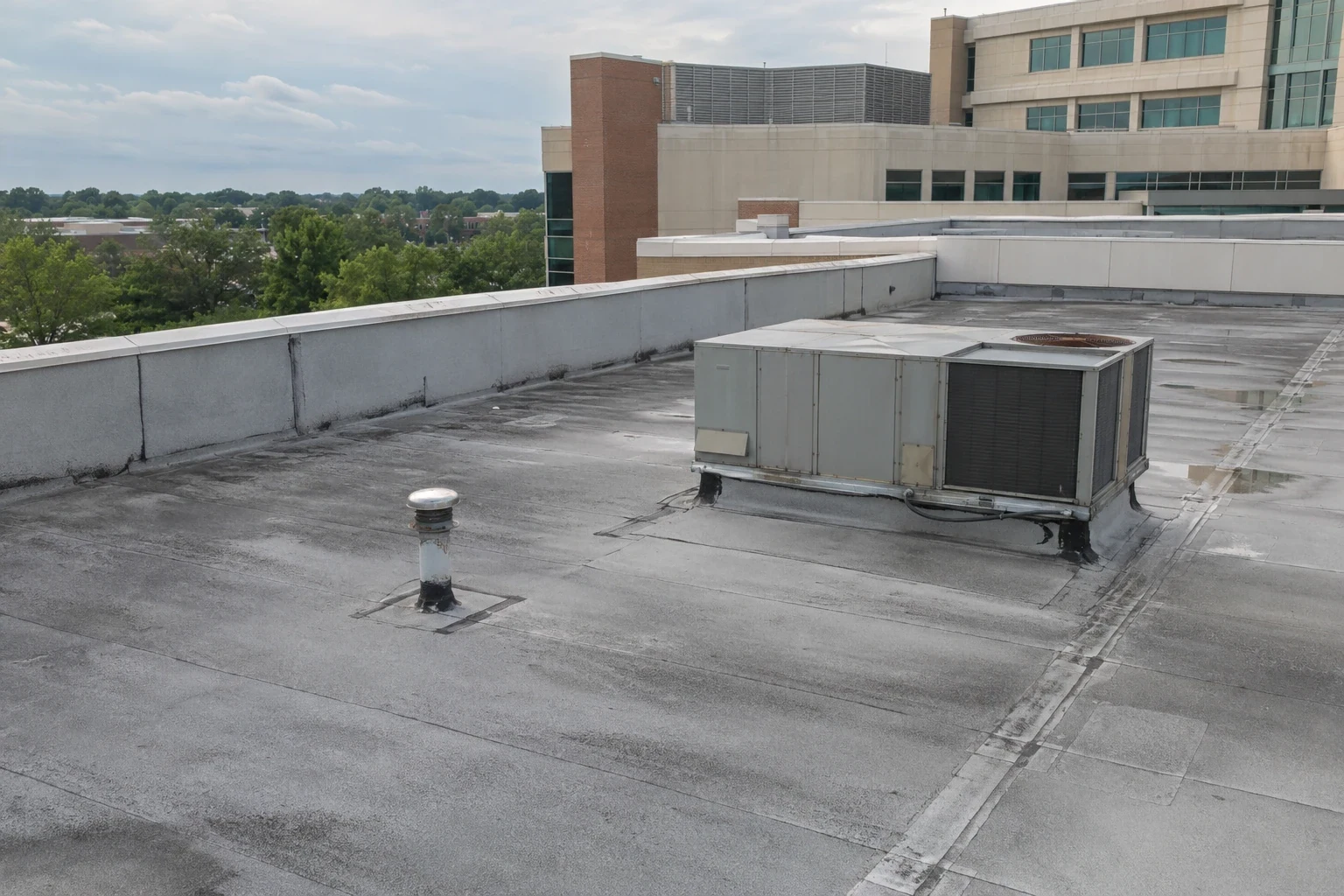
Hospital Roofing
A separated upper parapet coping splice can admit water into the wall cavity while the adjoining roof membrane remains useful. Funding a field replacement before examining that joint can leave the entry untreated. Hospital roofing in New Braunfels, TX, starts with the affected metal connection and its receiving construction. We assess attachment, joint movement and the weatherproofing beneath the cap. The owner can compare a defined perimeter correction with any separate concealed-layer rebuilding that the examination establishes.
Commercial Roofing New Braunfels repairs and renews roofing serving hospital and medical use. An exterior connection above occupied care space needs a complete closure and an appropriate work release. We identify the roof-side repair and coordinate adjoining wall or metal work with the relevant trade. Clinical protection, handling and temporary weather closure belong in that allocation. Useful field material can remain where its condition and the proposed assembly support retention.
Distinguish the roof connection from the piping failure
A roof drain includes the membrane or flashing connection at its bowl and the drainage components below. We examine accessible roofing at the outlet and inspect surrounding material. A damaged flange connection needs roofing correction. A separated or leaking pipe below an intact roof detail needs assessment by the appropriate trade. Both can occur together, so the work boundary should follow the observed conditions rather than choose one component from the interior location alone.
We connect roof drain detail repairs with the related drainage review. Drainage capacity or altered geometry may need appropriate design assessment. A repair should restore the affected connection and leave access for service. Where roofing remains useful, it may be retained. The owner should compare the actual membrane quantity with any piping correction so each expenditure resolves its own damaged component.
Set the release for the affected hospital area
A roof opening above hospital use can require a work boundary tied to the clinical area and equipment it serves. We coordinate the proposed task with the building operator's protection and access requirements. Handling routes, temporary closures and permitted work methods need assessment. The roofing boundary still must reach unsuitable material. The useful release allows that complete correction without relying on an unexamined separation between connected operating areas.
Adjacent outpatient and medical office areas may have different restrictions from other hospital space. We assess the specific operation beneath the work. For roof renewal over continuing medical use, phased removal can be useful where the assembly and protection arrangement allow it. Each phase adds transitions and closure tasks. The owner should compare those quantities with a wider released area before choosing the sequence.
Measure lower-layer damage separately from immediate entry
Water from a failed roofing connection can affect insulation beyond the visible opening. We investigate suspect material where it changes the removal decision. Accessible details and selected test openings can establish the construction and condition. A surface repair may control further entry while damaged hidden layers still require rebuilding. Those quantities should be identified before the new detail closes access to them.
We use appropriate roof moisture investigation where the assembly and conditions suit the method. Thermal indications need physical confirmation when they affect retention. Suitable dry material can remain where the proposed system allows. Wet or deteriorated support needs its own removal boundary. The investment should distinguish the immediate entry correction from concealed damage so the finished surface does not preserve an unsuitable receiving assembly.
Complete mechanical interfaces before equipment limits access
A new housing or changed support can make a formerly accessible flashing edge difficult to reach. We examine the proposed arrangement, curb height and retained construction before the equipment is installed. Support changes may need structural or design review. The roofing detail also needs a complete material connection. Equipment positioning should allow that work to be finished before the interface becomes concealed.
We coordinate hospital equipment roofing details with the mechanical sequence. A building containing equipment-dependent data operations can have additional connections affecting its work release. Those actual dependencies need assessment with the building operator. The next expenditure should include the relevant interface correction and receiving layers, not only the main field roofing. Suitable material elsewhere remains a separate retention decision.
Assess the medical building within its regional operation
Seguin has a regional hospital and serves as Guadalupe County's county seat. Hospital roof decisions there need the affected operation connected with its examined roof assembly. We assess drainage details, equipment interfaces and the layers proposed for retention. A localized repair may be suitable where the adjoining construction remains useful. The operating release should accommodate the complete correction and any related trade access.
For a building in Seguin or Live Oak, we identify the actual care area beneath proposed roof work. The inspection finding establishes the roofing quantity, while the building operator's requirements establish appropriate operating protection. Roof work over that type of clinical use needs the specific equipment and occupied-area restrictions assessed before removal is released.
Compare local rebuilding with the retained hospital roof
A defined drain or flashing failure can be corrected on suitable field construction. Broad moisture, weak attachment or repeated defects across deteriorated material can favor a larger phase. We examine the roof between problem areas and identify what each repair would retain. The useful comparison includes lower-layer rebuilding, access and weather closure. A field replacement should not be funded to resolve a piping defect that remains outside its scope.
We connect hospital roof condition findings with the next building allocation. The identified details and material boundaries distinguish roofing work from related building corrections. Planned equipment changes can affect which connections should be rebuilt during renewal. The owner can then compare immediate protection with the wider assembly decision. Each option should show the useful material retained and the complete correction needed for the affected roof, not merely a different surface installation.
Commercial Roofing Questions
Should roofing be removed where water comes from a pipe below an intact drain connection?
Assess the piping defect with the relevant trade and examine the roofing independently. Useful membrane and support may remain if their connection is suitable. Damaged roof material still needs its own correction where found. We separate those quantities before recommending removal. The owner should fund the component requiring repair rather than assume that replacing the roof surface will resolve a lower piping failure.
Can hospital roof repair and drainpipe work share one release?
A coordinated sequence may be useful where access and operating requirements overlap. We identify the roofing boundary and coordinate the related trade's needs with the building operator. Each component still requires its own complete correction. The work release should provide protection and suitable access for both tasks. Combining their timing should not conceal an unresolved roof connection or leave the piping repair inaccessible.
What if clinical restrictions permit only a small roof opening?
Compare that release with the material requiring removal and a practical closure method. We assess whether narrower phases can reach and rebuild the full damaged area. Additional transitions and handling belong in the comparison. An operating restriction should not lead to unsuitable layers being retained inside the finished repair. Another sequence or release may be needed to complete the assembly correction properly.
How should hidden moisture influence the hospital renewal quantity?
Establish the suspect area through appropriate investigation and confirm material condition where it changes retention. We separate the damaged lower layers from suitable adjoining construction. The removal boundary may extend beyond the visible entry detail. A fresh surface cannot rebuild those concealed layers. The proposal should compare complete local rebuilding with any wider renewal phase, including the clinical release required for each choice.
When is equipment preparation worth including before wider roof renewal?
Review the planned installation's effect on access, support and flashing height. Related interface work can be useful before new roofing closes the connection. We identify the material and design requirements at that junction. Unrelated field deterioration needs its own assessment. The next investment should resolve actual shared assembly work rather than combine tasks without showing which retained layers and operating releases they affect.

Hospital Roofing