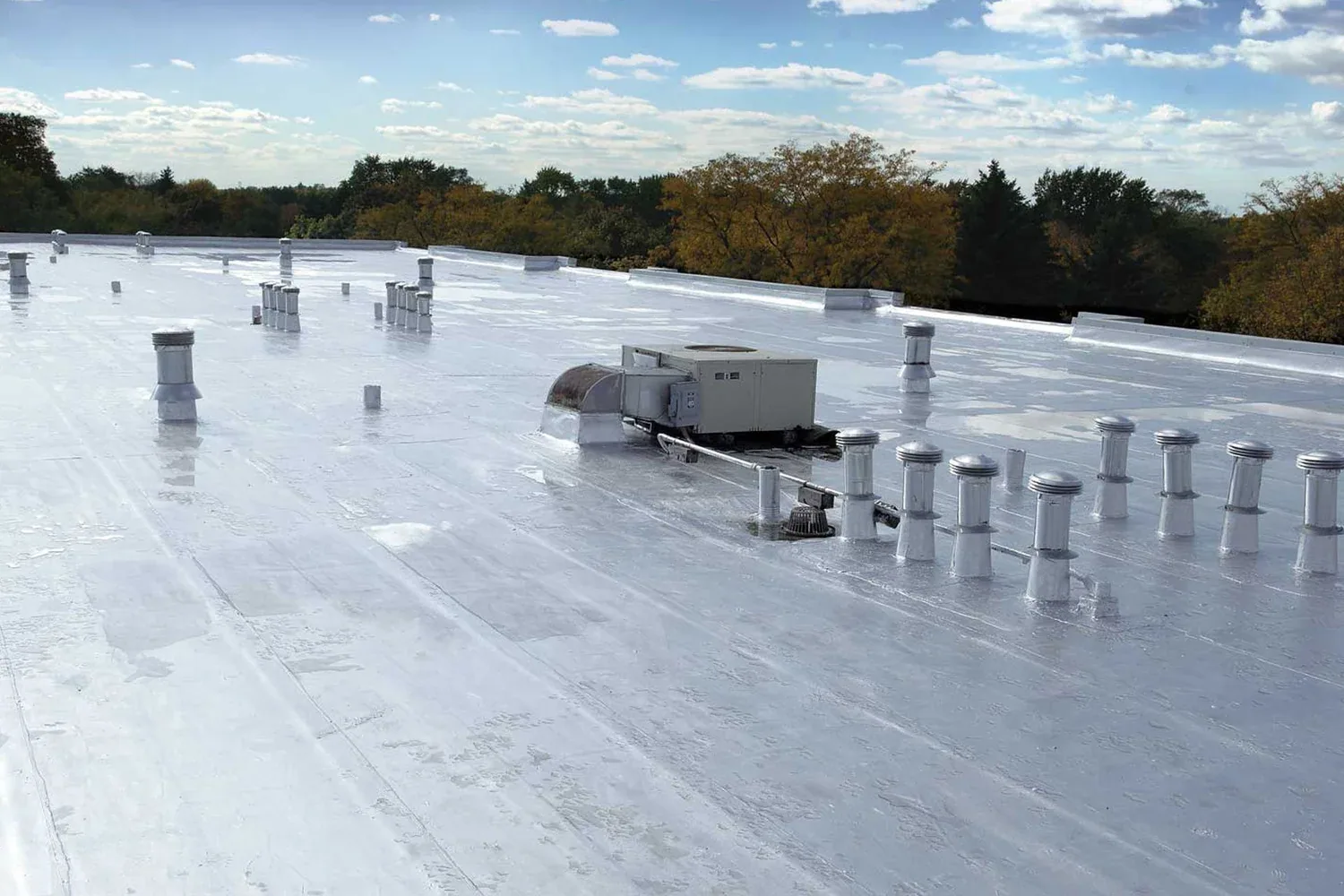
Commercial Roof Drains and Scuppers
A leak below an intact drain bowl puts the internal connection in the work assessment. Roofing and plumbing need separate repair quantities where both are affected. Roof drain and scupper work in New Braunfels, TX, examines how water reaches an outlet and how the connection discharges it. We separate blockage, poor geometry and damaged flashing. Each condition creates a different work quantity and a different investment decision.
Commercial Roofing New Braunfels repairs drainage details and evaluates ponding corrections on commercial roofs. The scope can include drain connections, scuppers, tapered insulation and crickets. We examine the existing assembly before choosing the correction. A suitable outlet still needs a workable approach. A sloped field still needs a dependable connection. The useful repair treats those elements together where they control the same drainage problem.
Inspect the connection below the strainer
Debris removal can expose a deteriorated drain connection that was hidden from a roof walk. We examine accessible drain components, clamping details and the surrounding membrane. Damaged material at the bowl can require rebuilding. A loose or unsuitable connection needs correction appropriate to the assembly. Where an internal drain line is obstructed or damaged, the relevant plumbing work also needs coordination with the roof detail.
A scheduled drainage maintenance task can clear obstructions and identify a changed condition. It cannot restore a failed drain body or correct an unsuitable sump. We distinguish those needs before recommending another cleaning visit. A drain that receives water but leaks at its connection creates a repair decision. A drain that cannot discharge the incoming water creates a different investigation, with attention to the route beyond the roofing surface.
Match the opening to the finished surface
A wall outlet needs a suitable relationship to the roof level and the water route approaching it. We examine the scupper elevation, lining, flashing and discharge. Added roofing layers can alter the original relationship. A low pocket beside the opening may require a local rebuild. The new connection should provide a suitable weatherproof transition through the wall without obstructing the intended discharge path.
Exterior collection heads and downspouts also affect that path where present. Loose attachments, leaks or blocked discharge can return water to the building exterior. We coordinate gutter and downspout work with the scupper correction where both are involved. The owner should compare the complete outlet route rather than a membrane patch around an opening. A suitable roof connection cannot compensate for an unresolved obstruction beyond it.
Move water around the obstruction
A broad equipment curb can interrupt the route toward a drain. Water may collect behind it even when the surrounding roof has useful slope. We assess the geometry and whether a cricket or tapered area can direct water around the obstruction. The correction needs compatible supporting layers and suitable flashing at its boundaries. Adding shape without addressing the connection can exchange one vulnerable detail for another.
Where low areas result from deteriorated material, removal may precede the slope correction. A tapered insulation rebuild should fit the surrounding assembly and outlet elevation. We consider finished flashing heights at nearby equipment and walls. Raising the field can reduce the available height at those interfaces. The useful scope makes the drainage improvement and the resulting connection changes visible in the same investment comparison.
Examine the alternate discharge route
A blocked primary outlet can leave water accumulating on the roof. We assess the available overflow provisions and their relationship to the finished surface. Capacity, elevations and structural loading questions may require appropriate design review. The remedy follows the applicable requirements and the actual building geometry. Installing another opening without assessing its role can leave the roof's drainage demand unresolved.
Heavy rainfall near New Braunfels in 1998 included moisture associated with Pacific Hurricane Madeline. Rainfall exposure makes primary and alternate discharge routes a practical examination priority. We check current outlets, obstructions and accessible supporting material before defining the rebuilding area. A defined ponding correction may involve more than drainage cleaning. The inspection should establish whether the retained water comes from blockage, surface geometry or another condition requiring work.
Protect the path beyond the roof
Wimberley Square includes shops, galleries, antique businesses and restaurants. At an occupied commercial property, the drainage route must account for discharge near entrances and exterior activities. We inspect the roof outlet and the connections carrying water away from it. A correction that moves water off the membrane can still leave an unsuitable discharge beside an occupied approach. That exterior relationship belongs in the work assessment.
Marion has restaurants, a hardware store and a meat market along with other businesses. For drainage work above commercial retail use, access and falling debris can affect the release of an outlet repair. A property in Wimberley may need a different work arrangement from one in Marion. We establish those operating conditions while defining the drainage repair, so the useful correction and the safe installation sequence remain connected.
Set the drainage quantity before reroofing
A planned renewal offers access to low areas and concealed outlet connections. We examine those conditions before the new assembly closes them. Leaving an unsuitable drain elevation beneath a replacement membrane can preserve the same ponding problem. Rebuilding the sump, altering tapered material or replacing a damaged outlet may be useful at that stage. Those quantities should appear beside the main roofing scope.
Cost drivers include access to internal connections, wet-layer removal, supporting repairs and work at wall outlets. Exterior handling can also influence the release. We compare those items with the broader replacement expenditure where renewal is planned. A local drainage correction can remain worthwhile where the rest of the roof is suitable. The decision should follow the affected geometry and layers, with the future roof surface designed to preserve the useful water route.
Commercial Roofing Questions
Why does water remain beside a clear scupper?
The opening may sit above a local low area, or the approach may have unsuitable slope. We examine those elevations and the surrounding assembly. Clearing debris restores only the discharge that the geometry permits. A local rebuild, tapered correction or altered connection may be needed. The useful work should address the retained pocket rather than repeatedly clean an outlet that is already unobstructed.
Can a cricket solve water collecting behind rooftop equipment?
Suitable geometry can direct water around an obstruction, but the supporting layers and adjoining flashing also need assessment. We examine outlet levels and the available height at nearby curbs. A cricket that creates another low pocket or reduces flashing height can leave a new problem. The correction must fit the complete water route and the assembly that supports it.
Should a leaking drain body be repaired by roofing work alone?
The roof connection and the internal drainage components need separate examination. A damaged drain body or line may require the appropriate plumbing correction, coordinated with rebuilding the roofing detail. We identify that interface before closing the membrane. Repairing only the exposed flashing can leave the internal defect unresolved, while internal work without a suitable roof connection can create another entry path.
Is adding an overflow opening always the next step?
Assess the existing provisions, capacity needs, elevations and applicable requirements first. The role of a new opening must be established for the actual building. Structural and drainage design review may be necessary. We connect the proposed outlet work with that assessment. Another opening is useful only where its position and discharge contribute to a suitable drainage arrangement.
What should be checked before new insulation raises the roof level?
Compare the proposed surface with drains, scuppers, equipment curbs and adjoining wall details. Changed elevations can obstruct discharge or reduce flashing height. We assess those relationships before the new material is installed. The renewal scope can then include the necessary outlet and interface corrections, rather than discovering that the finished surface has retained an old drainage problem or created another one.

Commercial Roof Drains and Scuppers