Commercial Roof Leak Repair
Water returning after a curb repair changes the next investigation. Repeating the same seal leaves the failed assumption in place. Commercial roof leak repair in New Braunfels, TX, starts by examining the suspected entry and the adjoining connections. We use the interior evidence, roof condition and weather history together. The repair expenditure should follow the water path we establish, rather than the detail that received the last patch.
Commercial Roofing New Braunfels traces active leaks and repairs the roofing assembly they affect. We distinguish immediate water control from the work needed to restore a suitable connection. Concealed moisture may require removal beneath that connection. Where water threatens occupied space before a permanent repair can proceed, urgent roof stabilization can protect the affected area while the lasting correction is assessed. We take urgent leak calls at night, on weekends and holidays, keeping stabilization separate from permanent repair.
Use the leak pattern to narrow the opening
Dripping that follows prolonged rain suggests a different investigation from water appearing only during equipment operation. We examine the timing, affected rooms and visible roof conditions. Interior observations can help define a search area. Roof-level examination then checks seams, penetrations, flashing and drainage. Water can travel along the assembly or supporting construction before reaching the interior. The examination must account for that movement.
A suspect equipment connection also needs review of the unit and its drainage. Condensate, plumbing or exterior wall entry can resemble a roofing leak. We separate those possibilities where the evidence calls for it. Suitable controlled testing may help isolate a connection when conditions permit. The test needs a specific purpose and a safe water application. Flooding a broad suspect area can obscure the finding and add water to an already affected assembly.
Open the connection that needs rebuilding
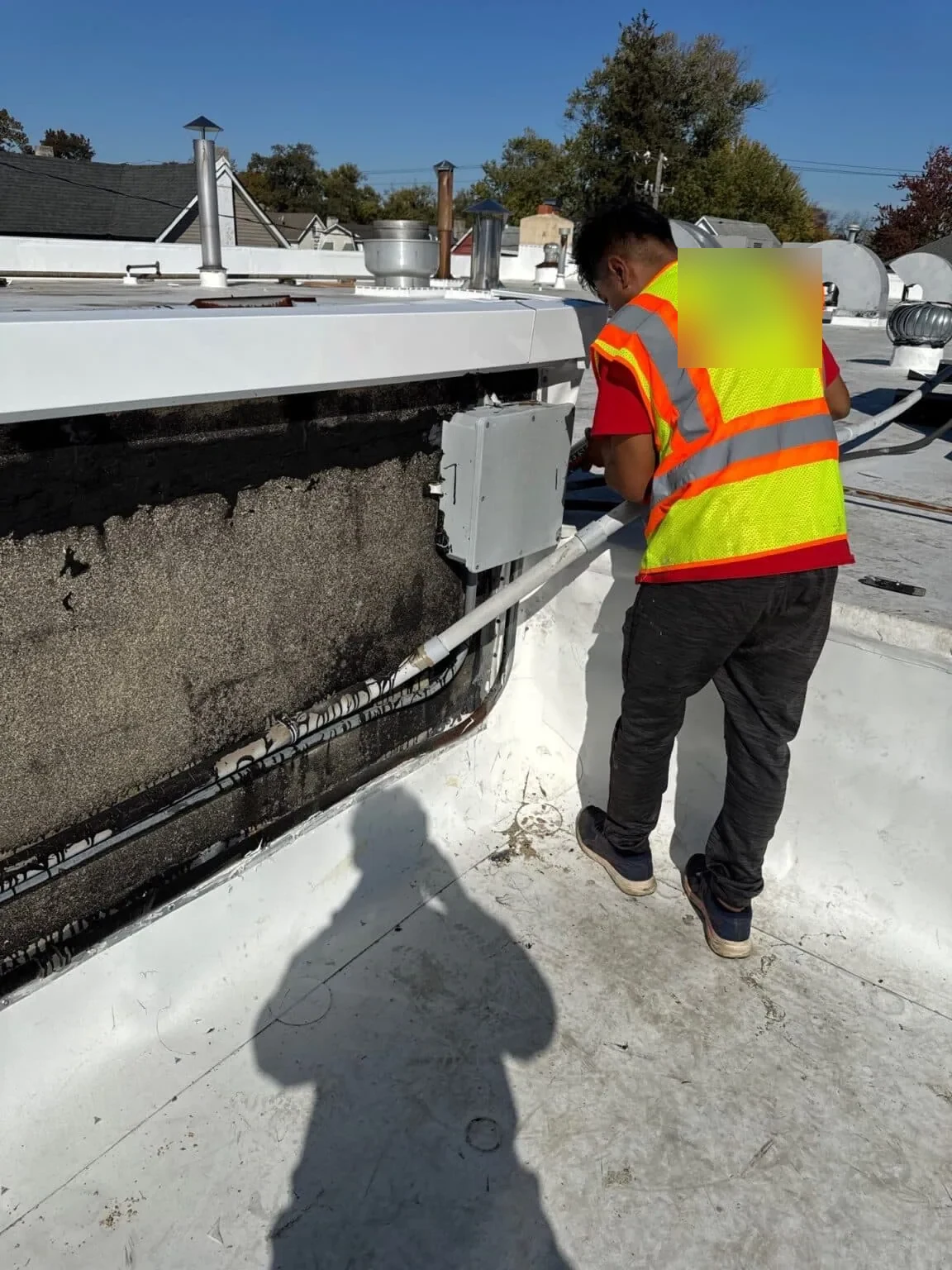
Loose flashing at a penetration can admit water beneath otherwise serviceable roofing. We examine securement, laps, corners and the interface with the equipment or pipe. An exposed seal may be one part of the failure rather than the complete repair. Damaged flashing can need replacement with compatible material and a suitable termination. Movement and insufficient height must also be addressed where they contribute to the opening.
We evaluate penetration and skylight flashing repairs against the actual assembly. An aged curb, a cracked dome and an open roof flashing joint involve different corrections. The scope should identify which component failed. Treating every leak near a skylight as a membrane defect can spend the repair budget without restoring the weather protection. We connect the repair method to the tested or observed failure rather than the nearest visible feature.
Separate water entry from damaged layers
Soft insulation beside a leaking detail changes the work below the surface. We examine its condition and the adjoining layers before closing the repair. Wet insulation can compromise thermal performance and leave unsuitable material beneath a new patch. Damaged cover board or deck also needs attention. The removal boundary follows the affected material and the sound surface needed for a suitable repair connection.
A leak investigation can identify one entry point without mapping all moisture beneath the roof. Where broader moisture distribution would change the repair decision, an infrared moisture investigation may be useful under suitable conditions. We confirm suspect findings with appropriate physical examination. The owner can then compare a defined local rebuild with a larger renewal area. Closing the entry and restoring affected layers are related tasks, but they are not interchangeable.
Check what holds water against the detail
A clogged outlet can keep water against seams or flashing longer than intended. We examine the outlet, its connection and the route approaching it. Clearing an obstruction may improve drainage. It still leaves any damaged roofing connection to be repaired. A low spot or inadequate slope needs its own assessment. Installing a larger patch around a drain does not correct the geometry that retains water.
Drainage pressure can also expose a weak joint that otherwise appears quiet between storms. We examine overflow paths and nearby openings as part of the affected area. Where standing water contributes to deterioration, correcting a ponding condition belongs in the repair comparison. Your investment should distinguish the immediate leak closure from the drainage correction needed to reduce repeat exposure. Deferring the second task should be a deliberate building decision.
Protect the use beneath the leak
Downtown New Braunfels has cafes, galleries and music venues. Water over merchandise, electrical equipment or an occupied seating area can change the repair priority. We locate the affected roof area and discuss protection beneath it. Roof work needs to account for the use directly below the opening. An interior area that can close briefly offers a different work release from one that needs continuous occupation.
Restored buildings in the Gruene Historic District serve shops and restaurants. For leaks above restaurant operations, exhaust equipment and service penetrations may warrant examination where they intersect the affected area. We coordinate any equipment interruption needed for that examination. Businesses in downtown New Braunfels benefit from a repair boundary that addresses the leak while keeping unaffected operations separate from the work. The roof finding and the occupied use both influence the sequence.
Judge the repair against the remaining roof
Separated failures across multiple areas can move the decision beyond one leak. We examine the condition between the active entries and identify what a local correction would leave in service. Suitable surrounding material supports a targeted repair. Broad membrane deterioration, scattered wet insulation or failing attachment can make a wider renewal more useful. The leak is the immediate trigger, but the remaining assembly determines the next investment.
Comal County brings summer heat and humidity to the repair window. Preparation and installation need roof conditions suitable for the repair materials. Temporary stabilization may be necessary until a permanent connection can be made properly. Access, drying, damaged-layer removal and equipment coordination all affect timing. A hands-on assessment of the remaining roof can help separate this leak expenditure from the larger renewal decision. We identify that difference before closing the repair scope.
Commercial Roofing Questions
Why has water returned after the same curb was sealed twice?
The entry may involve another connection, movement at the curb or water traveling from elsewhere. We inspect the previous repair and test the suspected path where appropriate. Repeating sealant without establishing the failure can leave the cause unresolved. The next correction should follow the observed condition and include any damaged material required to make a suitable connection.
Can roof work resolve dripping that occurs without rain?
The drip may come from an HVAC drain or another interior system even when the roof is dry. We examine the timing and the affected roof area before selecting roofing work. A failed roofing connection can still need repair, but it may be separate from the immediate drip. Identifying that distinction avoids paying for a membrane correction while an equipment drainage problem continues above the same occupied space.
Does a small ceiling stain mean the removal area will also be small?
Concealed moisture can extend beyond the interior mark. We examine the layers near the established entry and define removal from their actual condition. Sound, dry adjoining material may support a limited repair. A wider wet boundary increases the rebuilding quantity. The stain helps direct the investigation; it does not provide the dimensions of the affected roof assembly.
Should I combine several active leaks into a replacement decision?
Compare the distribution of failures with the condition remaining between them. Independent local defects may respond to defined repairs. Widespread deterioration can favor replacement even if each leak looks small. We assess that difference and identify the material a repair would retain. Your approval should reflect the remaining roof condition, access needs and the building's next renewal date.

Commercial Roof Leak Repair