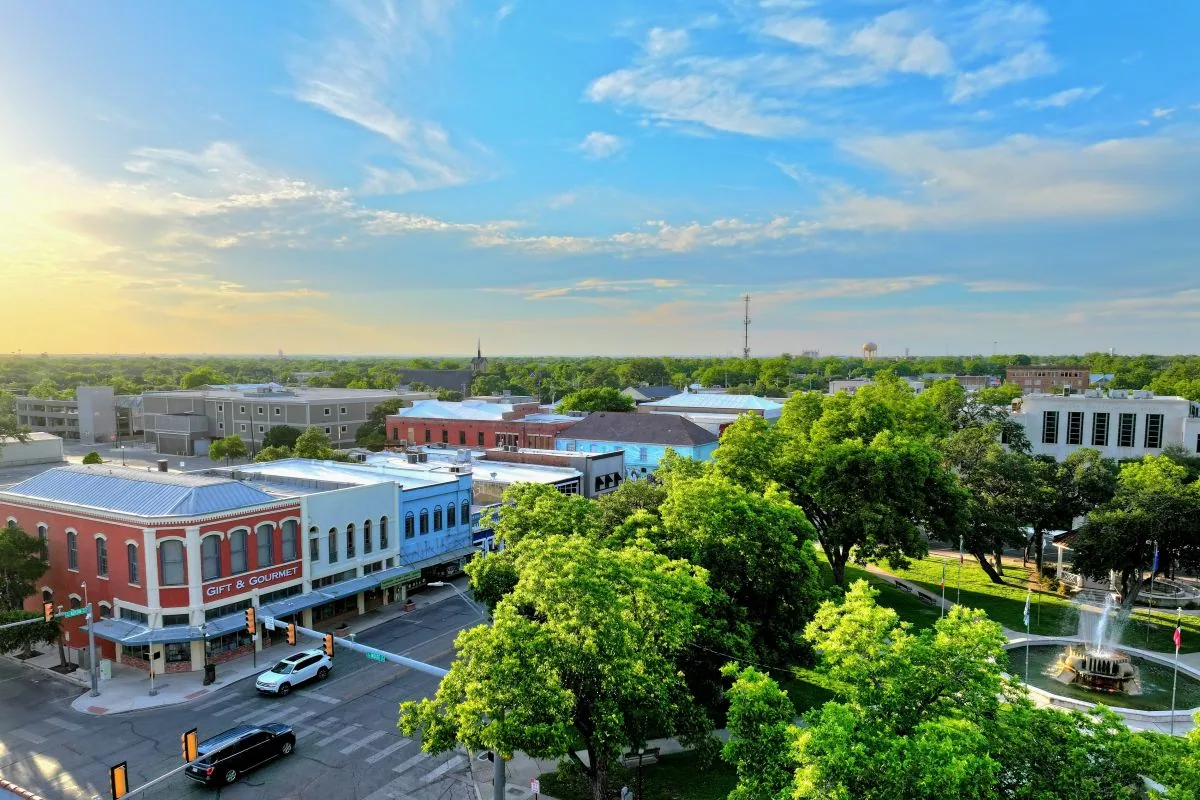
Seguin
A manufacturing roof decision can turn on one wet insulation bay or a connection that no longer accepts the existing panel. In Seguin, the employment base includes Caterpillar, CMC Steel and Hexcel. Those names establish manufacturing activity, not the roof condition or construction at any facility. We inspect the property the owner identifies, trace the reported condition, and measure the material that must be repaired or removed before choosing the next investment.
These institutions have distinct operations, but no campus or hospital roof is assumed in the scope. The owner provides access limits and release dates. We examine the actual assembly, coordinate work around its use and document each completed section. When an owner manages properties across the corridor, nearby New Braunfels and San Marcos provide separate local conditions. The work at each site still follows the layers and details found on its own roof.
Inspect the receiving surface before pricing
A plant production line, a school calendar and a clinical area each set distinct access windows and interior safeguards for roof work in Seguin. We confirm the building's actual use and the route to the work area before staging material. On the roof, we locate the reported entry and inspect adjacent membrane, seams, curbs, drains, metal edges and prior repairs. If a panel or sheet is sound beyond a single failure, the repair can stay local. If moisture or attachment loss continues below, we extend the opening only to the boundary the assembly requires.
A test cut is useful when the surface cannot show the insulation or deck condition. We record what each layer can receive and whether the base stays dry and stable. The inspection becomes a building-specific record rather than a general visual summary. A condition report can separate a current correction from a capital item, with photographs and quantities tied to roof zones. This matters where shutdown windows are limited: the owner can approve a complete work area instead of reopening a partly scoped section later.
Stage the work around the facility
A roof over production or patient care needs a sequence that protects the activity below. We confirm sensitive areas, intake points, delivery movement, work-hour limits and how the owner wants each opening released. If mechanical systems need to remain live, the scope identifies where dust control, temporary protection or trade coordination affects the work. We schedule removal so a section can reach its permanent closure within the planned shift. Any changed condition is photographed and shown before the next area is opened.
For an occupied building, phased reroofing can move by roof zones that have complete drainage and edge boundaries. It does not mean every building can stay open without adjustment. The owner confirms which rooms or production lines can be isolated and when. We can coordinate around a facility's maintenance calendar and equipment access. If an active leak threatens inventory or interior finishes, emergency protection stabilizes the condition while we measure the permanent correction. Temporary closure is recorded separately from the final assembly work.
Follow water through seams and equipment
Leaks can travel under the membrane before they show inside. A stain below a manufacturing line may sit apart from the roof entry, so we inspect uphill details and drainage first. We check whether a curb has enough height for flashing, whether a pipe boot moves with the service connection, and whether nearby seams are attached to material that can accept a repair. At drains, the bowl, clamp and discharge route each need inspection. A clear strainer does not prove the membrane connection is intact.
Where a low-slope roof has multiple layers, we identify the assembly before selecting a replacement sheet. TPO or modified bitumen each require a compatible detail and receiving surface. A patch must connect to sound existing material. If that connection cannot be made, the scope includes removal to a suitable boundary and rebuild of the base. The repair ledger then distinguishes a single local failure from a wider condition, avoiding a coating or overlay that would hide damage without resolving it.
Compare local repair with full renewal
A spot repair fits where adjacent sheet is sound, fasteners hold and the exposed substrate can receive the selected termination. A broader replacement deserves comparison when openings show moisture in several zones, widespread seam separation, deterioration at multiple transitions or an unstable deck. We document the pattern rather than infer a roof's life from the manufacturer's name or building use. Each option lists removal depth, retained layers, insulation, cover board, flashing, edge metal and tie-in work.
The cost and schedule change with roof access, equipment relocation, deck repair, finished height and the area that must be protected below. A recover may retain a stable assembly, but additional layers alter drain and curb elevations. A replacement removes unsuitable material and gives the new membrane a defined receiver. Recover analysis and replacement planning use the same condition findings, so the owner can see what each path retains and what it rebuilds. A decision date helps reserve the access and production window that the selected phase requires.
Document what changed at closeout
We inspect every completed seam, curb, drain and perimeter connection before the area is released. Photographs show the layer that was opened, the repair boundary and the finished termination. If a hidden condition alters the work, we show it before extending removal. The owner receives a record of material installed, work area, date and unresolved items. That record can guide the next inspection and prevent a future roof team from treating the repaired detail as an unknown.
For multiple commercial properties, a roof asset record can connect condition changes with renewal timing. New Braunfels city work has a different local code context, while San Marcos roof planning reflects its I-35 position and industrial and educational activity. Seguin remains its own scope. For an owner comparing both markets, New Braunfels roof repair planning keeps the city-specific findings distinct. Share the roof history, operating restrictions and planned decision date, and we can compare the measured repair with the next phase without assuming that one facility's assembly matches another's.
Commercial Roofing Questions
Can a Seguin manufacturing facility keep operating during roof replacement?
We determine that from the work area, interior use, access path and weather plan. Some sections can be isolated and closed in sequence; other conditions require a temporary shutdown or protected equipment. We coordinate the release with the owner's facility lead and define when each area returns to service. The schedule follows the actual building and work boundary.
Does the presence of Caterpillar, CMC Steel or Hexcel tell you what system a roof needs?
Those names support the fact that manufacturing employers operate in Seguin, but they do not establish another property's roof assembly. We inspect the installed membrane or metal, substrate, drainage and interfaces before selecting repair material. The roof itself determines whether a local correction, recover or removal is suitable.
How do you investigate a leak above an occupied hospital or university building?
We confirm the affected building and interior area with the owner, then trace the likely route across the roof. The inspection checks penetrations, curbs, seams and drainage and may use a test opening to verify concealed layers. Access, patient or student activity and system operations shape the work window only after the property is identified. We do not infer a condition from the institution name.
Which records help a Seguin owner compare reroof options?
Prior repairs, roof plans, inspection photographs and known leak dates help us establish what changed. We verify them at the roof and note each layer, wet area and connection that affects removal. We then price a local repair and a broader renewal against the same measured boundary. The owner can weigh access, operation, timing and remaining material with the scope in view.

Seguin