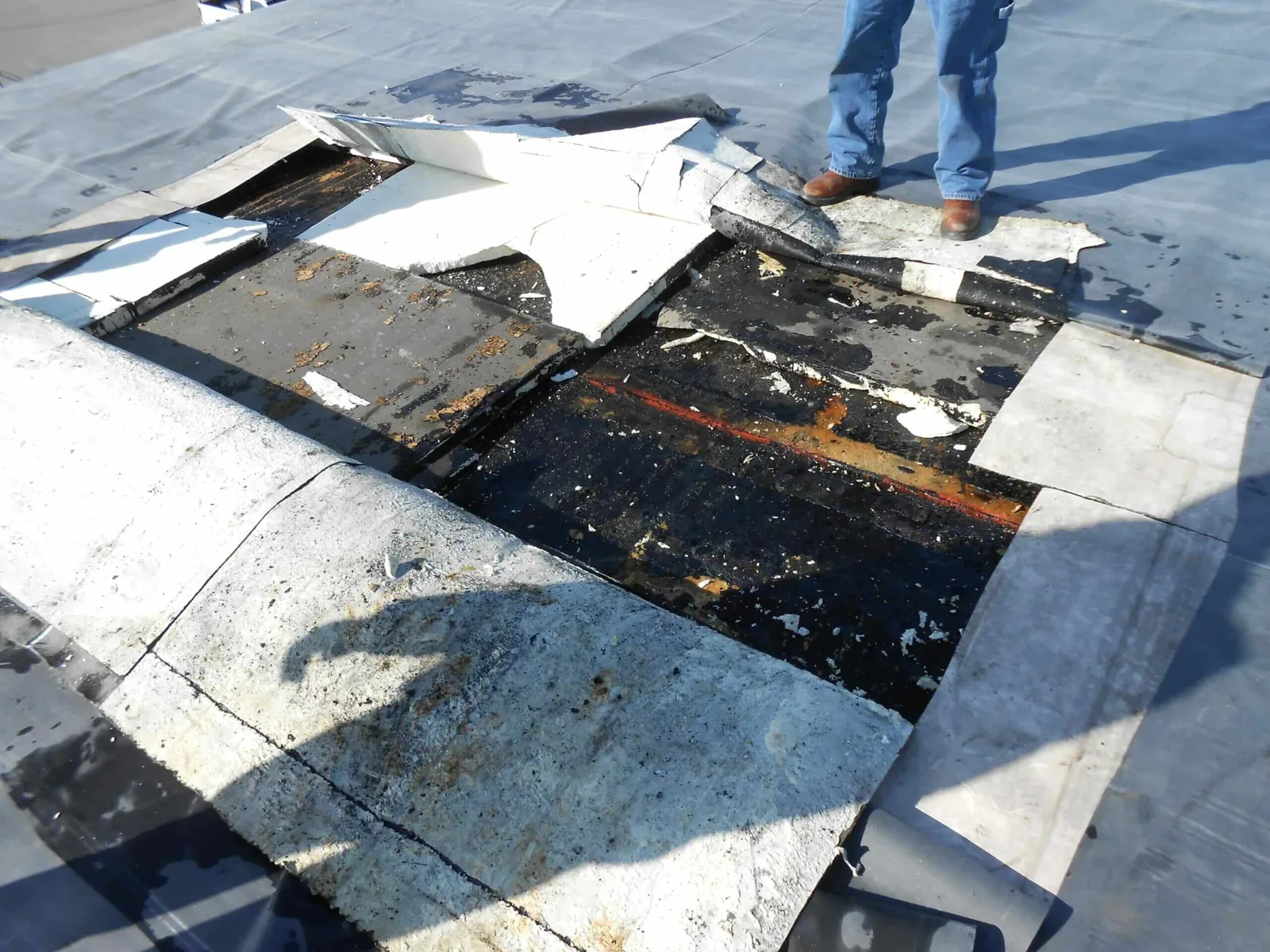
Emergency Commercial Roof Repair
An open drain connection above stored goods changes the immediate work priority. Protection beneath the opening and temporary closure need assessment before the larger renewal choice. Emergency commercial roof repair in New Braunfels, TX, addresses active water entry and unstable roofing conditions with a practical stabilization scope. We assess the exposed area, available access and conditions at the building. Safe work determines what can proceed now.
Commercial Roofing New Braunfels takes emergency calls day or night, including weekends and holidays. Temporary protection, tarping and dry-in can reduce exposure while the permanent correction is developed. The emergency expenditure should protect the affected use without concealing the larger roof decision. After stabilization, investigation of the active leak can establish the repair boundary and the material beneath it that needs rebuilding.
Close the unsafe approach first
A displaced roof component can threaten an area beyond the visible opening. Keep people clear of loose metal, hanging material and water near electrical equipment. Do not climb onto an uncertain roof to inspect the damage. We assess safe access and the condition of the working area. Strong winds, lightning, unstable roofing or poor visibility can prevent immediate roof-level work. A call starts the response assessment; conditions determine the safe action.
Inside the building, protect occupied areas without placing staff beneath an unstable ceiling or damaged roof section. Where electrical equipment is affected, the appropriate qualified trade needs to address that hazard. We coordinate roofing activity with the necessary safety boundaries. Emergency work should not create a second exposure while attempting to close the first. A defined exclusion area and suitable access can make the subsequent stabilization more useful and more controlled.
Select protection that can stay secured
An open membrane area may accept a compatible temporary repair when the remaining material can support it. A wider exposed area may need temporary covering and dry-in. We assess the supporting condition, attachment points and the way water will discharge from the protection. A loose tarp can become another wind hazard. Its suitability depends on a workable securement method and the conditions at the affected building.
Temporary protection also needs a boundary that does not trap water against a vulnerable opening. We consider laps, edges, drainage and adjoining details. The available access may limit the size of a safe work release. Where detached edge components are involved, perimeter metal correction may be needed alongside the temporary roof closure. Each measure should have a specific purpose: reduce entry, secure a component or protect an exposed layer until permanent rebuilding can proceed.
Separate the event from the affected assembly
On March 21, 2022, parts of South-Central Texas experienced large hail and tornadoes. A tornado east of Kingsbury damaged homes, barns and trees. Such regional storm activity makes post-event examination a practical building decision. At the affected property, we inspect displaced components, punctures, open joints and the surrounding attachment. The repair scope follows those observed conditions. A surface that appears intact may still need examination at seams and edges.
Where debris has struck a membrane, we look for damage beyond the first visible opening. Metal panels and rooftop equipment interfaces need their own assessment. Suitable storm-related roof repairs may restore a local area; broad assembly damage can require a larger removal decision. Keeping emergency stabilization separate from that comparison lets an owner protect the property now without mistaking a temporary closure for completion of the roof work.
Protect the activity directly below
The Gruene Historic District includes restored shops and restaurants. A roof opening above customer space can force a different operating decision from one above a room that can close. We discuss the affected use and isolate the work area where practical. Inventory, food service equipment and public entrances may need protection or relocation by the building operator. The immediate roof action should fit those occupied conditions.
For urgent roofing above restaurant space, equipment penetrations and service routes can affect temporary protection. We examine the relevant connections and coordinate required interruptions. Businesses in Gruene need the same clear distinction between a stabilized opening and a permanent assembly repair. An unaffected part of the building may remain usable where safety allows. The operating decision should follow the actual hazard boundary rather than a broad assumption about the entire property.
Measure the permanent correction after control
A temporary cover can stop direct exposure while leaving wet insulation or damaged decking beneath it. Once safe examination is possible, we assess those layers and define removal. The permanent scope may include new membrane, flashing, insulation, cover board or supporting repairs. Suitable material requirements and the actual assembly control the rebuilding method. A quick surface closure does not determine which concealed layers can remain.
The scope also needs to identify the cause of repeat failure. Loose attachment, failed flashing and obstructed drainage can require different corrections. We assess whether planned local rebuilding will restore a useful assembly or whether a broader renewal is needed. Where an insurance review applies, condition photos and roof damage documentation can support your submission. Coverage and claim decisions remain with the policy and insurer.
Keep the temporary closure in the decision
Hot, humid summer conditions in Comal County can affect the permanent repair window. Roof conditions affect preparation and installation of permanent repair materials. Wet surfaces, continued rain or unsuitable application conditions can delay the lasting connection even after temporary protection is installed. We assess what can proceed and identify the remaining exposure. That lets the building operator decide whether interior protection or a restricted work area needs to remain in place.
Emergency cost drivers include difficult access, temporary covering, debris handling and the material needed to secure the opening. Concealed damage affects the later rebuilding scope. We distinguish those tasks so the urgent approval does not leave the permanent expenditure ambiguous. A temporary closure should also receive follow-up appropriate to its condition and expected exposure. Your next decision is how to replace that temporary measure with a suitable assembly repair, not simply when to remove the visible covering.
Commercial Roofing Questions
Can I keep the entrance open if roof metal is hanging above it?
Keep people away from that approach until the hazard is assessed. Loose components can move or fall beyond their apparent position. We examine the roofing condition from a safe access point and identify suitable stabilization. Building staff should not climb up or pull at the metal. A different entrance may remain available where the property operator can maintain a safe route.
Will the emergency repair become the permanent roof repair?
A compatible repair on sound material may form part of the lasting correction. Temporary covering and dry-in usually serve a different purpose. We examine the affected layers and explain what still needs rebuilding. Wet insulation, damaged attachment or unsuitable flashing can require additional work after entry is controlled. The permanent decision should follow that examination rather than the appearance of the temporary closure.
What information helps with a call during the night?
Describe the building location, active water entry and any visible loose material from a safe position. Mention electrical exposure, affected occupied areas and the available roof access. Include recent roof work if known. Those details help establish the immediate safety and stabilization needs. You do not need to enter an unsafe area or reach the roof to gather them.
Should I authorize full replacement during the initial emergency response?
Stabilization and examination can provide a firmer basis for that expenditure. Severe damage may make broad renewal necessary, but the assembly needs assessment where safe conditions allow. We distinguish the immediate protection from the removal and rebuilding comparison. That gives you an urgent work decision without substituting a temporary-response finding for a complete replacement scope.

Emergency Commercial Roof Repair