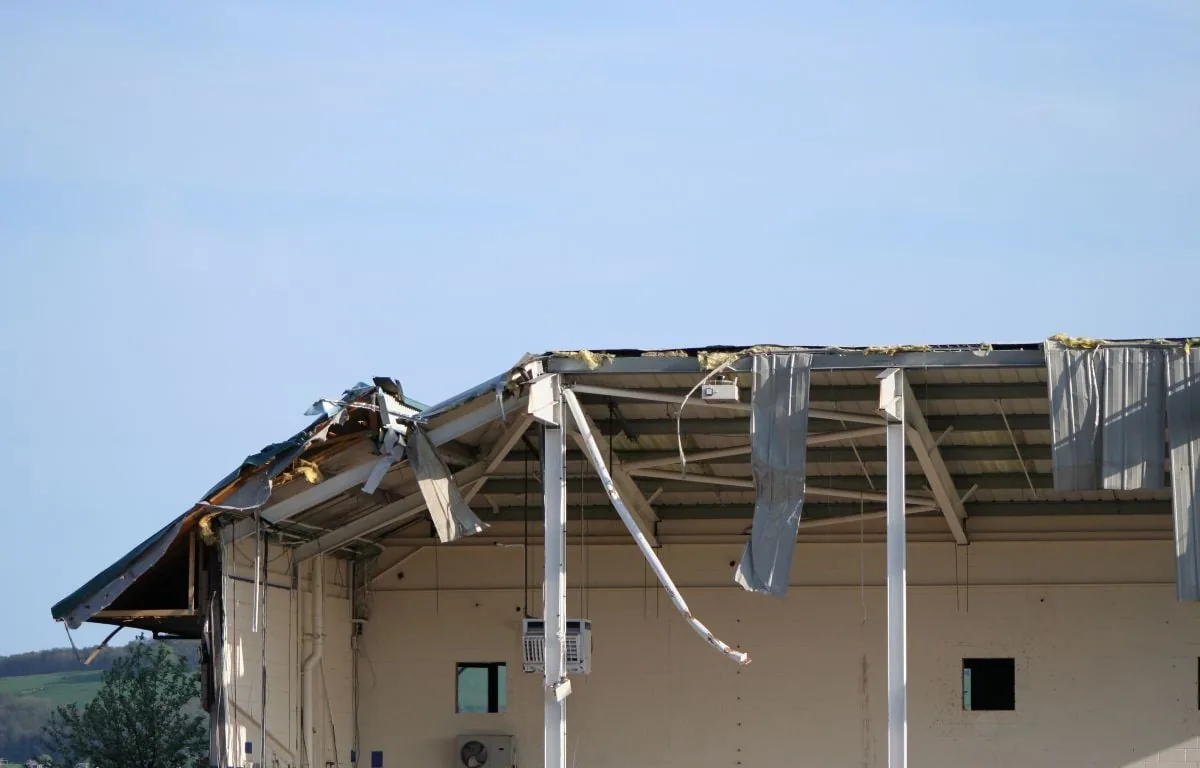
Commercial Storm Damage Roof Repair
Fresh punctures crossing an older seam repair can enlarge the rebuilding boundary. Closing each visible hole may leave damaged joined material between them. Storm damage roof repair in New Braunfels, TX, needs examination of the affected assembly and its surroundings. We identify what has moved, opened or fractured. The repair quantity then follows the material needed for a suitable connection, rather than the smallest visible mark.
Commercial Roofing New Braunfels assesses storm-related damage on membrane and metal commercial roofs. Urgent storm calls reach us overnight, on weekends and holidays; we separate protection from permanent rebuilding. Loose components or active entry may require temporary roof protection before the full assessment can proceed. Once safe access is available, the inspection identifies the local correction, concealed-layer questions and any broader renewal work the building needs.
Examine the material beside the impact
A membrane fracture can be difficult to distinguish from a surface scuff at a distance. We examine the suspected impact and the surrounding material closely. Splits, punctures, seam damage and disturbed flashing each require a different repair boundary. Cover board or insulation beneath an impact may also need attention. A sound-looking surface nearby still needs assessment where the damage suggests an underlying condition change.
Metal panels present other observations. Dents, damaged joints and displaced flashing need examination of their functional effect. An appearance change and an opening admitting water are different findings. We assess attachment and water-shedding connections before choosing a repair. For suspected hail-related roof damage, the useful scope connects the observed defect with the layer or connection requiring work. The event alone does not provide a panel replacement quantity.
Trace the disturbance into adjoining securement
A displaced edge can pull on roofing beyond the component that visibly moved. We examine adjoining attachment, flashing and membrane connections. The repair may need more than a replacement length of metal. Damaged supporting material or disturbed securement requires its own rebuilding detail. The boundary should reach construction capable of supporting the replacement, with attention to loads transmitted through the new connection.
We also assess seams and equipment interfaces where movement may have created openings. A repair to disturbed membrane joining needs suitable remaining material and compatible preparation. Existing patches can complicate that connection. We identify what needs removal rather than layering another repair over unstable material. The owner can then compare a defined local correction with a larger affected area where adjoining construction no longer provides a useful rebuilding base.
Use regional exposure to prompt property examination
The March 21, 2022 storm period brought hail and tornadoes to parts of South-Central Texas. East of Kingsbury, a tornado damaged barns, homes and trees. After severe weather affecting your property, we inspect the actual roof for entry paths, displaced components and impact-related defects. Regional weather context makes examination timely. The observed assembly condition establishes the work that belongs in the repair approval.
Comal County also experienced a tornado near Schoenthal Ranch in February 2017. At a roof with suspected wind disturbance, we examine attachment and exposed interfaces before releasing permanent repairs. A building in Kingsbury needs assessment of its own affected areas. A suitable PVC membrane repair connection, metal detail or another system correction follows the construction present at that building. Storm history informs attention; roof findings direct the rebuilding method.
Separate damage from retained material
Water beneath a newly opened seam can spread into insulation beyond the immediate defect. We investigate suspected moisture and damaged support where they affect the permanent work. Local removal may expose a suitable boundary for rebuilding. A wider wet area or weakened deck can change both cost and timing. Those quantities should remain distinct from the surface closure that first reduces entry.
We compare the repair with the condition left in service. Sound adjoining roofing may support a limited correction. Broad loss of attachment or widespread damage can make a larger replacement phase necessary. The recommendation needs to account for the affected layers and the remaining assembly. A temporary closure can protect an opening while that decision is made, but it does not establish which hidden material can remain beneath the permanent roof work.
Release rebuilding around the affected use
Seguin has manufacturing employers including Caterpillar, CMC Steel and Hexcel. For storm repairs above industrial activity, interior protection and safe material handling can influence the work sequence. We assess the use beneath the affected roof area and separate it from unaffected operations where practical. A small opening over sensitive equipment can deserve priority even where another visible surface has a larger appearance change.
On roofing above manufacturing operations, the permanent correction may need coordination with equipment access or a planned shutdown. We identify the specific interruption required by removal, rebuilding or an equipment connection. The work boundary should not become a broad operating closure without a condition that requires it. That comparison lets the owner assess the roof repair quantity alongside the release needed to carry it out safely.
Fund restoration of the affected assembly
Multiple isolated punctures can require substantial preparation and rebuilding even when each appears small. Access, removal of unsuitable layers and replacement of disturbed edges can add to the repair effort. We distinguish those quantities in the scope. The owner should be able to see which work restores the assembly and which additional questions still need examination. That clarity helps compare local repairs with broader renewal.
Where an insurance review applies, documentation of the roof condition can support the submission. We describe observations and the proposed correction without assigning coverage decisions. Photographs, locations and suitable material findings help connect the requested work to the assessed condition. Your immediate approval may address stabilization while permanent repair funding is resolved. We keep those scopes separate so the next investment follows the remaining roof need rather than the temporary measure already installed.
Commercial Roofing Questions
Should every dented metal panel be included in a repair scope?
Examine how the dent affects the panel and its connections. An appearance change may differ from damage that impairs weather protection or attachment. We assess joints, flashing and supporting conditions before recommending panel work. The repair quantity should follow the functional condition and the appropriate correction. A broad replacement allowance based only on visible dents can obscure which assembly components actually need rebuilding.
Can isolated storm punctures be repaired without removing the surrounding roof?
Suitable adjoining material may support localized work. We check the repair connection and the layers beneath each affected area. Wet insulation, fractured support or incompatible old patches can enlarge the rebuilding boundary. The final quantity depends on those conditions. A small visible opening can still require local layer removal, while sound material farther away may remain useful.
What changes the decision from storm repair to replacement?
Widespread assembly damage, disturbed attachment or substantial concealed deterioration can favor a larger renewal phase. We compare the material each repair would retain with the effort needed to restore separate areas. Local repairs remain useful where they reconnect to suitable construction. The replacement decision should reflect that assembly assessment rather than the event label or the number of marks alone.
Should temporary dry-in stay in place until the insurer has reviewed the roof?
Temporary protection needs follow-up appropriate to its condition and exposure. We coordinate the assessed roof work and available documentation while the claim review proceeds. A temporary measure can still need maintenance or replacement if it deteriorates. Permanent rebuilding may also have an operating deadline. Coverage review and the roof's physical protection needs should be considered together without assuming one suspends the other.
How should I prioritize damage across separate buildings?
Compare active entry, loose components and the use beneath each affected area. A defect over critical operations may take priority over a larger cosmetic change elsewhere. We assess the required stabilization and the permanent repair quantities separately. That supports a measured release of urgent work while the broader renewal and funding decisions are made building by building.

Commercial Storm Damage Roof Repair