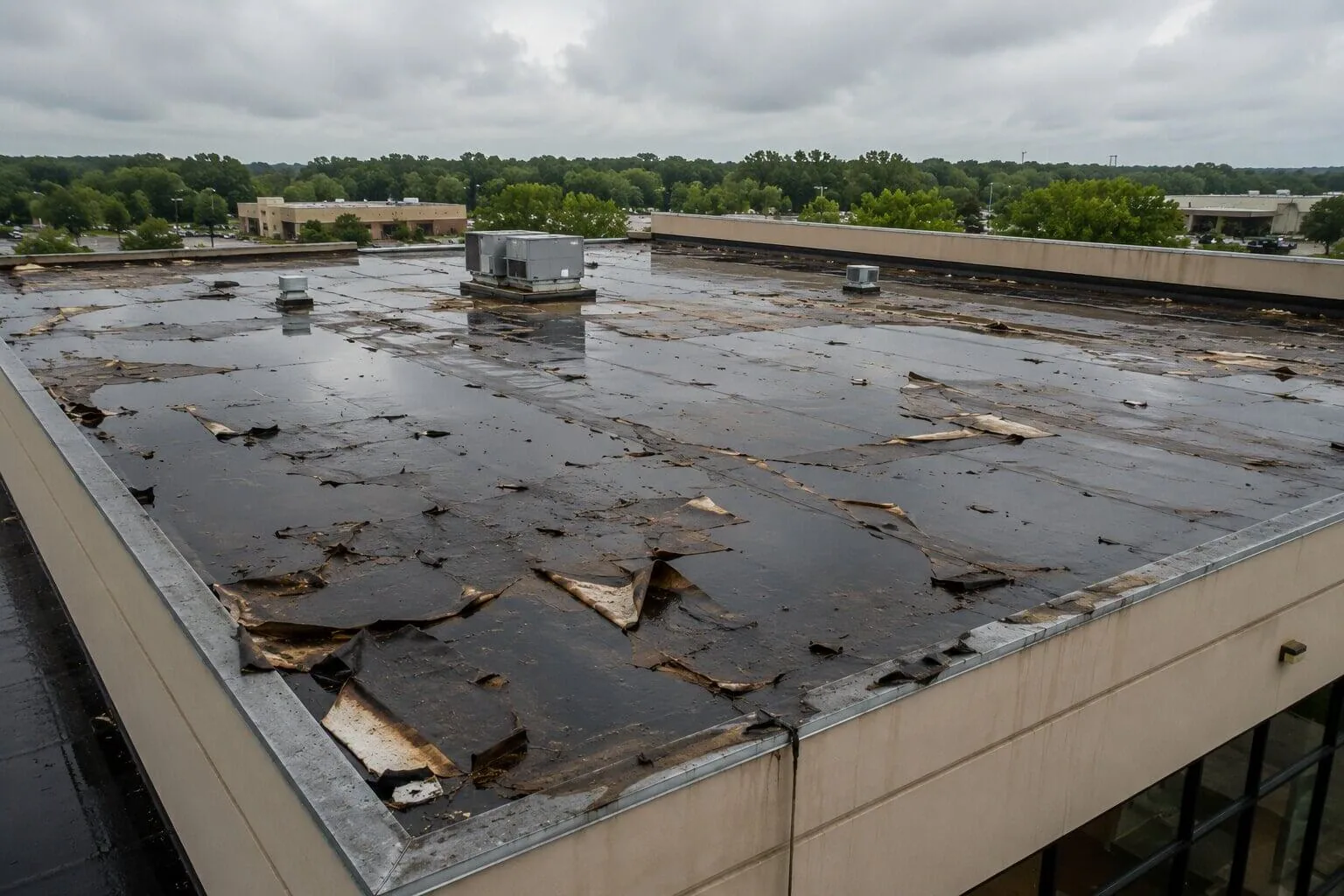
Commercial Roof Hail Damage Repair
A membrane split over fractured cover board changes the hail repair from sheet closure to receiving-layer reconstruction. The damaged board needs examination beneath the visible impact point. We inspect the affected assembly in New Braunfels, TX, and measure suitable material around the opening. A new patch needs support that can carry its connection. The owner can then compare complete local rebuilding with wider removal if investigation finds fractured board or wet layers extending farther.
We examine commercial roofs after reported hail and repair the physical damage found. Membrane, metal, coating and lower boards can respond differently. The inspection identifies the affected material and its function before specifying restoration. Surface marks receive closer examination where a split, loss of protection or damaged support is suspected. The proposal connects each finding to its removal or preparation quantity, with photographs showing why the complete correction is needed.
Open the damaged board where it determines reconstruction
A split above a localized depression can indicate lower material needing examination. We inspect the sheet and make a focused opening where support condition changes retention. Broken cover board must be distinguished from usable adjoining material. Moisture entering at the split may require further investigation. The repaired area needs suitable boards and insulation before the membrane closes it. Leaving crushed receiving material beneath a fresh patch would preserve the defect supporting that patch.
Replacement of fractured cover board and affected insulation should identify layer depths and transitions. We examine the deck if exposed and direct structural concerns to qualified assessment. The removal edge should reach support suited to the new construction. Replacement thickness needs a workable connection to retained layers without creating an unsupported ledge. The membrane quantity then follows that complete rebuilding boundary rather than the visible split alone.
We also check replacement board edges before closure. Their layout should support the selected repair without a loose corner beneath its seam.
Examine the sheet beyond visible impact marks
A roof surface can show marks without a through-opening, while a small split can expose lower layers. We inspect the sheet's continuity and accessible seams around suspect points. Older repairs may affect both inspection and the compatible closure available. Identify their materials before extending a patch across them. The usable receiving surface should meet the selected system's preparation and connection requirements around the entire reconstruction.
A TPO repair connection requires suitable sheet for welding or another approved compatible detail. A repair to rubber roof membrane needs its own preparation and materials. Those methods should not be selected interchangeably. If deterioration prevents a reliable local connection, the removal boundary may need widening. We explain that material condition and the new edge required before the owner authorizes reconstruction.
Use the reported event to direct the building inspection
Large hail and tornadoes affected parts of South Central Texas on March 21, 2022. The same event included tornado damage to homes, barns and trees east of Kingsbury. For a requested roof in the Kingsbury area, the reported event date helps organize photographs and the condition review. We examine the actual assembly and compare available repair history. The proposed work follows the building's inspected sheet, components and lower-layer findings.
The retail building mix in Live Oak includes Live Oak Crossing alongside Gateway Plaza. At a requested occupied retail building there, investigation openings need coordination with the affected space and equipment. We identify access and protection before exposing lower roofing. The work should leave a suitable closure after examination. A clear operating release also permits removal and rebuilding if the opening reveals fractured board beyond the initial visible defect.
Separate membrane rebuilding from damaged roof components
Metal caps, drainage parts and raised components need examination alongside the field. A distorted part can need its own repair even where the adjacent sheet remains suitable. We inspect receiving attachment and weather connections before defining replacement. Dismantling a component may expose roofing requiring restoration. Identify that work before treating the allowance as a purchase of visible metal alone.
Correction of damaged perimeter metal may connect to another roofing boundary. An open seam found during the hail inspection and a separate membrane penetration need their own physical assessment. We distinguish the conditions and identify where removal boundaries join. The owner should receive an assembly-level correction with components measured separately, rather than a single patch allowance that leaves their receiving details unresolved.
Compare isolated rebuilding with wider layer damage
Several local fractures can justify investigation between affected points. We check whether suitable board and sheet separate them or whether deterioration extends across the field. That examination changes the work boundary. Local reconstruction may retain useful material between defects. A broader renewal may be appropriate where lower-layer damage or sheet condition prevents suitable isolated connections. Both options need complete transitions to any material left in service.
The roof photographs and scope for claim review identify exposed damage and the correction it requires. Policy and payment decisions remain with the owner and insurer. We explain why preparation, removal or another investigation is needed. A condition report on adjoining roof construction can also identify remaining defects outside the proposed hail repair. Keep that later investment distinct from reconstruction already supported by the inspected damage.
Inspect the new receiving layers and closure
The reconstructed board should provide suitable support across the opening. We check transitions before installing the membrane closure. The completed sheet connection then needs examination appropriate to its material, including changes in direction and adjoining seams. Component repairs receive their own checks. Completion photographs identify the boundary rebuilt and the layers replaced. The handover should not describe the entire field as renewed when the work was local.
Later service activity can damage a repaired area if tools or supports bear against vulnerable sheet. We identify access protection where needed and keep drainage clear through the reconstructed field. Carry the installed material and dimensions with the roof history. A later impact or reported leak can then be examined against that known boundary. The next removal decision follows the new physical condition and the remaining assembly, rather than repeating an earlier surface repair without lower-layer examination.
Commercial Roofing Questions
Why does fractured cover board change a hail patch allowance?
The new sheet needs suitable support beneath it. Broken board can leave movement or an unsupported receiving surface even after the visible split closes. We open and measure the affected layer where needed, then rebuild it before membrane repair. Wet insulation or a damaged transition can enlarge that quantity beyond the initial impact point.
Do all visible hail marks require the same repair?
Examine the material and function at each affected component. A sheet split, dented metal and damaged surface protection can call for different corrections. We identify actual loss of continuity, receiving damage or unsuitable attachment. The work allowance should reflect those findings rather than applying one replacement method to every mark across the roof.
Can you document lower-layer damage for the owner's review?
Photograph the accessible condition and selected openings that determine the work. We describe the layer observed and its relationship to the proposed reconstruction. Each opening needs suitable restoration afterward. The owner can use that physical scope in claim or investment review, while policy terms and payment decisions remain with the responsible parties.
What supports retaining material between several repair areas?
Retention begins with inspection of the intervening sheet, board and attachment where they affect the proposed connections. Suitable material may allow separate local rebuilding. Broader fractured or wet layers may require one larger boundary. We compare those complete reconstruction quantities and identify the material each option keeps. Retention should follow that assessment, not only the appearance between visible impact points.

Commercial Roof Hail Damage Repair