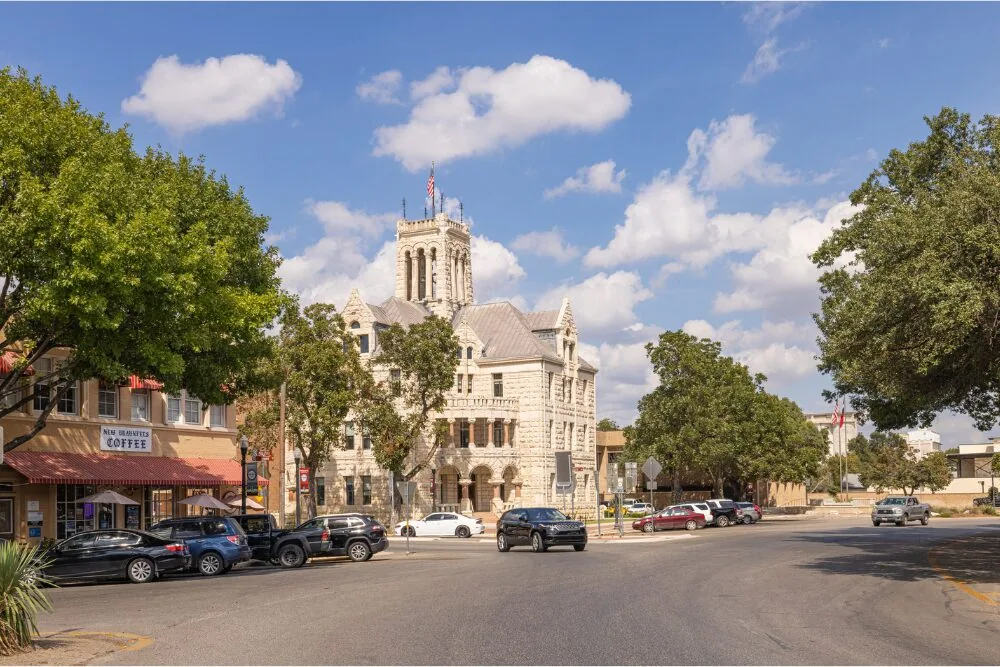
Kingsbury
A soft deck at one repair point changes the removal decision. The finding applies to the inspected Kingsbury building only. We inspect the affected assembly, trace moisture beyond the visible mark, and define what stays separate from what must come out. Kingsbury is a Guadalupe County municipality served by Navarro, Seguin, Luling and Prairie Lea independent school districts. That service-area fact does not tell us what any individual building has overhead. It does make clear why the owner needs a repair quantity tied to the actual structure, not a townwide assumption. We document each opening and explain the measured work before closing the roof. For a first look, our commercial roof inspection records seams, edges, drainage and penetrations. A written condition report with photos can carry the finding into a repair or capital review. A nearby comparison in Seguin is useful for route planning, while the roof scope remains specific to the Kingsbury building.
Trace the damaged boundary
A ceiling mark can sit downslope or across a deck flute from the opening, so inspect the full drainage and seam path before setting the repair limit. We start where the owner sees the condition, then inspect the roof surface, nearby seams, wall transitions, drains and equipment curbs. A blister, open lap or puncture is recorded separately from wet insulation or soft cover board. If the condition points below the surface, a controlled test opening can show the layer sequence and the material that remains dry. The opening is kept small, then rebuilt with compatible materials and a complete weather seal. New Braunfels climate records for Comal County describe hot, humid summers and mild, warm winters. We use that market context when planning New Braunfels work; at a Kingsbury roof, we check actual conditions before selecting a work window. For continuing water entry, emergency roof response shields the exposed zone and interior first; inspection then sets the permanent removal line. A membrane repair is appropriate only after the surrounding material is sound enough to hold the correction.
Separate dry layers from wet material
One test opening should answer a defined question. We note the membrane type, insulation depth, cover board, fasteners or adhesive, and deck condition visible at the opening. Moisture readings are useful when they are mapped to the roof area and confirmed against physical conditions. A reading alone is not a removal quantity. If the assembly is dry beyond a localized failure, the scope can retain stable material and rebuild the disturbed area. If moisture continues across multiple bays or seams, the owner receives a larger boundary to evaluate. Inside New Braunfels, local amendments accompany the city’s 2021 building, existing-building and energy-code editions. Kingsbury lies outside that city jurisdiction; we identify the authority responsible for the property address and confirm its permit steps before putting inspection holds on the roofing schedule. Use thermal results to choose test openings where the scan is reliable; price insulation and cover board separately for the zones those openings confirm.
Price a local correction
A repair allowance follows the measured defect, not a guessed square footage. We identify how much membrane must be removed, whether insulation is affected, how the existing sheet can be tied into, and what edge or penetration details need to be reopened. The roof system matters. A TPO seam calls for a different preparation and weld check than an EPDM patch or modified-bitumen repair. We match the repair to the installed assembly where that remains practical. If a compatible local correction cannot restore the detail, we show the change in scope and explain why. Kingsbury's school service area crosses four districts, including Seguin and Prairie Lea. For a property serving students or staff, the owner may need to align noisy work and roof access with its own calendar; the district fact alone does not establish a particular roof use. We set the work boundary, access point and daily closeout with the building contact. Owners comparing assemblies can review TPO roof detailing against the material actually installed.
Compare the next investment
Repeated repairs can be reasonable when the rest of the roof is dry, stable and serviceable. They become harder to defend when leaks recur at separate transitions, wet insulation reaches beyond prior patches, or the membrane has lost useful attachment. We compare the cost drivers in the scope: removal depth, disposal, deck repairs, insulation replacement, perimeter work, penetrations, access and protection of operations. A second layer adds value only if the retained roof is dry, secure, drains as designed and can meet the governing requirements. Overlaying saturated board simply conceals a condition that still needs removal. A recover evaluation checks those limits before the owner commits. Where several repairs are accumulating, a replacement comparison shows the work as a complete assembly with a defined removal boundary. That record lets the owner compare this repair boundary with a defined renewal phase when the building’s next capital decision arrives. The decision follows documented layers and quantities.
Release a complete work area
Roof access and weather exposure affect sequence as much as material choice. Before work begins, we identify the route to the roof, the delivery point, any active equipment, and the area that must remain available to occupants. The crew removes only the approved scope, protects the open assembly, and closes each shift at a weather-ready boundary. New Braunfels’ hot, humid summers make surface temperature, moisture and cure conditions worth checking for market work. At a Kingsbury roof, we check the actual substrate before selecting material. A calendar date is not a substitute for those checks. For occupied properties, occupied-building sequencing assigns work areas and notices before tear-off starts. We record changes that alter the quantity or release date instead of allowing a small repair to grow without review. An owner can request a preventive maintenance visit after the repair to check the restored detail, drainage and nearby transitions. The owner can compare the access plan with roofing work in New Braunfels while keeping Kingsbury quantities distinct. For work that follows a storm, the March 2022 tornado east of Kingsbury damaged homes, barns and trees; that report does not establish damage to any commercial roof. At each Kingsbury address, verify the actual roof construction and record the observed condition before recommending work.
Commercial Roofing Questions
What would a roof check cover before a Kingsbury repair is priced?
We trace the reported leak across the roof surface, seams, edges, drainage points and penetrations. If wet insulation or a soft deck is suspected, we define a test opening and confirm the layer condition before including removal. The written scope separates the membrane correction from any insulation, board or deck work, so the owner can compare a local fix with a broader renewal option.
Does the March 2022 tornado report establish roof damage in town?
No. The weather record places a tornado east of Kingsbury and reports damage to homes, barns and trees. It does not document a commercial roof loss in town. We inspect the actual building for lifted edges, displaced metal, punctures and water entry, then keep any storm-related scope tied to those findings and photographs.
When should an owner compare a recover with full replacement?
A recover stays in the comparison only if the existing assembly is suitable to remain, the roof can drain, and the new system can be attached and detailed correctly. We check for trapped moisture, prior layers, deck condition, perimeter attachment and penetrations. If those conditions are not met, the proposal should price removal and rebuilding instead of placing a new layer over a known problem.
How do the four school districts affect work planning?
The district service-area listing does not identify a particular school's roof or operating schedule. If the building is occupied, we coordinate the owner's access rules, noisy work, delivery path and restricted areas directly with the site contact. That schedule is put beside the repair boundary and daily closeout plan, so the roof can be opened and secured in controlled sections.

Kingsbury