Commercial Roof Insulation and Cover Board
Crushed insulation beside a service path changes the support quantity. A new membrane laid over that depression would retain the damaged base. Roof insulation and cover board work in New Braunfels, TX, examines the material beneath the weather protection. We identify compression, moisture and unsuitable attachment before rebuilding. The owner can then compare local layer replacement with a larger insulation renewal.
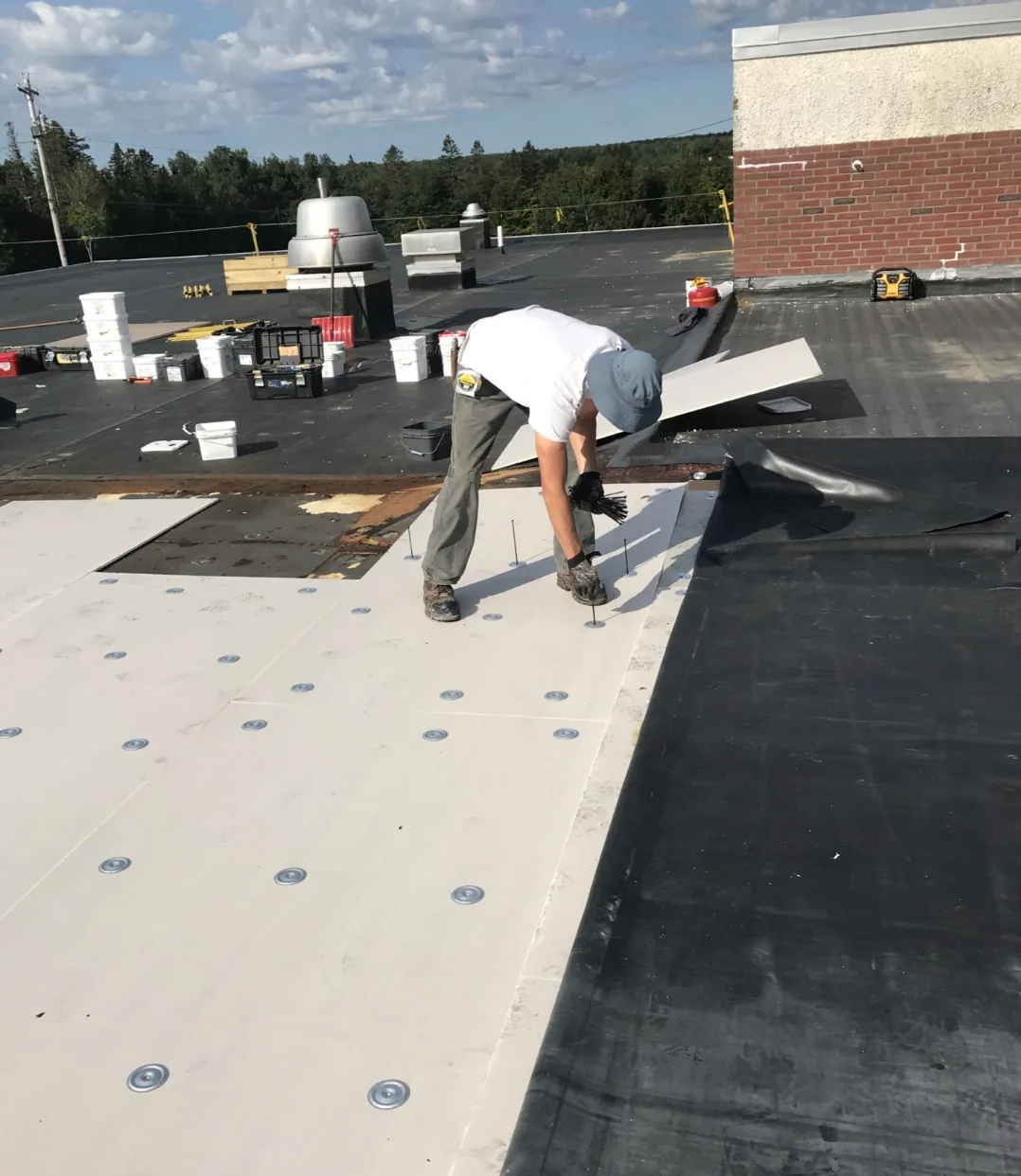
Commercial Roofing New Braunfels installs and repairs insulation assemblies, tapered systems and cover board on commercial roofs. The selected layers must suit the deck, roofing system and applicable requirements. Insulation provides a thermal function. Cover board can provide a suitable protective surface. Neither component substitutes for repairing weakened supporting construction. We connect each layer with its actual role so the expenditure restores the assembly rather than merely adds material beneath a new finish.
Remove the layer that has lost its function
Wet insulation and compressed insulation create different rebuilding questions. Moisture can impair thermal performance and leave material unsuitable for retention. Compression can change the surface level and support beneath the membrane. We examine the affected area and adjoining layers to establish a useful boundary. Where the damage extends beneath a repair, the opening may need to reach beyond the visible surface patch.
A moisture investigation with confirmation can help locate suspect material where the assembly and conditions permit useful results. Physical examination identifies the layer condition at test points. We combine those findings with the surrounding roof assessment. Local removal may restore a sound base while suitable material remains nearby. Broad deterioration can favor a larger phase. The quantity follows the affected construction, rather than an assumption that the whole field has the same condition.
Select protection for the working surface
Repeated service traffic can place concentrated demands on the roof assembly. A suitable cover board can provide a harder surface beneath the membrane and improve resistance to certain impacts. Its material and installation need to fit the roofing system. It does not eliminate the need for appropriate service routes or repair weakened insulation beneath it. We assess those elements before treating an added board as the complete correction.
Board choice also affects preparation and attachment. The new membrane needs a suitable receiving surface, with compatible joining or adhesive requirements. Fastening and bonding follow the proposed assembly. We compare that construction with a supported TPO membrane installation or the other system being considered. The owner should see the role of the board in the assembly, not only its product name or the apparent strength of an individual sheet.
Assess insulation as part of the building
A roofing renewal can change the insulation decision. We examine the existing layers, intended construction and requirements applying to the work. New Braunfels has local amendments to its adopted IBC, IEBC and IECC, all the 2021 editions. Applicable energy provisions need review alongside the existing-building conditions. The selected insulation assembly must suit those requirements rather than rely solely on the thickness already present beneath the old roof.
Interior conditions also matter. Moisture movement and condensation questions need assessment of the building use and proposed assembly. A vapor-control decision should follow appropriate design rather than a general assumption that more insulation solves the issue. We identify where that review is necessary. For a full roof rebuilding scope, the thermal and moisture roles of the new layers belong beside membrane and deck decisions before material installation proceeds.
Set the finished level at every interface
Tapered insulation can establish a useful drainage route where the existing geometry needs correction. We assess the outlets and obstructions before choosing the layout. A cricket may direct water around equipment. A sump may improve the approach to a drain. Each shape needs to work with the surrounding levels, not create another trapped area or obscure an outlet beneath the new build-up.
Finished roof height also affects curbs, wall flashing and perimeter connections. We check those relationships before adding material. A drain or scupper adjustment may be required alongside the tapered work. Equipment interfaces can need their own changes. The scope should include those consequences so the owner compares a complete drainage and insulation correction rather than the field material alone. Suitable geometry must carry through to the detail that receives and discharges the water.
Match rebuilding to the occupied operation
For an industrial property, insulation examination needs to account for the use beneath the test area. Access, temporary exposure and sensitive equipment can influence the release. We assess the actual assembly and interior conditions before choosing openings or a rebuilding sequence. The layer decision should fit the building's operating needs as well as the roofing system.
Schertz and Selma lie southwest of New Braunfels along Interstate 35. Owners assessing insulation work above manufacturing space across the corridor need separate material findings for each roof. A property in Schertz may have a different deck or work release from one in New Braunfels. We define the suitable retained material and removal quantities at each building, rather than carry one assembly assumption across separate properties.
Compare retained layers with rebuilding effort
Scattered damaged boards can require significant handling and detail work. A larger continuous removal phase can have different access and disposal needs. We compare those quantities with the condition of the material between them. Retaining sound layers may reduce useful removal work. Retaining uncertain or damaged material leaves another correction pending. The scope should identify which layer remains and how it supports the proposed roofing.
For retention within an eligible recover, added insulation or board also affects loading, attachment and interface heights. Those questions need assessment with the existing assembly. The owner can then compare local repairs, broader insulation replacement and another renewal method. The next investment should produce a suitable base and workable finished geometry. It should not conceal the damaged support that first made the new surface necessary.
Commercial Roofing Questions
Can a cover board be installed over compressed insulation?
Examine the damaged base before selecting an added layer. A harder board can provide protection within a suitable assembly, but it cannot restore crushed material beneath it. We define the compression boundary and assess removal or rebuilding. The new board then receives appropriate support. Covering the depression without that assessment can retain poor geometry and an unsuitable base under the roofing.
Should wet insulation always trigger removal of every existing layer?
The affected boundary and condition of adjoining material guide the scope. Localized moisture may require a defined removal area while suitable construction remains elsewhere. Broad wet distribution or damaged support can enlarge the renewal phase. We investigate those differences and identify which layers need work. A single wet finding needs follow-up before it becomes a whole-roof removal quantity.
How does tapered insulation change work at rooftop equipment?
Added height can reduce the available flashing at nearby curbs. Changed slopes can also affect the water route around them. We assess those interfaces before installation. Curb alterations or a different tapered layout may be necessary. The useful drainage correction needs suitable equipment connections, not merely a new field shape that leaves another vulnerable detail beside the unit.
Does a new membrane require the same insulation already installed?
The proposed assembly needs its own compatibility and requirements review. Existing layers may be suitable for retention, or they may need removal because of condition, attachment or other limitations. We assess deck type, thermal needs and the selected roofing method together. Repeating the old construction without that review can leave the reason for deterioration inside the renewed assembly.
What should an owner compare beyond insulation thickness?
Examine material condition, fastening or bonding, cover board, finished levels and interface work. Applicable thermal requirements and loading also matter. We identify those items in the rebuilding scope. A thicker layer alone does not show whether the drainage, support and connections will work. The investment comparison needs the complete assembly that remains after installation, including the retained construction beneath it.

Commercial Roof Insulation and Cover Board