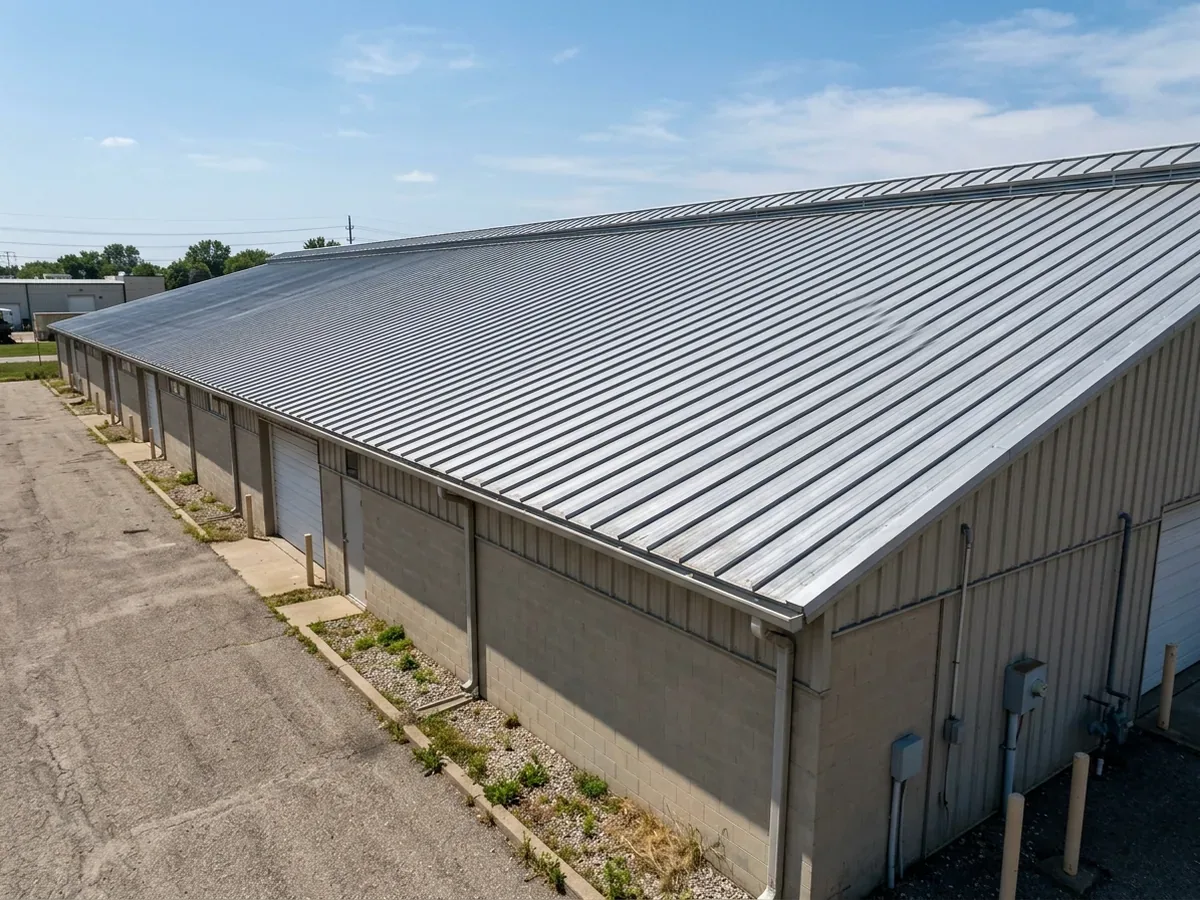
Commercial Standing Seam Metal Roofing
A failed seal at an existing panel end lap can admit water while the adjoining standing seam panels remain useful. The joint needs examination before the owner funds another field treatment. Standing seam metal roofing in New Braunfels, TX, requires suitable connections that accommodate the selected panel system. We assess the affected lap, adjoining seams and supporting attachment. The useful correction may rebuild a local detail rather than replace serviceable panel material.
Commercial Roofing New Braunfels installs and repairs standing seam commercial roofs. Panel condition, support and movement requirements determine the work. An exposed opening can involve more than the seal visible from above. Clip condition and the way adjoining components meet also matter. We separate those findings so the investment restores the working connection instead of adding another surface application over an unresolved mechanical or movement problem.
Rebuild the end connection on suitable material
An end lap combines adjoining panel sections through a detail appropriate to the system. Seal deterioration, movement or damaged metal can affect its performance. We inspect the connection and surrounding panels. A suitable repair may require local opening or replacement rather than an exposed seal alone. The work must preserve the panel's intended connection and water route. Its boundary follows the material needed to rebuild that detail properly.
We coordinate investigation of water at the panel joint where the entry remains uncertain. Water near an end connection can also involve adjacent flashing or equipment. The repair should address the established condition. Suitable retained panels can support local rebuilding. Damaged edges, corrosion or unsuitable earlier work can enlarge the correction. The owner should compare those quantities before treating the visible seal as the entire repair scope.
Inspect the clip and fixed interface
Metal panels expand and shrink as temperatures change. The system's clips, fixed points and details must accommodate the intended movement. We examine accessible attachment and the conditions at penetrations, ridges and perimeter transitions. A rigid repair in a moving connection can concentrate stress. Another seal application may not restore a detail that has lost the ability to move as its design requires.
We assess equipment interfaces on the metal assembly where altered curbs or supports affect that movement. New equipment can require a system-appropriate transition rather than fastening through panels without a suitable design. The existing roof construction also needs examination before changes are made. A serviceable field can remain useful where the modified connection preserves its support and movement requirements.
Define the panel removal without hiding support damage
Corrosion, deformed seams or damaged clips can change how much panel material needs removal. We examine the surrounding construction and the repair method needed to reach suitable support. A localized panel change may involve adjoining sections because their connections need to be opened and rebuilt. The visible damage length alone may not establish the handling quantity. That work should be identified before the replacement section is ordered.
Where broad deterioration is present, a metal roof retrofit comparison may become useful. The existing panels and support need assessment for the proposed construction. Retrofitting should not conceal an unresolved weakened base. We identify whether local rebuilding can retain suitable material or whether another renewal method is warranted. The owner's comparison needs both the new system and the condition of what would remain underneath it.
Separate finish restoration from connection repair
A weathered finish can have a different correction from a loose or leaking joint. We inspect the panel surface and determine the suitability of compatible restoration where appropriate. Surface preparation, adhesion and material requirements matter. A coating cannot repair a damaged clip or restore panel geometry. Those mechanical conditions need assessment before any wider finish application becomes part of the scope.
Where a compatible silicone surface system is considered, the proposed material must suit the metal finish and operating exposure. We assess that compatibility rather than presume a coating can bridge every moving connection. Detail repairs may still be needed first. The owner can then compare useful surface restoration with the panel or attachment work that resolves the actual weather-protection defect.
Release metal work above occupied uses
Garden Ridge Elementary stands across from the city's municipal complex. For a roof project serving educational or public activity, access, handling and occupied protection can influence the panel-work release. We examine the actual assembly and the area beneath removal. A metal connection may need an opening different from the apparent defect size. The operating plan should account for that rebuilding quantity.
New Berlin has a feed store and restaurants, including barbecue service at Brietzke Station. For standing seam work above educational space or another occupied property, equipment and interior sensitivity can affect the sequence. A building in Garden Ridge needs a different release from a retail or food-service property in New Berlin where their operating conditions differ. We connect the roof boundary with the actual use before selecting the phase.
Compare the joint correction with wider renewal
Repeated end-lap or attachment failures can change the value of isolated repairs. We inspect their distribution and the condition of the material between them. Sound panels with localized defective details may support a defined correction. Broad corrosion or supporting damage can favor a larger phase. The comparison includes access to clips and rebuilding of adjacent connections, not simply the length of replacement sheet.
Hot weather and humidity in Comal County summers affect preparation for compatible repair materials. The installation needs conditions suited to the chosen method. We connect those requirements with the next metal roof funding decision. Equipment changes and planned use can also influence timing. A measured investment should restore the panel system's useful support, connections and weather protection while keeping suitable retained material distinct from the construction that needs renewal.
Commercial Roofing Questions
Can one leaking end lap be rebuilt while neighboring panels remain?
Suitable adjoining material may support a localized correction. We examine the lap, panel edges and attachment needed to complete the detail. Opening the connection can require work beyond the visible seal. Corrosion or damaged clips may enlarge the boundary. The scope should identify those quantities so the owner compares a complete joint rebuild rather than a surface treatment alone.
Why does metal movement affect a patch or seal repair?
The panel system has particular movement requirements at clips and interfaces. A repair that restricts needed movement can place stress elsewhere. We assess the connection before selecting the method. Suitable materials and details must work with the system rather than merely close its exposed opening. The correction should address the moving joint and the weatherproof connection together.
Would coating the field resolve damaged panel attachment?
Attachment damage needs its own examination and rebuilding. A compatible coating may restore an eligible finish, but it cannot replace a failed clip or weakened support. We separate those work quantities. The surface decision should follow correction of the mechanical condition so a broader finish application does not hide the component responsible for ongoing disturbance.
How does an equipment curb change the metal roof repair scope?
The interface must fit the panel geometry, movement and support. We examine the proposed curb and existing connection before alteration. Damaged adjoining panels or unsuitable fastening can require additional rebuilding. A new unit fit does not establish a suitable roof transition. The owner should see the complete equipment interface quantity alongside any local panel or flashing correction.
What makes broad retrofit worth comparing with local metal repairs?
Assess the panel and support condition between the visible failures. Repeated corrosion, attachment damage or unsuitable connections can increase the effort of separate repairs. A retrofit needs its own eligibility and design assessment. We identify what it would retain and what needs correction first. The next expenditure should follow the complete assembly condition rather than the number of joints needing attention.

Commercial Standing Seam Metal Roofing