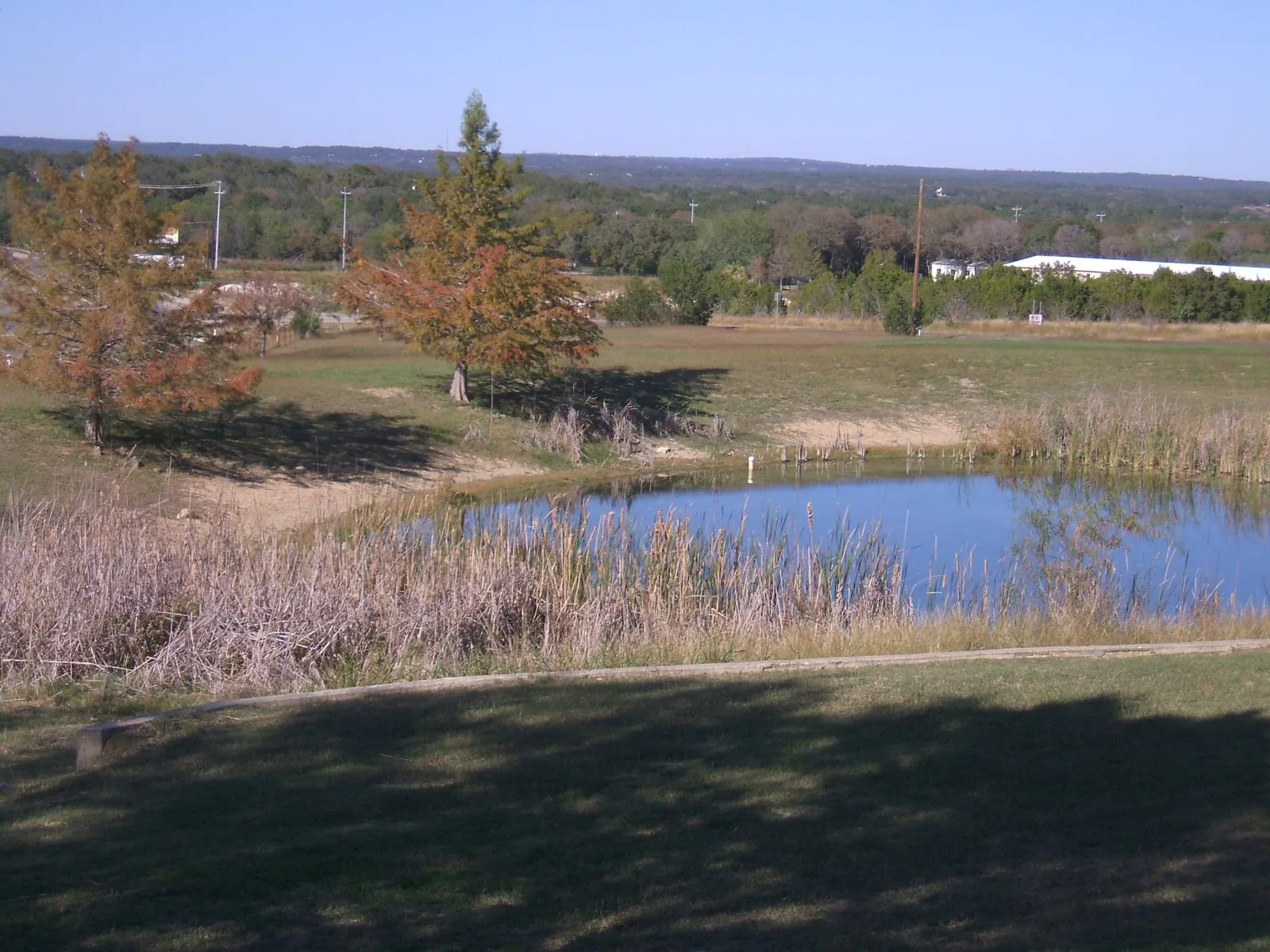
Garden Ridge
A drain transition that sits below a planned recover layer changes the roof decision before material arrives. In Garden Ridge, Central Garden Ridge is roughly three miles north of the I-35 segment in adjacent Schertz, and the two municipalities meet along Garden Ridge’s south edge. Those geographic details help identify the area, but the roof's finished elevations still need a site measurement. We inspect the existing membrane, drain, curb and edge before choosing what can remain under a new assembly.
Garden Ridge Elementary stands across from the municipal complex. That nearby civic and school relationship is a fact about the city, not a statement about either roof or its operations. The owner identifies the property in scope and provides access needs. New Braunfels' hot, humid summers add a regional consideration for surface preparation and application timing. We check the actual roof at release, then measure the repair boundary and document which material can support the next phase.
Keep the roof finding tied to the building
The city border with Schertz and the nearby I-35 corridor do not tell us whether a building has a low-slope membrane, standing seam or older layered assembly. We confirm that on the roof. The walk covers field seams, wall terminations, penetrations, drain bowls, scuppers and edge metal. We compare the interior leak location with the likely route above, then inspect adjoining material before setting the removal quantity. A small split may need a local correction. A soft board underneath can move the boundary farther.
A reported interior stain gives us a starting point, not the roof-side opening dimension. We compare the suspected water route with seams, curbs and drains, then expose a test area if the lower layers remain uncertain. A commercial roof inspection records the condition and photographs; a condition report separates urgent repair from broader capital work. The owner receives a sequence of findings, so each proposed task has a clear roof area and reason.
Measure the finished height at drains and edges
Adding a layer changes how the roof meets every raised detail. We measure curb height, drain opening, parapet, perimeter metal and equipment support before approving a recover. If the new surface rises above a drain clamp or leaves too little flashing height, the assembly cannot finish correctly without adjustment. A roof plan that shows only the field misses that interface. We include drain and edge work as part of the comparison, with the finished elevation written into the scope.
The inspection checks whether the retained sheet is secure and whether insulation below remains dry. Test cuts can show a layer that surface observations cannot settle. A recover is considered only if the material below can carry it and the transition details can be rebuilt. Where a roof has failed through multiple layers, replacement planning identifies what comes off and which components need reconstruction. Our drainage correction keeps the water route clear from the membrane to its discharge, rather than leaving a newly raised field at an old connection.
Confirm jurisdiction before fixing the schedule
Garden Ridge is in southern Comal County and shares a border with Schertz. Municipal boundaries can affect which department reviews a permit and when an inspector must see an exposed assembly. We confirm the property location and responsible authority with the owner before building those checkpoints into the work schedule. The fact that I-35 is nearby does not answer that jurisdiction question. The work order keeps access, permit review and inspection release tied to the actual parcel.
Before work starts, the release plan names required permit inspections and the stage when an exposed assembly can be reviewed. We coordinate the roof opening so the responsible authority can see any required deck repair before new layers conceal it. A phased reroof may keep unaffected areas in service, but the owner approves the access plan and release windows. Damaged deck, wet insulation, equipment coordination or high edge transitions can affect when each section closes.
Release the surface when installation can hold
New Braunfels has hot, humid summers, a regional planning consideration that does not establish conditions at a Garden Ridge roof. We inspect the membrane surface and substrate, then confirm temperature, moisture and forecast for the selected system. Welding, adhesive and coating each have material requirements. If the surface is not prepared or the weather window is unsuitable, a permanent closure should wait behind a secure temporary boundary.
A coating should not hide a wet assembly or correct standing water by itself. We check existing treatments, surface bond, seam condition and the drainage path before considering coating restoration. When moisture may sit beneath a surface that appears intact, thermal imaging can help select locations for confirmation openings. The owner receives the confirmed area and proposed test locations before removal expands. When test cuts are approved, we mark each opening, record the material exposed and close the test with a compatible repair so the inspection does not leave a new entry path. That keeps the finish choice connected to the layer it would protect.
Close the work with a condition change record
At completion, we inspect each seam, curb, outlet and perimeter connection and photograph the finished detail. If an opening showed a lower condition, the record states what was removed and replaced. Items outside the approved boundary remain visible with a next review date. A repair history that names the roof zone and date makes the next inspection more useful than a broad note that a building was repaired.
Owners working in both Garden Ridge and nearby Schertz can compare Schertz roof scopes with Cibolo commercial roofing, but each property retains its own findings and permitting path. A roof asset record can carry that distinction into funding. Share the building use, leak history, prior photos and next decision date, and we can measure the work that can be released now against the remaining renewal phase. Access limits and a required return-to-service time belong in that initial review.
Commercial Roofing Questions
Does the nearby I-35 route affect the roof system needed in Garden Ridge?
No. The highway is a geographic reference, not a system specification. We inspect the building's current membrane or metal, lower layers, drainage and edge details. A repair or replacement selection follows the receiving material and operating needs. The final scope also confirms access and any permit review tied to the property's location.
Can the Garden Ridge Elementary roof be used to judge nearby commercial buildings?
A school and municipal complex are local landmarks, but their presence does not establish a roof type or condition elsewhere. We inspect the property named by its owner and record its own layers, access and defects. That prevents a comparison from substituting for the actual assembly under review.
What should be checked before adding another roof layer?
We confirm that retained material is dry, stable and compatible, then measure drains, curbs and edges at the proposed finished height. A new layer can reduce flashing height or obstruct an outlet. If the base cannot support retention, the scope compares removal and replacement. No recover is released until the transitions can be completed.
Why verify the permit authority for a Garden Ridge project?
The property location determines which jurisdiction reviews the work. Schertz borders Garden Ridge, and the nearby interstate does not show where a parcel falls. We confirm the responsible department and required inspections with the owner before scheduling. That keeps opening, inspection and final closure in the correct sequence.

Garden Ridge