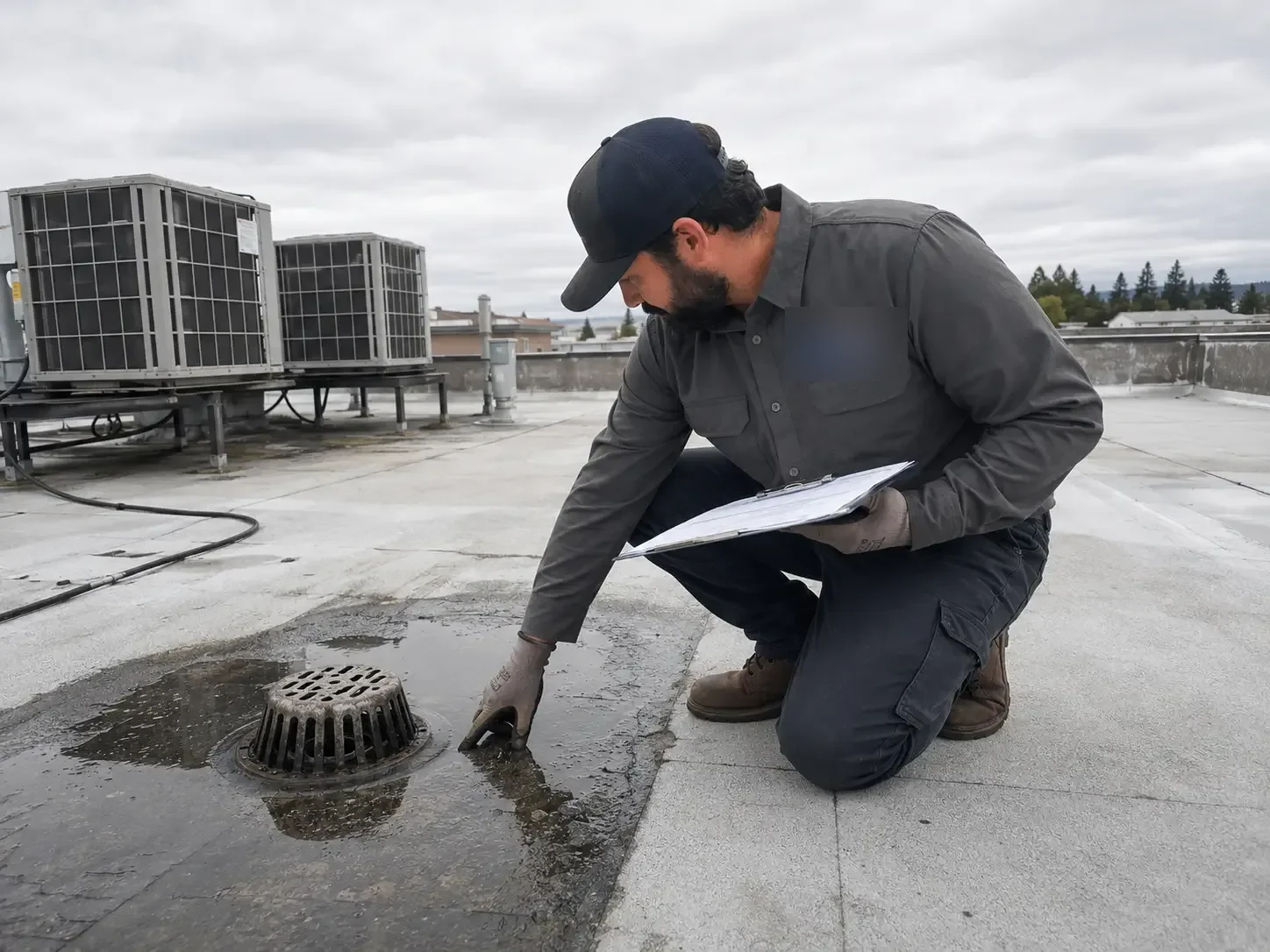
Roof Due Diligence Surveys
A poorly bonded recover over an older coated sheet can change the acquisition's roof allowance when an inspection opening exposes the interface. The outer surface may appear usable while the retained assembly cannot provide suitable receiving construction for another repair. We examine that connection on the requested property in New Braunfels, TX. The buyer needs the affected bond and layers investigated before treating the installed recover as useful retained material throughout the next investment phase.
We survey commercial roofs for acquisition and refinancing decisions. The examination identifies installed material, accessible defects and further investigation needed to define reconstruction. A sale date or financing review creates a decision deadline. It does not replace assessment of the receiving assembly. We distinguish work supported by inspected conditions from quantities still dependent on opening or component access. The owner can then evaluate complete roof corrections and remaining renewal against the building decision.
Examine the bond between new and retained construction
An opening through a recover can reveal an older treatment beneath the outer sheet. We identify that material and examine the connection between layers. Poor adhesion may be local or extend farther, requiring assessment beyond the first opening. The proposal should identify the investigation needed to determine extent. A new patch on the outer surface would leave an unsuitable retained interface unchanged beneath it.
For assessment of an installed roof recover, the survey examines how the assembly is connected and what remains below it. Receiving material and attachment requirements differ by system. We identify the construction actually installed before recommending retention. Suitable areas may remain where a complete new detail can meet them. Unsuitable bond or damaged layers may require removal to reach a workable receiver.
The opening location should answer the receiving question without needlessly disturbing unrelated roofing. We identify the affected interface and examine adjoining layers where they change the extent. Removing a small outer piece may expose residue that limits the replacement bond. The survey should explain the additional preparation or removal required, with suitable closure planned for the investigation opening itself.
Compare available roof history with the exposed assembly
The seller's roof information may identify a replacement, recover or repair without showing its full boundary. We compare that information with the material accessible during inspection. Photographs of earlier work can help locate rebuilt areas. The current opening determines what layers are actually present there. The survey should distinguish a locally renewed section from another part still containing older material.
Written findings on inspected roof construction connect those differences with the buyer's work decision. We identify the surface examined, lower material opened and receivers still unavailable. Another examination may be needed behind equipment or edge covers. Its access and restoration belong in the survey recommendation. The transaction allowance should not assume that an inaccessible assembly is suitable merely because an earlier roof entry describes completion.
Assess the requested property before setting its allowance
Cibolo's older commercial district is on Main Street. For a requested building in Cibolo, roof investigation needs a route to the actual recover boundary and equipment interfaces. We examine access above occupied space and identify the protection required for openings. The buyer should know which material decision remains unresolved before finalizing a repair quantity or the date for its construction release.
Gruene Historic District contains restored shops, restaurants and hospitality buildings. A requested property there may need investigation arranged around its operator's access restrictions. We identify the receiving layers and work boundary at that building. We examine sheet connections, layer depths and accessible roof edges before recommending what that property can retain. Handling and component removal need an allowance where they permit the required examination and permanent closure.
Establish removal depth where the interface is unsuitable
A recover bond finding needs examination of the material below that interface. Wet insulation, damaged board or unsuitable earlier treatment can alter the removal depth. Focused openings establish those layers where the result determines retention. The proposed reconstruction should identify the suitable receiver and the complete transition back to retained roofing. A boundary selected only from the outer sheet condition can miss material that makes the local detail unworkable.
Replacement of affected lower roof layers may extend beyond the first opening. We examine adjoining construction where required and restore investigation areas appropriately. For a roof removal and replacement comparison, support condition also matters. Qualified review resolves structural concerns where identified. The survey separates that review from the roofing quantity so the buyer can see which decisions must precede permanent reconstruction.
Include edges and penetrations in the investment comparison
A recover may have changed field height without providing suitable transitions at every component. We examine accessible edges, drainage connections and penetrations. The next assembly needs those receivers checked against its dimensions. A local interface correction can be necessary even where field material remains usable. The acquisition allowance should include its preparation and complete reconstruction instead of carrying only a field membrane task.
Rebuilding an unsuitable roof-edge connection and correction of an affected penetration detail can require different access and trades. We identify those requirements before the buyer compares options. A capital comparison for the acquired roof should state each option's retained material, removal depth and new transitions. The physical differences determine the construction funded by the allowance.
Locate unresolved work before the transaction decision
The survey recommendation should lead to an identifiable next task. A bond finding may need another opening; an accessible defect may be ready for measured repair. We identify the distinction and the access needed to resolve it. The owner or buyer coordinates authorization for investigation at the property. Its timing should allow suitable examination and restoration rather than forcing a final material decision from an unfinished opening.
Management of the retained roof after purchase uses the installed materials and reconstructed boundaries established during that work. Carry the completed correction separately from roof material still awaiting renewal. Later equipment changes can reopen the receiver decision. Review those proposed changes before disturbing the sheet. The next roof investment then follows the building's physical construction and current condition, with remaining investigation or work release clearly identified.
Commercial Roofing Questions
What does an unbonded recover interface mean for acquisition planning?
Investigate its material and extent before setting retention. The outer sheet may be usable in appearance while the assembly beneath it is unsuitable for the proposed connection. We identify the receiver and further opening needed. The buyer can compare local reconstruction with wider removal once the lower condition and complete work boundaries are established.
Can a seller's replacement record establish the entire roof assembly?
Compare the record's boundary with the current construction. A replacement may have covered one section or retained particular lower layers. We examine accessible edges and appropriate openings to establish the assembly affecting the decision. The survey should identify where earlier information matches inspected material and where another physical examination remains necessary.
How should restricted investigation access affect the allowance?
Identify the unavailable receiver and the task needed to reach it. Component movement, cover removal or an operating release may be required. We distinguish that investigation from repair quantities already supported by inspected conditions. The buyer should resolve the material decision before treating assumed retention or removal as a final construction scope.
What should the roof survey carry into a later refinance review?
Keep the inspected construction, repair boundaries and completion information identifiable. Include material left in service and any separate renewal or investigation still required. A later review examines current condition against that history. It should distinguish work completed since acquisition from original material retained, so the next investment follows the assembly now present at the building.

Roof Due Diligence Surveys