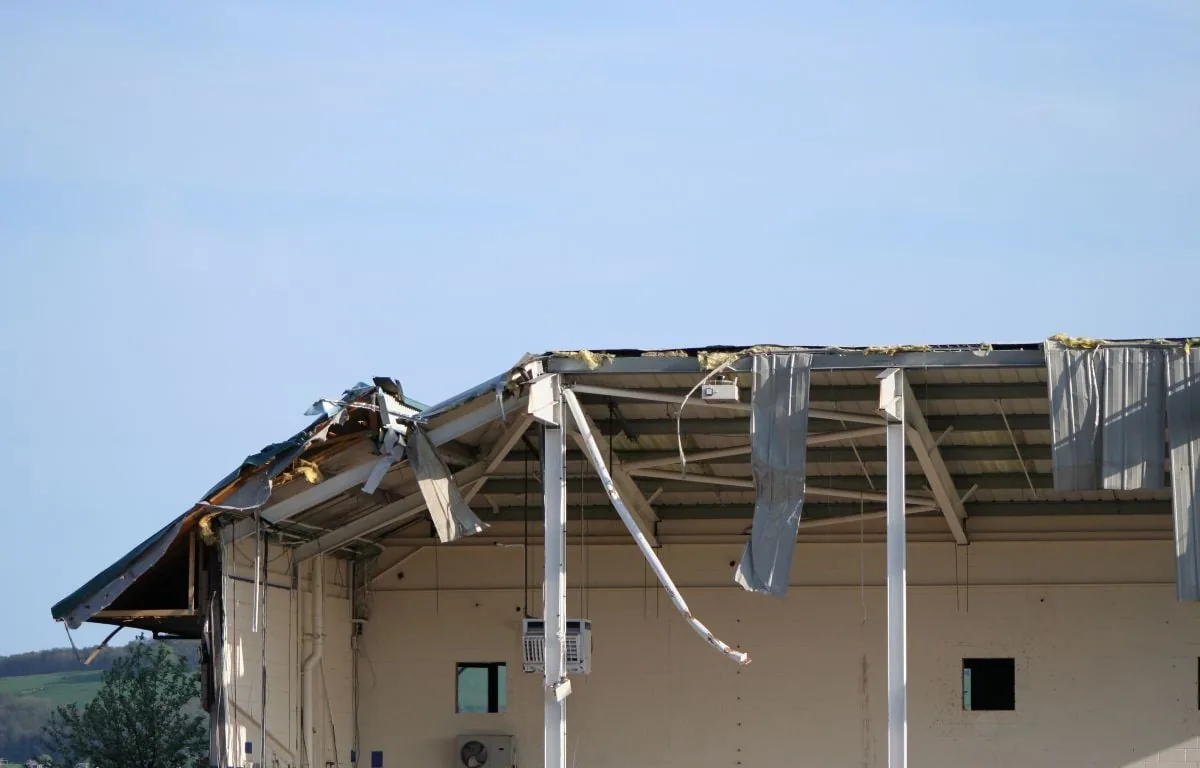
Tornado-Damaged Commercial Roof Repair
A detached membrane attachment row beneath an apparently retained perimeter changes the roof removal decision. The edge may look seated while the field connection has lost useful receiving support. After appropriate access release, we examine the displaced assembly on the requested building in New Braunfels, TX. The owner needs the attachment, deck and affected layers assessed before approving a new sheet closure. A retained outer edge alone does not restore the field's connection.
We inspect commercial roofing after reported tornado damage and reconstruct the affected assembly. The work follows qualified release of access and support where those concerns arise. Loose material, response openings and damaged layers require separate examination. We identify suitable receiving construction and the complete boundary needed for the new roof connection. Temporary protection addresses the immediate exposure. Our roofing team takes urgent calls around the clock, including nights, weekends and holidays, to arrange prompt protection for an exposed opening. Permanent reconstruction needs its own material, attachment and operating release before the damaged area returns to service.
Establish the receiving support before handling loose roofing
Displaced sheet can conceal damaged board or compromised support. We coordinate the inspection approach with the responsible parties before reaching that material. Structural concerns require qualified assessment. The accessible roof route and affected opening also need suitable protection. Loose components must be controlled before they create another hazard. Roof reconstruction proceeds from receiving construction accepted for the work, rather than from the visible position of a retained sheet.
Temporary closure of exposed roofing can help protect the building once suitable access and support are established. We identify the opening and attachment available for that closure. Its handling should not load unsuitable construction or interfere with drainage. Interior protection, electrical work and equipment isolation remain coordinated tasks with their responsible trades. Record the temporary boundary separately from the assembly planned for permanent rebuilding.
Examine the detached row and adjoining construction
A detached row may involve pulled fasteners, damaged plates or unsuitable receiving material. We examine the visible connection and adjoining layers. The deck assessment determines whether the proposed attachment can use retained construction. Qualified review may be needed where deck damage or support condition is suspected. Replacing fastening into damaged holes without examining that receiver can leave the new sheet connected to an unresolved defect.
Rebuilding the affected receiving roof layers should follow the accepted support condition. We identify material depths and removal needed to reach it. The new assembly's attachment requirements determine the suitable reconstruction. An attached perimeter needs examination too, including its transitions and receiving metal. The final scope connects the field and perimeter as one workable assembly without assuming every visually seated component can remain.
Apply the local event history to an actual damage review
A February 2017 tornado near Schoenthal Ranch in Comal County began near Dedeke Drive and Dry Comal Creek. That local history makes tornado-related condition review relevant to owners with a reported event at their building. We examine the requested roof, available photographs and earlier repair information. The reconstruction boundary follows its actual displaced material and receiving support. We inspect attachment receivers, membrane cuts and penetration edges before locating each reconstruction boundary. Where the receiving layer is concealed, suitable investigation openings establish what needs removal and how the replacement detail can join the retained construction.
The March 21, 2022 South Central Texas event included tornado damage east of Kingsbury, affecting barns, trees and homes. At a requested property around Kingsbury, we inspect both visible displacement and concealed roofing where it changes retention. A nearby piece of debris may indicate another contact point requiring examination. Each damaged connection receives its own measured rebuilding quantity, with the wider assembly assessed before replacement is recommended.
Inspect impacts and response openings separately
Debris can cut sheet or distort a penetration away from the detached attachment row. We examine accessible affected areas for those conditions. An opening made during response can also need permanent reconstruction. Its shape and receiving layers determine the closure. The repair boundary may reach beyond the visible cut if water or broken board extends below it. Identify those areas before combining them into a larger renewal allowance.
Reconstruction at a membrane impact opening needs suitable sheet and support. A damaged roof flashing interface requires its own termination and receiving-surface assessment. We coordinate removal where their boundaries meet. A new field sheet will not rebuild a displaced component or unsuitable wall connection by itself. Those tasks should remain visible in the scope before another trade covers them.
Release the building area needed for complete reconstruction
Seguin's manufacturing activity includes CMC Steel, Caterpillar and Hexcel. At a requested operating industrial property there, roof reconstruction needs a practical material route and protection for the actual space beneath it. We identify equipment and handling restrictions before removal. The operator determines the released operating area. That release must permit complete correction of damaged support and layers, not merely placement of new sheet above material still requiring work.
For reroofing around continued building operations, narrower phases can keep work separate from usable areas. They also create additional transitions and temporary boundaries. We compare those construction tasks with a wider release. The owner and other responsible trades should know which openings can receive permanent closure during each phase. Schedule the required lifting, support correction and component work before that roof area is opened.
Compare retained construction with the replacement assembly
Some surrounding layers may remain useful after examination. Wider damage can require a broader reconstruction boundary. Replacement of the damaged commercial roof assembly should identify the material retained, support accepted and transitions rebuilt. A proposed TPO renewal or another membrane system needs suitable attachments and perimeter details throughout that boundary. The comparison includes those connections, not only the installed field sheet.
A photographed damage and retained-layer assessment identifies the findings driving that decision. Final checks examine the reconstructed field, edges and penetrations before temporary protection is removed. Record the installed material and attachment boundary with completion photographs. Later work should use that information when changing equipment or opening the roof. A future condition review can then distinguish the completed reconstruction from material left beyond its measured extent.
Commercial Roofing Questions
Can a retained perimeter justify repairing only the detached field row?
Inspect the receiving deck, affected layers and perimeter connections first. A seated outer edge may coexist with unsuitable field support or damaged attachment. We identify the construction that can remain and the new connection it can receive. Local rebuilding is considered against those findings, including transitions needed to make the assembly complete.
Who determines whether the exposed support can carry reconstruction?
Qualified assessment resolves structural concerns before roof installation proceeds. We identify accessible material and coordinate roofing with the accepted receiving condition. The attachment method must suit that construction and the selected assembly. A new membrane should not conceal support that remains unresolved merely because temporary weather protection has been placed above it.
How do debris openings affect the replacement boundary?
Each impact needs examination of sheet continuity and lower material. Damaged board or water can extend removal beyond the cut. Several openings may join one reconstruction boundary when suitable receiving construction lies farther away. We measure that relationship before recommending isolated closures or a wider assembly, with component and flashing defects addressed separately.
What should remain distinct in the damage and completion records?
Keep initial findings, temporary protection and permanent roof reconstruction identifiable. Photographs should show the affected material and the completed boundary. Include receiving layers replaced and any separate task remaining outside the work. The owner can then use the roof history for later maintenance, equipment changes or review of a new condition without treating temporary closure as finished renewal.

Tornado-Damaged Commercial Roof Repair