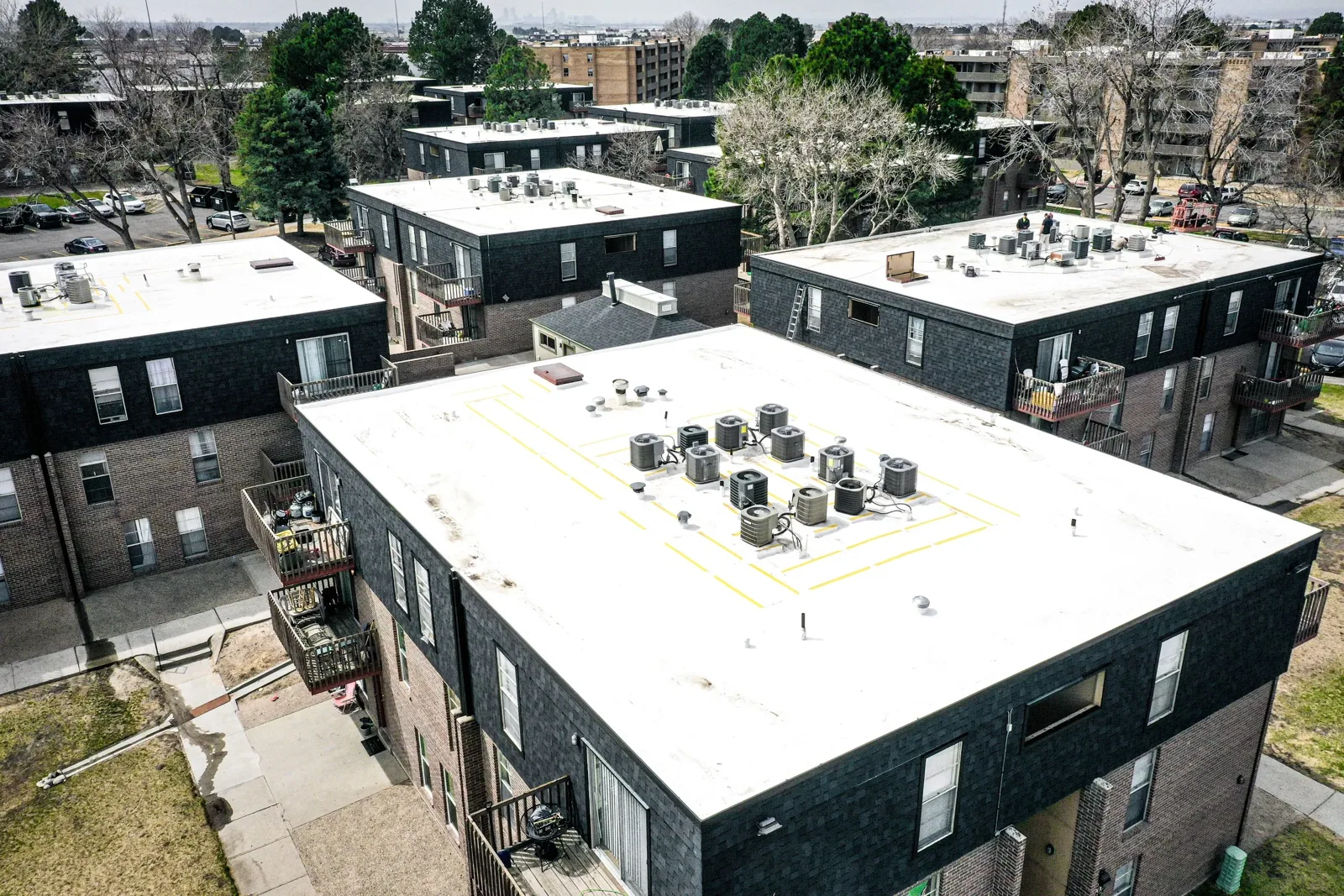
Duro-Last Commercial Roof Work
Closely spaced pipes can leave too little receiving room for two separate flashing details to close properly. The proposed prefabricated connection needs measured geometry before fabrication or installation. We examine the affected Duro-Last roof in New Braunfels, TX, and identify sheet, pipe clearance and support at the opening. The owner should compare a suitable combined or otherwise appropriate detail with any required component change. Forcing separate parts into the same restricted space can leave an incomplete roof connection.
We repair and install commercial roof systems, including Duro-Last PVC assemblies suited to the building. Duro-Last uses prefabricated roofing and accessories alongside connections completed at the work area. Actual dimensions and compatible receiving material determine how those parts can be installed. We inspect the field and penetrations before selecting reconstruction. The scope identifies material removed, layers retained and permanent details needed, with access that permits preparation and inspection around the whole connection.
Measure the available receiver around both pipes
The distance between penetrations affects flashing placement and access for connection work. We measure pipe positions, sizes and height above the roof. Adjacent equipment or covers can restrict preparation too. The suitable detail must meet the assembly's requirements in the space available. If a component needs relocating, the responsible trade and design requirements should be identified before roofing is fabricated or the field opening is released.
Reconstruction of closely spaced penetration flashing includes the receiver between components. We examine sheet condition and the material beneath it. A prefabricated part should match useful dimensions, not an assumed arrangement that changes during another trade's work. Confirm those components before final fabrication where appropriate. The roofing closure then needs a workable sequence around both pipes, with any required lower reconstruction completed first.
We also check tool access between the pipes. The installer needs room to prepare and finish the selected connection without pressing against an adjoining detail.
Identify compatible PVC and older repairs
Existing sheet and patch materials need examination at the proposed connection. We review available Duro-Last information and inspect accessible receiver edges. Suitable PVC can receive a material-specific reconstruction. Deterioration, contamination or incompatible repairs may require more removal. The detail should have useful receiving material throughout its boundary, including the restricted position between the pipes. A prepared outer edge alone does not complete that inner connection.
Repair of the installed PVC assembly follows the selected system's preparation and connection requirements. We check installation conditions at the roof and examine completed seams appropriately. Factory preparation does not remove the need for suitable field connections. The work area still needs enough access to finish and inspect them. If equipment limits that access, coordinate its responsible movement before roofing closes around it.
Reach the requested building's service interfaces
For a commercial property on the New Braunfels I-35 corridor, the actual pipe arrangement and handling approach need inspection. On the regional map, I-35 runs from New Braunfels toward Schertz and Selma to the southwest. At the building, we verify the assembly and operating space before opening the field. The repair allowance should include protection and component access necessary to prepare both receivers, rather than restrict work to the side easiest to reach.
Within New Braunfels city limits, Building Safety processes building permits and inspects construction. For work involving a roof assembly or insulation change, we confirm the applicable permit path and inspection points before opening the field. We identify the receiving layers, coordinate equipment and occupied-area restrictions, and set a work release that still permits complete fabrication fit and roof closure.
Rebuild unsuitable material beneath the fabricated detail
A crowded penetration area may cover wet insulation or damaged board. We investigate lower condition where it changes the receiver or removal boundary. Selected openings identify material depth and support. Unsuitable layers require a measured quantity. Useful adjoining material can remain where the new detail meets it correctly. The opening should reach construction capable of supporting the entire fabricated connection, including the space between its pipe receivers.
Replacement of the affected receiving roof layers includes transitions to retained field material. We check height and attachment before closure. The pipe trade addresses its support or relocation task separately. The roofing detail should follow suitable component positions and accepted receiving construction. Installing the accessory first can conceal board that still needs work or force another opening when a component dimension changes.
Compare the complete connection with a wider renewal
A useful surrounding field can support local reconstruction after unsuitable material and access restrictions are resolved. Wider sheet damage or several incomplete receivers may warrant another renewal boundary. We inspect construction between affected details before extending removal. Sika Sarnafil PVC systems and Johns Manville roof options may be evaluated for an appropriate broader project. Each assembly needs review of its own compatible receiving construction.
The allowance for renewal of a larger roof field should include new penetration and perimeter interfaces. A prefabricated field still needs connections completed at the building. We compare those tasks with local Duro-Last reconstruction, including handling, component access and weather-resistant stopping points. The owner can then assess complete usable assemblies rather than choose an outer material while leaving the crowded receiver unresolved.
Inspect field connections before returning equipment access
The installed detail should fit the accepted pipe arrangement and meet suitable sheet around its boundary. We inspect accessible seams and transitions using appropriate methods. Lower reconstruction should have been checked before closure. Component covers should not return before the roofing beneath them receives its inspection. Completion photographs identify the fabricated part, field connections and material rebuilt. The handover also identifies construction left beyond the local work.
Continued care of the completed PVC roof should preserve access to vulnerable connections. Later pipe or equipment changes can alter the receiver dimensions again. Review those changes before disturbing the installed detail. For review of applicable roof warranty documents, the issuing party's terms and process determine requirements and coverage decisions. We can identify the material and physical correction for that review, with the reconstruction boundary kept clear in the roof history.
Commercial Roofing Questions
Can separate prefabricated flashings fit two closely spaced pipes?
Measure the component arrangement and available receiver before selecting fabrication. The details need enough space to form their required connections. A combined or different suitable detail may be needed, or another trade may need to alter a component. We identify that decision before field removal so the installed roofing can close completely around both pipes.
What should be confirmed before the flashing is fabricated?
Identify pipe positions, dimensions, component support and receiving roof material. Resolve proposed changes with the responsible trade. We examine lower layers where their condition affects the part's fit or support. The final geometry should permit preparation and inspection at the work area, rather than assuming that a factory-made accessory can compensate for an unsuitable field receiver.
How do older patches affect Duro-Last reconstruction?
Examine their material, bond and location within the proposed boundary. An unsuitable patch or residue can require removal to reach useful compatible sheet. The closure needs receiver on all sides, including restricted spaces beside components. We identify that quantity before installation and measure lower damage where it extends the reconstruction beyond visible surface preparation.
What should be reviewed before later equipment changes near the detail?
Compare the proposed component positions and dimensions with the installed roof connection. Identify sheet or accessory work that will be disturbed. Coordinate compatible reconstruction and relevant document requirements before release. The completed change needs inspection at the field connections, with material and boundary information retained for later roof assessment or another investment decision.

Duro-Last Commercial Roof Work