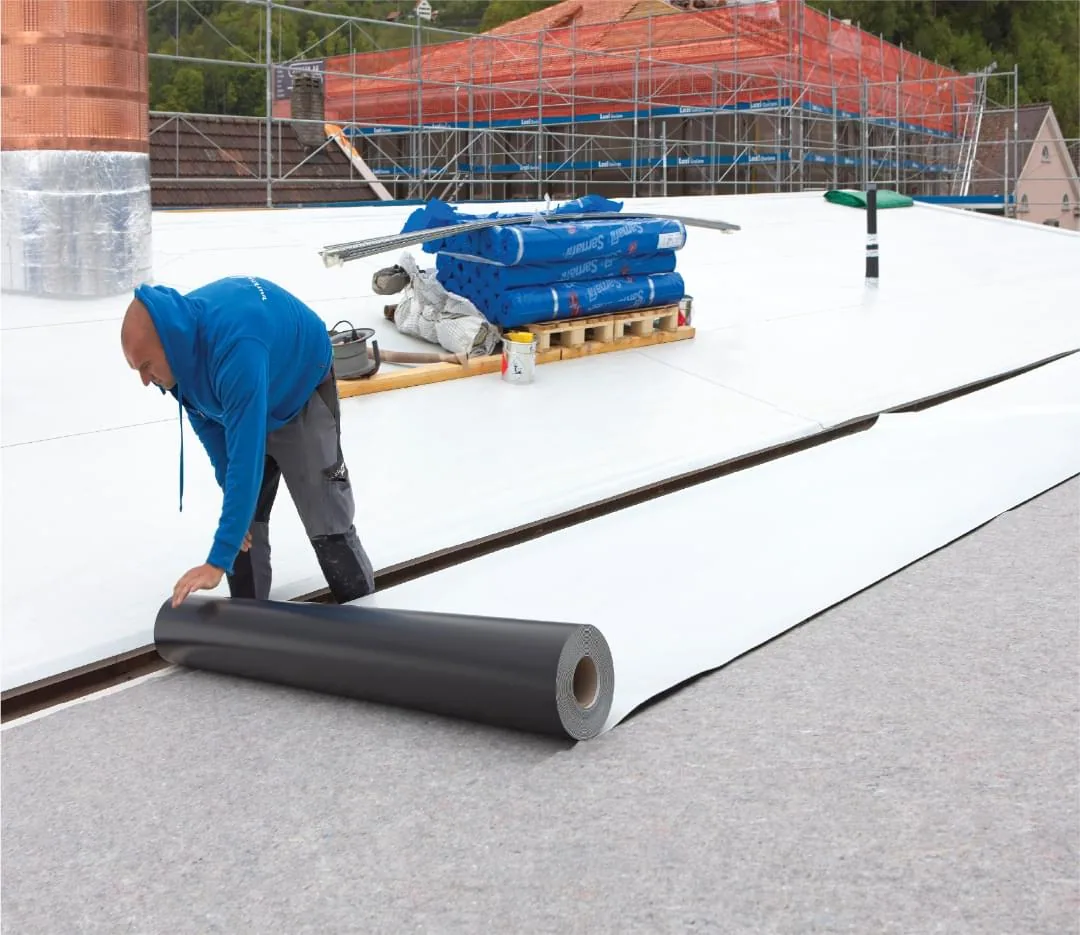
Sika Sarnafil Commercial Roofing
A loose corner at a parapet can leave a PVC roof exposed even when the field membrane remains serviceable. We inspect the Sika Sarnafil assembly in New Braunfels, TX, then check the seam, flashing height, edge metal and substrate before assigning the repair. A product name helps identify the system family. The roof still needs an inspection to confirm which layers are present and whether an earlier repair changed the surface.
We measure the failed corner and the adjoining material. A patch should not cover a detail that is still moving or a lower layer that has lost support. The next investment could be a local flashing reconstruction, a larger section of membrane, or removal and replacement of the affected assembly. We record what the roof shows, which area can remain and what needs a separate verification before the work is released.
Read the PVC sheet and the detail together
Sarnafil is a PVC roofing line. The field sheet, seams, flashing and accessory materials still need to be identified on the actual building. We check markings, drawings, welds, attachment and prior repair products, then distinguish original materials from later work. A property may have several roof sections installed at different dates. We keep those assemblies separate in the report rather than letting a familiar name stand in for an inspection.
Heat-welded seams require a clean, compatible surface and an appropriate weld. Corners, pipes, drains and equipment curbs each present different geometry. We check whether the sheet has enough movement allowance and whether the receiver is stable. Where the roof has mixed materials, a Carlisle SynTec membrane comparison or a Versico assembly record can help interpret the documents, but the field evidence controls what we specify.
Trace water before rebuilding the flashing
At a parapet, we inspect the wall transition, termination bar, coping, inside corner and nearby drain path. Water may enter where flashing has pulled away, or it may collect because a drain or scupper is restricted. We map the reported leak to those roof details and compare it with the interior location. A stain alone does not establish the roof opening. The inspection record gives the owner a measured location for the first repair boundary.
We look below the membrane when a soft area, blister or moisture reading suggests a concealed condition. The removal quantity follows confirmed wet or unstable material, not the full area around a ceiling mark. When the issue is drainage, a drain and scupper correction may need to be considered with the membrane work. A leak repair scope can show both tasks separately so the owner can authorize the cause that has been verified.
Set access for the actual New Braunfels property
New Braunfels has hot, humid summers, and the crew checks the roof surface and substrate before beginning membrane work. A warm day does not replace a readiness check. Moisture, shade, wind, surface contamination and existing coating can affect the weld and preparation. We identify the proposed repair area, access route, equipment restrictions and the person who can release the roof. That plan changes for a production building near FM 1101 and for occupied retail or hospitality property in the Gruene Historic District.
Downtown New Braunfels pairs retail and hospitality uses with nineteenth-century architecture; access and customer paths shape the ground protection plan. Those uses make pedestrian protection and deliveries part of the field plan where a job is near an active commercial block. A roof inspection does not assume a named building's system or condition. We confirm it at the property. When a scope changes roof layers, the owner needs to identify the permitting authority and any required inspection before the crew date is set. We keep that review tied to the proposed assembly and the property's jurisdiction.
Compare a focused repair with membrane renewal
Repair fits when the defect is isolated and the field sheet, seams and receiving surface remain sound outside the measured boundary. Replacement becomes a stronger option when deterioration repeats across the roof, flashing details cannot be rebuilt reliably, or wet insulation extends beyond the original opening. Recovery may retain suitable layers, but moisture, attachment, structure, drainage and edge details must support the new assembly. We list each route separately, including the removal or retained material that drives the work.
Cost and timing depend on membrane and flashing quantities, access, equipment removal, insulation or cover-board replacement, protection, disposal and any permit review. We include the edge and wall terminations because those can dictate how far the new assembly extends. Where inspection supports all three choices, we compare a complete replacement scope, a compatible recover option, and a measured PVC roof assembly as separate estimates. The comparison identifies assumptions and conditions that would change the quantity. If a capital cycle is close, a measured repair can protect the area while the owner prices replacement. Inspection findings still determine whether that timing is sound.
Protect the finished weld and repair record
We inspect the completed welds, flashing corners, edge terminations and nearby drainage before the area returns to service. Photographs document the repair location, receiving surface and final condition. The closeout notes the material installed and the lower-layer work. If an adjoining area was not included, we record its condition separately so a later inspection can tell retained material from repaired material.
For active properties around San Marcos, Interstate 35 and regional employment routes can influence crew access, but we coordinate from the actual building schedule and the owner's delivery rules. Roof access, hot-work controls where applicable and equipment movement are confirmed with the responsible contact. Keep product submittals, membrane records, roof drawings and photographs together. A later condition report can compare the same parapet or seam and identify whether the next investment remains local or moves into a renewal phase.
Commercial Roofing Questions
How do you know whether the roof is Sika Sarnafil PVC?
We check labels, drawings, exposed edges, membrane appearance, seam construction and repair history. The manufacturer name on a prior invoice is useful, but additions can differ. If a section cannot be identified from the available evidence, the report marks it unconfirmed and names the sample or manufacturer review needed before we select a repair material.
Can a small parapet opening be patched without replacing the field?
A focused repair is possible when the adjacent sheet and receiver are sound and the corner can be rebuilt with compatible material. We inspect the full transition, not only the visible split. If the membrane is brittle, the wall flashing has failed along a longer run, or insulation is wet, the work boundary may need to extend.
What does a PVC roof inspection cover?
We review field seams, flashing, corners, penetrations, drains, edges, attachment and prior repairs. We also note ponding, soft substrate, exposed insulation and equipment conflicts. The report separates confirmed findings from areas where an approved opening could change scope. The owner can price the measured repair boundary beside a wider renewal option.
Will weather change the installation window?
The crew checks actual surface temperature, moisture, wind and readiness before welding or bonding. New Braunfels has hot, humid summers, but conditions vary by hour and roof exposure. We follow the selected system requirements and adjust the work sequence when the receiving surface is not ready.
What should be kept after a Sarnafil repair?
Save the repair location, identified membrane, material submittal, installed quantity, photographs, seam check and completion date with the roof file. Add any retained condition or access restriction. This record gives the next inspection a reliable comparison and helps keep an old correction distinct from a later failure.

Sika Sarnafil Commercial Roofing