Carlisle SynTec Commercial Roofing
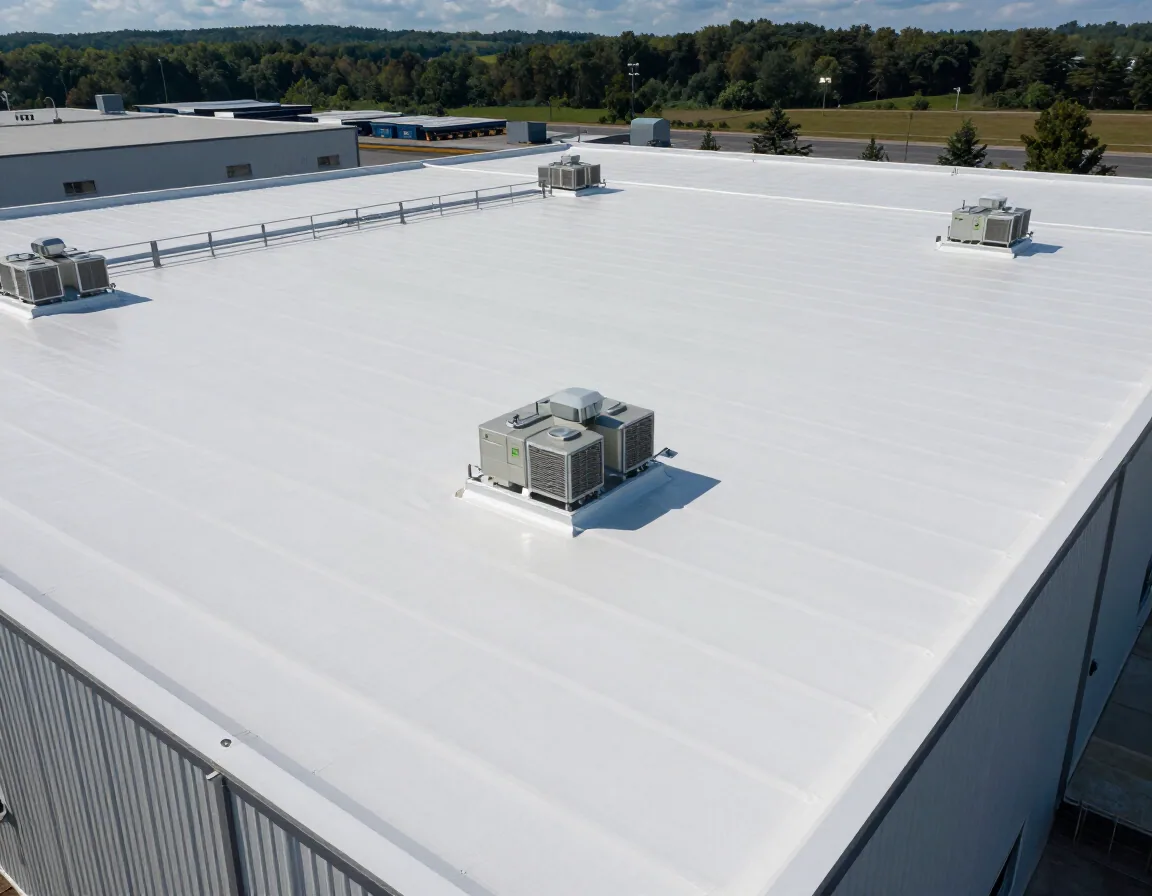
A lifted seam beside a rooftop unit changes the repair boundary. The field sheet may still be usable, while the curb flashing or nearby cover board needs rebuilding. We inspect the Carlisle SynTec assembly in New Braunfels, TX, identify the membrane and repair history, then measure the affected detail. The manufacturer name narrows the material conversation. We pair the bond check with lower-layer findings and deck condition, then compare the repair boundary with the owner’s wider repair-or-removal decision.
We work on commercial membrane roofs in New Braunfels, where hot, humid summers are documented for Comal County. Surface temperature, moisture and the existing assembly affect preparation and installation timing. Before we set a scope, we record the area that changed, the adjoining material that remains sound, and any transition that could widen the work. The owner gets a measured correction rather than a broad replacement recommendation based on one failed seam.
Identify the sheet before choosing a repair
We start with records, visible markings and a close inspection of field sheet, flashing and earlier repair materials. Carlisle SynTec is associated with several commercial membrane assemblies. A building can also carry later additions or repairs from another system. Later additions or repairs may use another system. We identify the sheet by roof area and mark any compatibility question that needs a sample or manufacturer review before the repair method is selected.
That distinction matters when the repair crosses a coated metal edge, curb, drain bowl or expansion joint. The membrane can look similar while the attachment, thickness or surface treatment differs. We compare the proposed material with the existing sheet and detail before setting the method. When markings are inconclusive, we hold product selection until a sample or manufacturer review confirms a compatible repair surface. A separate Versico system review can help an owner compare another documented membrane when the roof history shows mixed work.
Trace the seam and the receiving surface
A seam problem is rarely measured by the visible split alone. We test the adjoining weld, check for movement and look for trapped water, contamination or a poorly supported transition. At a curb, the vertical flashing and field sheet must connect without a tensioned corner. At a drain, the sheet must meet the bowl and clamping detail without a wrinkle that redirects flow. The inspection records the failed length and nearby details separately, so a local defect does not turn into an unmeasured field allowance.
Lower layers also matter. A membrane that appears intact can sit above wet insulation or crushed cover board. We look for soft areas and review moisture-survey findings before closing the scope. Where a condition report or infrared result indicates a broader question, we can compare it with a photo-based roof condition report and set selective openings. The owner can then see whether the repair stops at the seam or includes a defined area of underlying material.
Plan the work around the building use
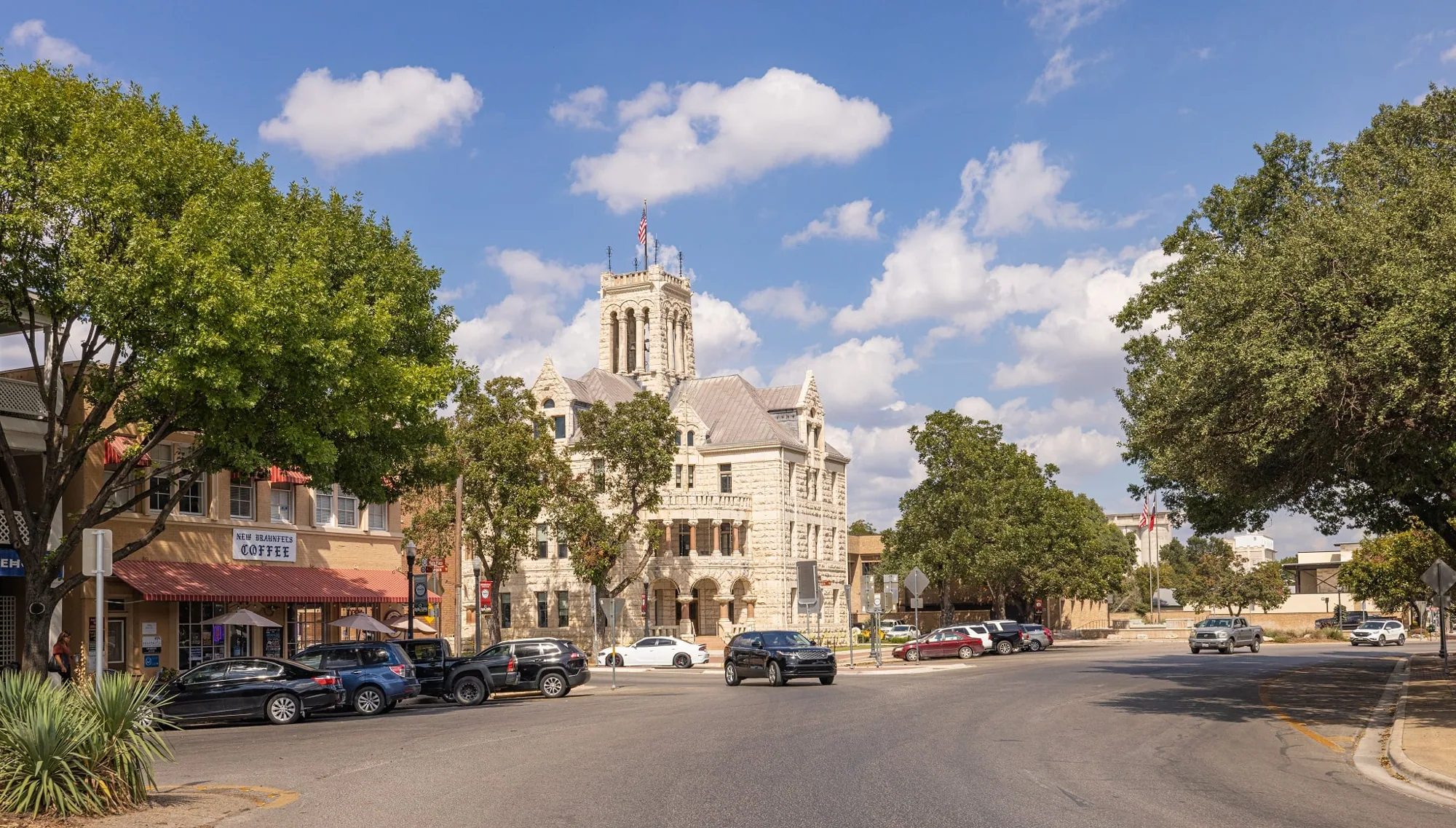
New Braunfels roofs serve different operating schedules. A manufacturing property near FM 1101 can need access coordinated around production and equipment movement. Downtown New Braunfels buildings with retail, cafes and music uses may need pedestrian routes kept clear. Those are different release conditions, even when the roof detail looks similar. We identify the requested area, roof access, equipment shutdown needs and any tenant boundary before mobilizing. The repair plan names the work zone and the person who can release it.
Comal County's hot, humid summer context affects when adhesives, coatings and membrane work can be prepared and installed. The crew verifies moisture, temperature and surface readiness at the roof; a scheduled date alone cannot establish suitable application conditions. We also keep the application steps tied to the chosen material. An adhesive set, heat weld and liquid flashing detail each require their own clean, dry and compatible receiving conditions. For a nearby property in Gruene Historic District, restored shops and restaurants make occupied-area protection a practical part of the staging plan, not a generic promise.
Compare a local correction with broader renewal
A measured patch is sensible when the sheet remains sound around a discrete opening and the receiver can support a compatible repair. A wider section may be justified when seams, fasteners or insulation show related failure beyond that point. We outline both boundaries when inspection supports both choices. The price drivers are the quantity of membrane and lower-layer removal, detail count, access, protection, disposal and the time needed for trade coordination. We list confirmed removal quantities separately and identify any concealed layer that still needs a test opening.
A new layer should be priced only if the current build-up meets retention requirements and can support the proposed attachment, drainage and perimeter details. The retained layer must be suitable, the roof cannot be carrying an unaddressed moisture condition, and the new attachment must reach an appropriate substrate. For New Braunfels projects, check the locally amended 2021 building, existing-building and energy provisions against the proposed roof assembly. Permit and inspection needs belong in the schedule discussion. We can also evaluate a roof recover overlay or a full replacement scope when the inspection record supports that comparison.
Inspect the finished connection before release
We check the repaired seam, flashing edges and nearby drainage after the work is complete. A weld probe or other suitable quality check can reveal an open edge before the area is returned to service. We photograph the corrected detail and note any retained material or condition outside the work boundary. If the crew opened insulation or cover board, the closeout records what was removed and rebuilt. That lets the facilities lead compare the next inspection against the same roof location and decide whether a new condition changes the renewal phase.
Equipment pads, service routes and rooftop curbs are part of the repair handoff when they sit beside the work. We coordinate repositioning with the responsible trade and confirm that the new detail remains accessible for future service. If water remains after a storm, a drain and scupper inspection can distinguish a drainage obstruction from membrane damage. Keep the record of the identified Carlisle SynTec assembly with the repair ledger for its next inspection.
Commercial Roofing Questions
Does a Carlisle label tell us which repair material to use?
The label is a starting point, not a complete compatibility record. We identify the membrane, surface condition and prior repair at the affected area, then select a method that can bond or weld to that receiving surface. Mixed repairs or unclear markings may require a sample or manufacturer confirmation before installation.
Can one open seam justify replacing the whole roof?
A single opening does not answer that question. We inspect nearby seams, flashings, attachment and lower layers, then map the repair boundary. If surrounding material remains sound, a local correction may be reasonable. Repeated failure or wet insulation can support a larger renewal, which we document separately.
How does summer heat affect a membrane repair in New Braunfels?
Hot, humid summers are part of the Comal County climate context. We check actual surface and substrate conditions, moisture, shade and forecast before starting. Those observations guide preparation and the work window. They do not substitute for the product requirements or a sound receiving surface.
What should the closeout record include?
Keep the affected roof location, identified sheet, materials installed, area opened, lower-layer work and final seam photographs together. Add the completion date and any access restriction or retained condition. That gives the next inspection a useful comparison and prevents a later repair from being mistaken for original construction.
When is an overlay worth comparing with removal?
We compare recovery only after checking moisture, attachment, substrate capacity, drainage and applicable code requirements. A sound, dry assembly may support a retained-layer option. Wet or unstable layers can require removal. The written scope should show the tested area, the assumed boundary and the condition that would change the quantity.
Carlisle SynTec Commercial Roofing