Versico Commercial Roofing
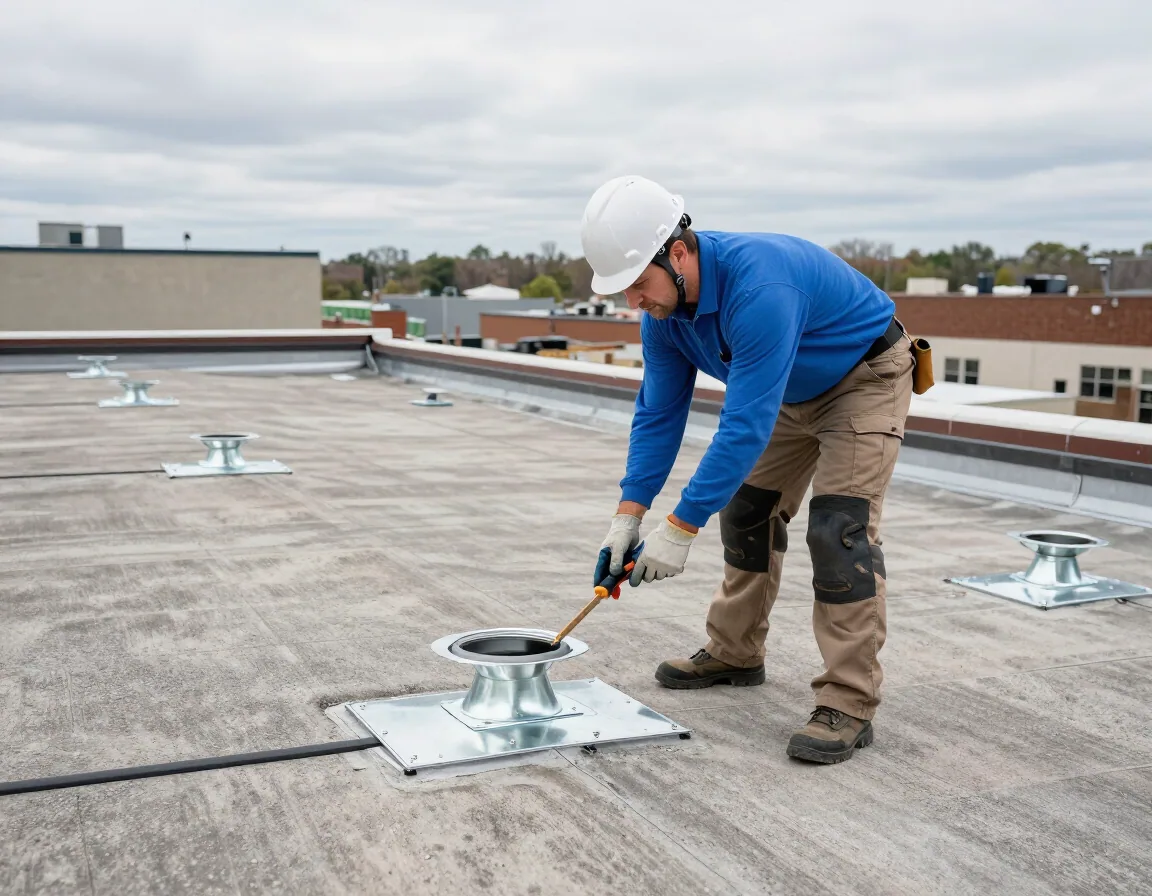
A wrinkle that reaches a drain bowl can hold water even when nearby seams remain tight. We inspect the Versico roof in New Braunfels, TX, and measure the transition before choosing a correction. The manufacturer name helps us locate records and compare materials. It does not tell us whether the drain, field sheet and insulation beneath it are all part of one original assembly. Each item needs its own finding.
Our repair ledger separates the membrane issue from drainage and lower-layer questions. We record the area that can remain, the detail that needs rebuilding and any opening needed to verify concealed material. New Braunfels has hot, humid summers, so we check the actual surface and substrate before installation. The next investment can then follow the condition change rather than a blanket recommendation based on a single wrinkle.
Identify each roof area before ordering material
We compare the roof markings with drawings, submittals, repair invoices and the visible sheet. A Versico label can point to the system family while leaving later additions unexplained. We map roofs by section, record how each is attached and note changes in membrane, insulation, cover board and edge detail. If the assembly is mixed, we do not extend one repair specification across the entire building without evidence.
The repair must meet its receiver. We test or inspect the surface, then choose a compatible weld or bond and identify the required preparation. At pipes, curbs, drains and parapets, material and geometry work together. If the record points to a different membrane, we can compare a Carlisle SynTec roof section or a Sika Sarnafil PVC assembly without treating product names as interchangeable. The field inspection sets the recommendation. We confirm the receiving surface before each weld begins.
Give the water path its own inspection finding
A drain-area wrinkle can come from sheet tension, a poorly formed bowl transition or movement below the membrane. We clear the path enough to inspect it, check the clamping or flashing detail and measure ponding where present. The roof slope and nearby scuppers matter because a local patch cannot correct a blocked outlet. Our photographs show the wrinkle, the drain and adjoining field so the owner can see which work addresses each condition.
When a leak is reported inside, we trace it to the roof rather than assume the closest visible flaw is the source. Water can travel under the membrane or follow deck flutes. If insulation may be wet, we review survey data or request a selective opening. A drain and scupper repair can be priced beside a leak correction, with separate quantities for the owner to authorize. The scope should not charge a drain rebuild to an unrelated interior stain.
Plan a repair through the workday
State Highway 46 links New Braunfels with Seguin and Boerne. That route does not set the building delivery window, but it gives the facilities lead a reference for coordinating suppliers and crew arrival. We confirm the contact, loading area, ladder or hatch, equipment shutdowns, pedestrian routes and any tenant notice. At a production property in New Braunfels, the operating schedule can set the work window; in the Gruene Historic District, customer movement may shape ground protection.
We name these constraints before setting the release date. If a temporary opening is needed, the scope says how it will be protected overnight and who can inspect it. The crew confirms weather and surface readiness on the day of application. Humidity, wind, shade and moisture can affect preparation. We do not promise a weld or adhesive connection until the substrate and membrane are ready under the selected system's instructions.
Price the boundary the roof can support
A local correction is appropriate when the sheet remains serviceable around a defined defect and the substrate is dry and stable. A wider membrane renewal may be justified when seams or attachment fail across multiple areas. Replacement should be considered when wet insulation, failed edges or repeated repairs make retained material a poor base. Recovery is a separate option, and requires a suitable assembly, secure attachment, sound structure and details that can terminate the added roof.
We measure membrane, flashing, insulation, cover board, edge metal and drain work separately. Access, lift needs, equipment relocation, disposal, occupied-area protection, permit review and trade coordination affect price and timing. We measure the receiving area, truck path and onsite working hours before setting deliveries. Those details decide where materials can be staged and which roof route remains open during the repair. Where the findings support multiple paths, compare a recover overlay with full replacement and a TPO assembly. Each scope should state the condition that would widen its quantity. Permit review can also affect the sequence when the project alters insulation, assembly layers or edge conditions. We identify that need before committing to a crew date, then keep field changes separate from the approved base scope so the owner can review added quantities clearly.
Keep the closeout useful for the next visit
We inspect the repaired seam, drain, termination and nearby transitions before returning the area to the owner. The closeout records material, repair dimensions, photographs, date and lower-layer work. If an adjoining area remains outside the scope, it gets its own note. That distinction gives the next inspection a baseline and keeps a future condition change from being confused with the current correction.
For a building with repeated roof sections, we match each record to its location and equipment context. A facilities lead can track an insulation repair at one drain without assuming that the same assembly continues across the whole property. If a larger capital choice follows, a roof condition report can bring inspection findings, images and outstanding decisions into one review. We ask for the building, roof history and next funding date before planning the return inspection.
Commercial Roofing Questions
Does Versico on an invoice prove every roof section uses the same material?
No. Additions and later repairs can introduce different membrane or attachment. We compare the invoice with markings, visible edges and field conditions. The report separates each identifiable section and flags uncertain areas for a sample or confirmation before we choose a repair material.
What can cause water to collect beside a drain?
A wrinkle, restricted outlet, poor bowl transition or movement in the receiver can affect drainage. We inspect the bowl, membrane, slope and outlet together. If water remains after clearing the path, we document the measured area and decide whether correction belongs in the membrane scope, drain scope or both.
Can you replace only the affected Versico section?
A local replacement can work when the boundary is clear and adjacent sheet can receive a compatible connection. We check seam condition, attachment, insulation, cover board and termination details around the area. If those conditions continue beyond the opening, the scope expands to the measured limit rather than an arbitrary patch size.
How are work hours set for a commercial property?
We coordinate the roof access contact, delivery path, equipment restrictions, tenant route and return-to-service time. The building use determines the controls. Weather and actual roof readiness affect the work sequence, so the release date follows both the operating window and the conditions needed for the repair.
What is needed before an overlay is approved?
The existing assembly must be suitable to retain. We check moisture, attachment, structure, drainage and edge conditions, then account for applicable code review. The written scope names the retained material and any assumptions. If selective openings show wet or unstable layers, we revise the removal quantity before proceeding.
Versico Commercial Roofing