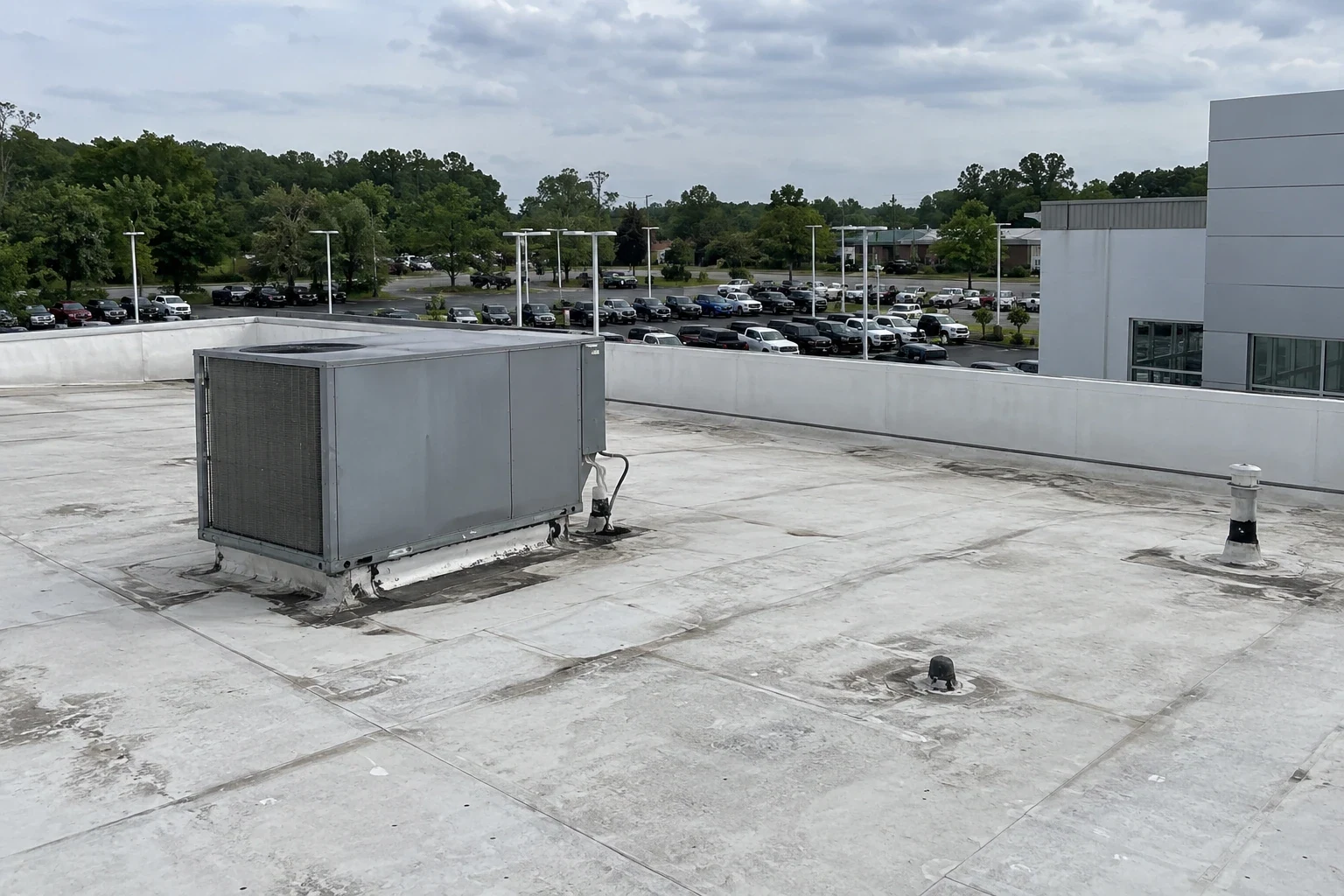
Auto Dealership Roofing
A failed weather seal where a translucent roof panel laps adjoining metal can make that junction the next dealership roof expenditure. The rooflight and receiving panel need examination before another general metal treatment is selected. Auto dealership roofing in New Braunfels, TX, connects the detail finding with compatible reconstruction. We inspect the panel condition and supporting arrangement. The owner can then compare a localized junction repair with the metal field retained outside that work boundary.
Commercial Roofing New Braunfels repairs and installs commercial roofs over vehicle sales, service and related storage use. Showroom and service areas can have different assemblies or operating releases. We assess the affected detail before recommending removal. The useful investment identifies what material remains and the connection requiring rebuilding. Vehicle movement and equipment dependencies need practical coordination where they directly affect roof access, protection or completion of that correction.
Assess the translucent panel and its metal junction
A rooflight panel can have cracks, degraded edges or a failed lap connection. We inspect its condition and the adjoining metal profile from a suitable access position. Translucent material should not be treated as a walking surface. The repair method needs compatible seal materials and appropriate securement. A damaged panel may require replacement rather than another lap seal. Supporting and receiving construction should be examined before selecting that quantity.
We connect daylighting roof detail correction with the actual assembly. A replacement must suit the profile and construction it meets. Appropriate review may be needed where the panel arrangement or support changes. The owner should compare the rooflight component, its junction and surrounding metal as connected quantities. New sealing material alone does not rebuild a cracked receiving edge or restore a panel that can no longer support the intended detail.
Locate the work above the vehicle and service area
Roof component removal above vehicles or service equipment needs a defined protection and release arrangement. We identify the affected area with the building operator. Handling new panels and removed material also needs a suitable route. Vehicle movement can cross the exterior work position. The proposal should reconcile those requirements with the damaged detail's complete removal and closure boundary before any rooflight component is taken out.
Adjoining parts storage roofing or sales office space may have another operating pattern. We assess shared equipment and connected roof areas where they change the release. A floor partition does not necessarily separate the affected construction above it. The useful sequence permits complete repair while keeping unrelated use distinct where protection allows. Its investment includes handling and temporary closure, not only the replacement panel or lap material.
Assess access at the Interstate corridor property
Interstate 35 serves northern Schertz with access at exits 174 through 180. For a commercial property along that corridor, roof material handling needs assessment of the actual building approach. We inspect the roof position and coordinate exterior separation with the building operator. Incoming deliveries and vehicle movement should not rely on an unresolved shared work area. The rooflight and metal connection also need suitable access for preparation and finishing.
Selma lies southwest of New Braunfels, and its growth follows Interstate 35. A dealership property in Selma may have a different roof geometry from one in Schertz. We examine the assembly under consideration rather than choose a common corridor repair. The next allocation should identify the local panel quantity, receiving support and retained metal. Those findings establish the roofing work, while the actual access arrangement establishes its practical release.
Examine the field outside the failed panel seal
Adjoining metal can remain useful even where a rooflight junction has failed. We inspect coating condition, seams and fastening beyond that local boundary. Corrosion or weak attachment can require another repair quantity. Lower construction needs assessment where suspected damage changes retention. The proposal should distinguish the field's condition from the translucent component, rather than treat one lap symptom as the same decision for every roof panel.
We compare standing seam metal reconstruction with other suitable assemblies where wider work is justified. Panel movement and attachment need the appropriate detail. A metal roof retrofit requires its own receiving support and geometry review. Retention should follow that complete construction. The owner should see what each option keeps and the components it rebuilds, including the daylighting junction where it remains part of the roof.
Resolve the service interface beside planned equipment work
Equipment installation can change access to a rooflight or its adjoining detail. We examine the proposed service route and support arrangement before selecting the repair sequence. The new installation should not conceal unfinished roofing. Related preparation can be useful where the tasks meet the same assembly. An unrelated equipment connection still requires its own assessment and work quantity.
We coordinate dealership equipment roof connections with the relevant installation requirements. Changed loading or support may need design review. For roof renewal above an operating dealership, phased work needs suitable transitions and weather protection. More phases can reduce the released area while adding handling. The owner should compare those quantities with complete closure of the selected assembly before deciding when material removal will proceed.
Choose the component correction or broader renewal quantity
A suitable receiving metal field can support a defined rooflight repair. Deteriorated panels, weak support or broader concealed damage may favor another renewal extent. We assess those findings before selecting removal. Immediate weather control can be needed while permanent material and access requirements are arranged. The permanent correction should still identify the component and compatible connection required at the damaged junction.
We connect dealership roof investment planning with vehicle-area protection and planned equipment changes. The comparison includes preparation, supporting material and complete detail work. Your next allocation should restore useful weatherproofing above the affected use. Suitable material outside that boundary can remain where the selected assembly permits it. Wider renewal then follows the actual metal and support condition rather than another broad surface expenditure that leaves the failed rooflight connection untouched.
Commercial Roofing Questions
Can the rooflight lap be repaired without replacing the adjoining metal roof?
Inspect the translucent panel, receiving metal and support before selecting retention. A serviceable assembly may allow compatible localized reconstruction. Cracked panel material or deteriorated edges can require component replacement. We identify those quantities separately from the wider field. The useful repair restores the complete lap connection and its receiving construction rather than only add another surface seal.
What if the translucent panel itself is cracked?
Assess whether replacement is required for a suitable weatherproof assembly. Sealing a crack may not restore the panel's material or supporting performance. We examine the profile, attachment and connection to adjacent metal. The proposed replacement needs to suit those requirements. Safe access also needs assessment; the rooflight should not be treated as a service walking surface during the work.
How should vehicles beneath the roof affect component removal?
Establish suitable protection or movement with the building operator before opening the affected area. Exterior handling needs its own separation from vehicle routes. We compare those requirements with the panel boundary and closure sequence. Another operating period may be necessary. The selected release should allow the damaged component and receiving detail to be completely rebuilt.
Does a retrofit remove the need to assess the old rooflight junction?
Review how the proposed assembly will meet or replace that connection. Retained metal and support must suit the selected construction. The rooflight may need its own new detail or component quantity. We identify those interfaces before recommending the system. A field retrofit alone should not be treated as the correction for a damaged daylighting connection that remains outside its finished boundary.
When should the dealership compare wider roof renewal?
Examine metal condition, securement and support between the localized defects. Useful panels can remain with defined component corrections. Broad deterioration or unsuitable receiving construction can favor a larger phase. We identify the complete quantities and the operating protection each choice needs. The investment should follow those assembly findings rather than the rooflight symptom alone or another surface treatment disconnected from its damaged junction.

Auto Dealership Roofing