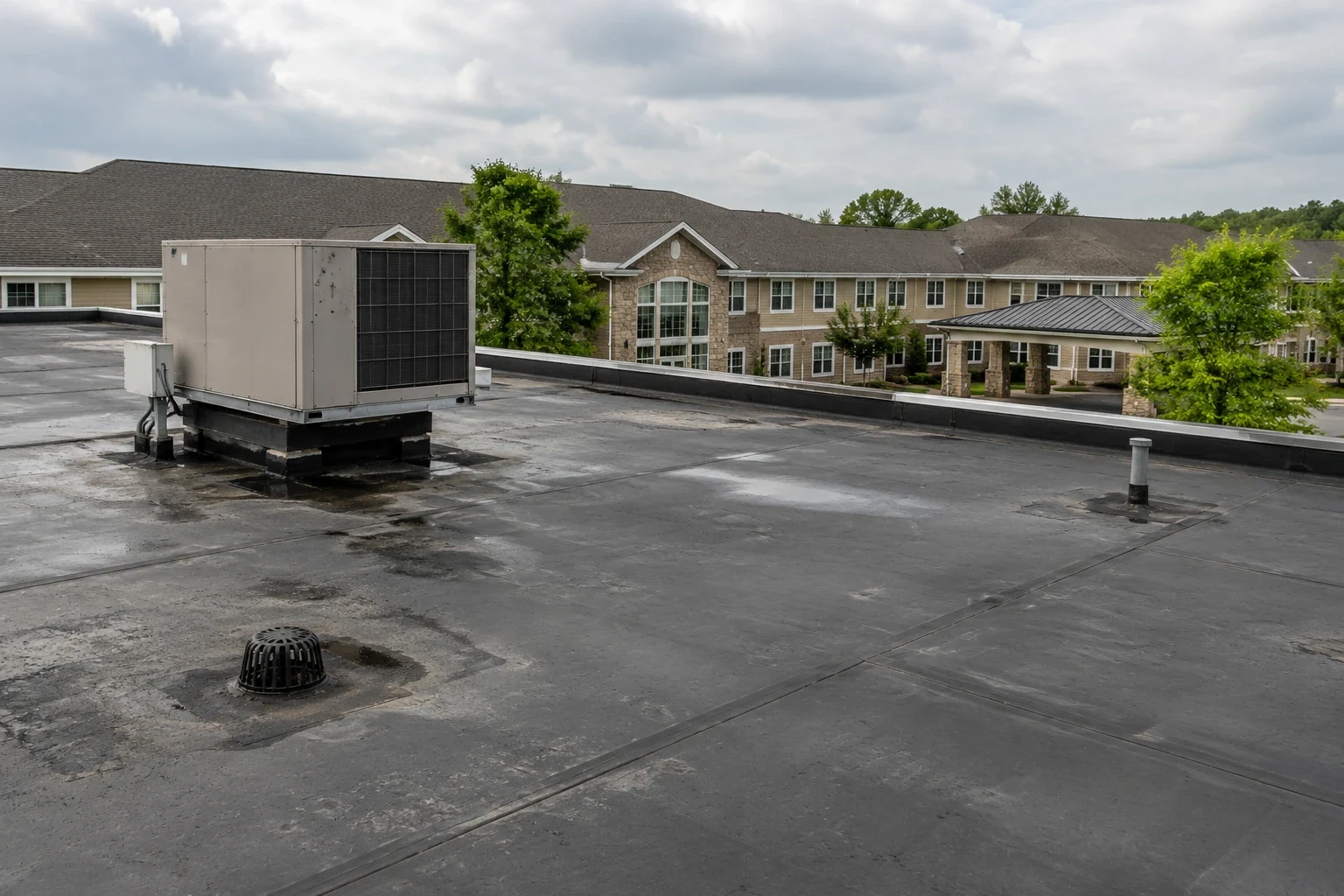
Senior Living Roofing
Cracked pitch-pocket filler around a moving conduit can reopen a small roof penetration after its visible surface has been sealed. The conduit connection needs examination before more filler is funded. Senior living roofing in New Braunfels, TX, starts with that movement and the surrounding assembly. We inspect the receiving material and coordinate the needed service review. The owner can then compare a suitable penetration reconstruction with retention of field roofing outside the damaged local boundary.
Commercial Roofing New Braunfels repairs and renews commercial roofs above senior living use. Resident approaches, occupied areas and equipment serving the building can affect the work release. We identify those requirements with the building operator. The roof proposal should still follow the actual damaged material. A useful allocation restores the affected connection and distinguishes lower-layer rebuilding from suitable construction that remains available for continued service.
Assess conduit movement before replacing the failed filler
A pitch pocket surrounds penetrations with a compatible sealant arrangement. Its filler can crack, shrink or separate where movement or unsuitable preparation affects the connection. We examine the pocket, conduit and adjoining membrane. Relevant equipment support needs assessment by the appropriate trade. The selected roof detail must suit the penetrations and operating conditions. Adding material over a separated surface can leave the movement and receiving defect beneath the new closure.
We compare rebuilding of the roof penetration with a suitable alternative detail where the assembly allows. The support and weatherproofing requirements should be identified together. Damaged sheet or board can enlarge local removal. Useful field material away from the pocket may remain. The owner should see the whole connection quantity rather than fund another filler application without identifying what the new material will meet.
Establish a practical release beside resident access
Work above an occupied approach can require another handling route or operating period. We assess the roof position and coordinate suitable separation with the building operator. Resident access requirements belong in that assessment where they affect removal and material movement. The work should also have a practical closure path. A convenient opening position is not sufficient if it leaves damaged receiving layers beyond the reachable repair boundary.
A property combining multifamily living areas with clinical support space can have different dependencies below adjoining roofs. We identify the actual equipment and occupied area affected. Unrelated space may remain distinct where suitable protection permits continued use. The useful sequence connects the roof reconstruction with those operating requirements before material is opened. It should not rely solely on an interior room boundary to establish protection or the removal quantity.
Assess the roof within the residential and medical building mix
Canyon Lake includes residential and commercial development that followed the reservoir's completion. For an occupied property there, we examine the actual roof penetration and assembly rather than select a repair from the community's building use. The conduit support and receiving membrane establish the immediate correction. Suitable exterior handling needs assessment where it affects access. The next investment should identify local rebuilding and the material left in service.
For a property in Canyon Lake or Live Oak, the occupied-area release should follow its actual operation. We coordinate that release with the affected roof task. Equipment changes can reopen penetration work while the surrounding field remains suitable. The proposal should identify those connections before a new service arrangement conceals access to the material requiring correction.
Define concealed damage beneath the pocket
Water entering around a penetration can affect insulation farther than the visible filler separation. We examine suspect insulation beside the pocket before choosing the penetration rebuilding boundary. Selected openings can establish material condition and are restored appropriately after assessment. Wet or deteriorated layers need a complete rebuilding quantity. Suitable adjoining support may remain where the repair assembly allows. The local boundary should reach material capable of receiving the new detail.
We use direct assessment of the senior living roof to connect that damage with the field outside it. A PVC membrane repair assembly is one option where compatible with the selected construction. Other systems require their own details and preparation. The owner should compare the complete penetration and support quantity. A fresh surface should not conceal damaged insulation or another unsuitable layer that remains beneath the repaired connection.
Complete service adjustments before the roof detail closes
A replacement conduit or support can alter the pocket geometry and the material connection needed around it. We review the proposed arrangement before reconstruction. Related service work should have a sequence that leaves access to prepare and complete the roofing. Appropriate design review may be required where the attachment or loading changes. The final detail should meet useful material and the actual service configuration.
For roof rebuilding during continued residence, smaller phases may help separate affected areas where appropriate. Each phase adds transitions and handling. We assess those quantities against complete closure of the damaged assembly. The building operator's restrictions need a feasible work release. Another phase or operating window may be necessary where a narrower opening cannot reach and rebuild the full penetration boundary properly.
Distinguish the penetration investment from later field renewal
A reconstructed penetration may remain a defined local quantity beside useful roofing. Wider moisture, weak attachment or repeated field defects can change the renewal comparison. We examine those findings separately. The owner should see what layers each option retains and the material requiring removal. Immediate weather protection may also be needed while a permanent service and roofing correction is arranged.
We connect senior living roof allocation with planned equipment changes and the retained field's condition. A building with hospital-related operating space can need another release and protection boundary. Each roof task should follow its actual use and construction. Your next expenditure should restore the failed penetration with complete support and closure requirements, while keeping the broader field decision tied to material examined outside that correction.
Commercial Roofing Questions
Will adding more pitch-pocket filler resolve a moving conduit connection?
Examine the movement and receiving detail before selecting the repair. The appropriate service trade may need to correct support or routing. We assess the pocket, membrane and lower layers affected. A compatible detail can then be rebuilt on suitable material. Another filler application should not conceal the same movement or separated construction beneath a new surface.
Can the field roof remain while the penetration is reconstructed?
Suitable roofing may stay where a complete new connection can meet it. We examine attachment and material condition at the proposed edge. Moisture or deteriorated support can enlarge the local boundary. The owner should compare those quantities with the field outside the defect. Retention follows the assembly available for useful reconstruction rather than the apparent size of the pocket alone.
How should resident access affect the work position?
Identify the affected approach and suitable separation with the building operator. Another handling route or work period may be needed for the roof task. We assess that arrangement alongside material removal and closure. The practical sequence should provide complete access to the damaged assembly. Protection and resident circulation requirements should be established before the penetration is opened.
What if a conduit replacement is planned after the roof repair?
Review the future arrangement before rebuilding the detail. Related preparation may avoid reopening newly completed roofing. We identify the geometry and service support required at the penetration. The immediate defect remains a work quantity needing suitable protection. The investment should show what can be completed now and what the later service change will still require at the roof.
When does a penetration defect call for more extensive roof renewal?
Assess the receiving field and lower construction beyond the immediate opening. Useful layers may support a local reconstruction. Wider moisture, unsuitable attachment or deteriorated material can favor another removal extent. We identify those conditions with the operating release they need. The next decision should compare complete assemblies rather than treat repeated filler repairs as resolution of concealed material damage.

Senior Living Roofing