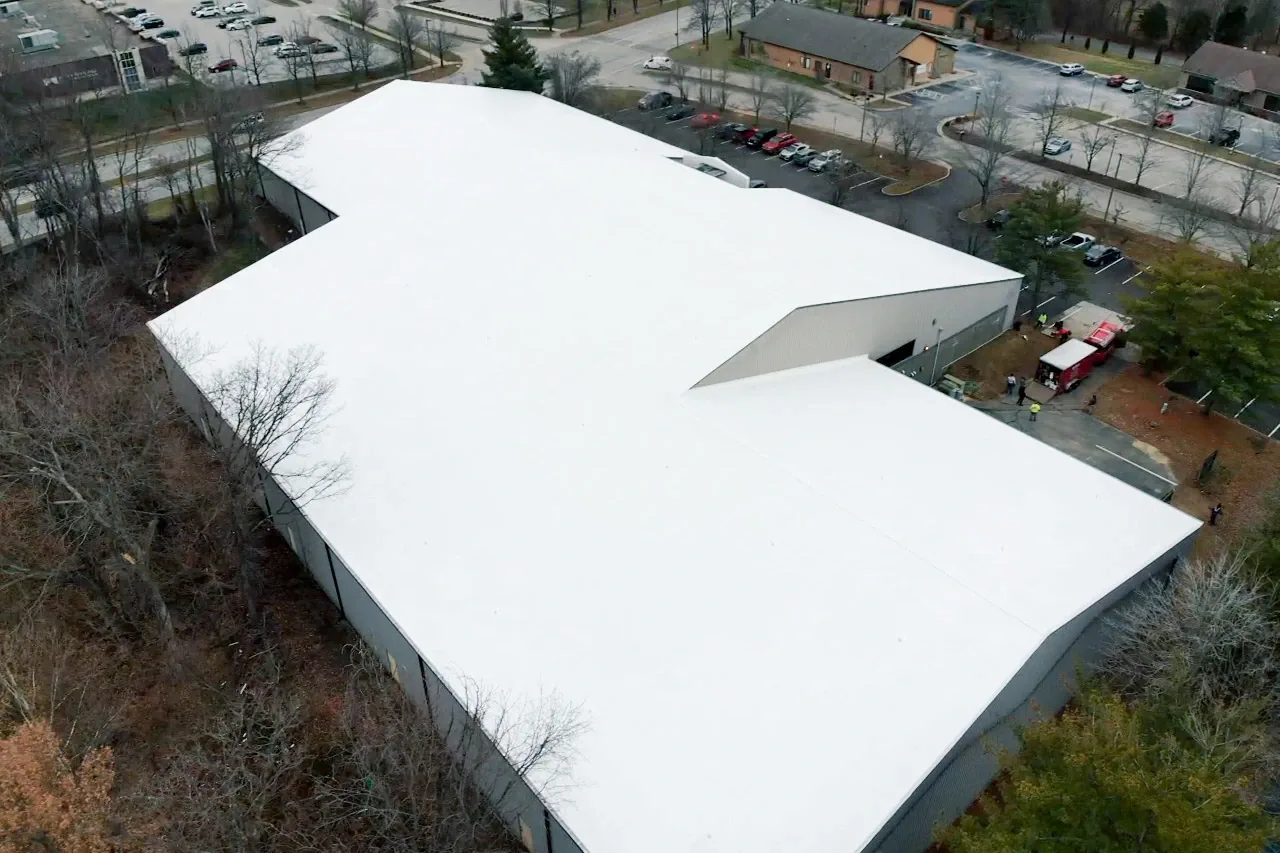
Army Installation Roofing
Displaced counterflashing at a masonry-to-low-slope junction can expose the upper edge of useful base flashing. The wall receiver and roof termination need examination before the field assembly is assigned removal. Army installation roofing near New Braunfels, TX, connects that inspection finding with the complete junction. We assess the receiving construction and adjoining layers. The owner can then compare restoring the wall-side detail with rebuilding roofing affected beneath it.
Commercial Roofing New Braunfels repairs and renews commercial roofing for installation building use. Wall transitions, equipment and different occupied operations can establish separate work quantities on the same property. We inspect the actual assembly before recommending retention. Applicable project design requirements and mission access need coordination for the task. The useful investment identifies the damaged material and the connection required where new construction meets the roof that remains.
Restore the receiver above the base flashing
Counterflashing protects the upper termination of the base flashing at a wall. A displaced piece may have damaged securement or a deteriorated receiver. We inspect the accessible wall and roof components. The selected correction should provide a suitable connection to the wall without concealing failed roofing beneath it. Local masonry or receiving-material work may be needed before the metal detail is replaced. Appropriate review establishes that quantity where the existing construction has changed.
We connect rebuilding the wall-side weather detail with the condition of the base flashing. Loose or damaged roofing needs its own compatible reconstruction. Useful material may remain where the repaired counterflashing protects a complete termination. The owner should compare those two detail quantities before selecting retention. A new outer metal cover does not restore a detached base layer or unsuitable support hidden behind it.
Assess the actual Army support and medical building use
Its building uses include dining facilities and range-support structures. Roofing work for those uses needs assessment of the specific occupied area and equipment beneath the proposed correction. We identify the wall transition and receiving layers under consideration. The next investment should connect their material condition with a practical work release before components are opened.
A roof serving medical or instructional use can have equipment and occupied-area restrictions different from a range-support task. We assess the actual building and coordinate relevant protection with its operator. The useful quantity distinguishes the wall receiver, base flashing and field condition. Each needs direct examination so a localized metal defect does not become an assumed common removal scope for separate assemblies.
Identify the roof material beneath the wall defect
Water at an exposed termination can affect insulation or board farther than the detached counterflashing. We investigate suspect layers where concealed condition changes the proposal. Selected openings can establish material condition and extent. The repair boundary should reach suitable support. Useful lower construction may remain outside the damaged area. Wet or deteriorated receiving layers require rebuilding before a fresh base detail closes them.
We use examination of the Army building roof to distinguish local interface damage from the field. A modified bitumen flashing assembly is one option where suitable to the selected construction. Other roof systems have different compatible connections. The owner should compare complete assemblies at the wall, including receiving support and termination height, rather than select the outer surface without the layers it must meet.
Release the wall work with its occupied area
A wall-junction repair can need both roof access and another position for receiving-material reconstruction. We inspect those approaches before choosing removal. Installation access, escort and operating schedules require coordination as applicable. Material handling and protection below the task also need suitable boundaries. The repair should reach the complete damaged connection rather than stop at the part available from the easiest work position.
A building sharing medical operating use or military storage activity can have another work release. We identify the affected equipment and occupied area with the building operator. Applicable roofing design may follow Unified Facilities Criteria. The useful sequence allows permanent reconstruction and suitable weather closure. Those requirements should be resolved together before wall or roof material is removed above an active operation.
Assess the repair within the western installation context
Roof work serving a storage operation needs a specific operating release. We assess the assembly and handling positions for the building under consideration before selecting reconstruction.
Garden Ridge is in southern Comal County and borders Schertz. For a property in Garden Ridge, the wall detail and exterior access may differ from an installation building farther west. We inspect the actual connection and receiving layers. The proposed correction should identify local material, access and closure quantities. Related equipment or operating changes need assessment where they affect the repaired wall junction or its retained roof.
Compare the counterflashing correction with broader renewal
A suitable base detail and field can support defined wall-side reconstruction. Broader deterioration, weak attachment or concealed moisture can favor another renewal boundary. We inspect the field attachment and wall receiver independently before selecting either removal quantity. Immediate weather protection may be needed while permanent receiver work is arranged. The finished correction should restore the complete termination rather than rely on another temporary seal above damaged material.
We connect Army building roof renewal allocation with planned equipment and wall alterations. A building containing readiness or armory operating space may have another access and release requirement. The owner should compare those actual tasks with each retained assembly. Your next expenditure should restore useful protection at the wall connection and keep wider field renewal tied to material examined outside that local defect.
Commercial Roofing Questions
Can displaced counterflashing be restored while retaining the base flashing?
Examine the base layer, its termination and the wall receiver before deciding retention. Suitable roofing may remain where the reconstructed metal detail protects a complete connection. Detached material or damaged support can require another local quantity. We assess those components separately. The useful correction restores the wall-side detail without hiding an unresolved base-flashing defect behind a fresh outer cover.
What if the wall receiver needs repair before roofing can meet it?
Identify the receiving construction and appropriate local rebuilding with the relevant review. The roof termination should connect to useful material. We coordinate access and sequence for both parts of the junction. Another work position may be needed for the wall task. The owner should compare that preparation with the flashing quantity before a replacement detail is installed over an unsuitable receiver.
How should military medical use affect the roof work release?
Coordinate the actual occupied area, equipment and protection requirements with the building operator. Access and mission arrangements also need review for the task. We assess removal and closure against those restrictions. A localized wall correction may still have connected operating dependencies. The useful sequence permits complete reconstruction rather than leaving damaged receiving material beneath a repair chosen only for its easier installation position.
Does water beneath counterflashing mean the whole roof requires rebuilding?
Investigate the affected layers and assess the field beyond the wall junction. Defined local damage may be rebuilt beside suitable material. Wider moisture or deterioration can enlarge renewal. We identify those boundaries before comparing options. The investment should follow the actual support and roofing condition, including the complete wall connection each choice will retain or reconstruct.
When should wall-detail repair be combined with planned roof renewal?
Review the field condition and the altered termination needed by the selected assembly. Related receiver work may be useful before added layers change height or access. We identify that interface quantity separately from unrelated deterioration. The owner should compare retained material, removal and operating release for each option. Combining work is useful where it resolves the same construction rather than merely shares a roof location.

Army Installation Roofing