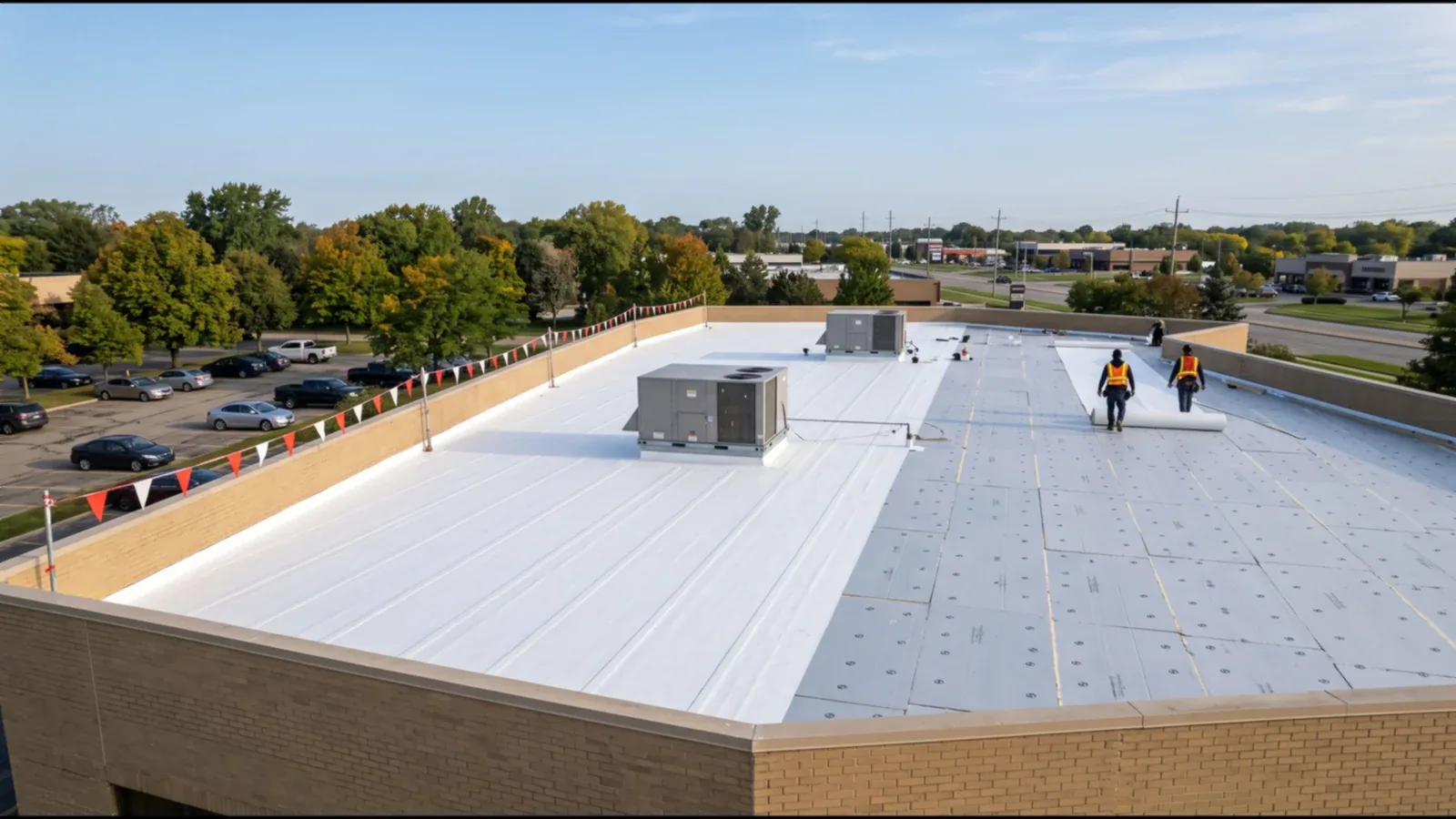
Military Installation Roofing
Failed curb flashing above a maintenance area makes continued use and roof removal part of one decision. The damaged layers need a defined rebuilding boundary. The activity below needs a suitable work release. Military installation roofing near New Braunfels, TX, connects those requirements before the roof is opened. We assess the assembly and identify which local correction or renewal phase can restore useful protection while accommodating the operating use.
Commercial Roofing New Braunfels plans commercial roof work for military-related building conditions. Access requirements, mission schedules and applicable roofing criteria affect how the work proceeds. They do not replace examination of the roof. We identify suitable retained material, removal quantities and the detail that needs rebuilding. The owner's next investment should fund that measured work within a practical release, with the roofing and operating decisions clearly connected.
Inspect the assembly above the maintenance use
Work at a controlled property begins with documented authorization, escort arrangements, movement limits and a site-approved schedule. Its operations support facilities include hangars, simulator buildings, traffic-control towers and base-operations space. Those building uses can create different priorities for roof examination. At a maintenance property, water over equipment or an access route may need earlier attention than isolated surface wear elsewhere. We examine the affected assembly and identify the protection needed during removal.
For roof work above hangar and maintenance activity, access, equipment handling and occupied space influence the release. The installed roof still needs its own material assessment. Metal joints, membrane details and concealed layers require different corrections. We examine the installed layers and their connections before selecting a correction. A suitable local repair can retain useful material, while broad deterioration may move the decision toward renewal.
Separate storage protection from the removal quantity
Roofing work for a depot building needs coordination with the actual storage and operating requirements. We assess the affected area, safe access and the material removal needed. The work release should protect the use below while still allowing suitable examination and rebuilding of the damaged assembly.
A depot roof repair or renewal may need careful separation of the exposed work area from retained occupied space. Supporting repairs, wet insulation and unsuitable flashing can change that boundary. We identify those quantities before the roof release. Temporary protection may be necessary while the permanent correction is prepared. The owner needs to distinguish what restores the assembly from what maintains suitable protection during an operating or scheduling constraint.
Apply the roofing criteria to the actual construction
Applicable Unified Facilities Criteria for roofing need assessment within the project requirements. The existing deck, assembly and proposed method determine how those requirements affect the work. We coordinate the roofing scope with the appropriate design review. Material selection, attachment, insulation and detailing remain connected decisions. A new membrane cannot establish suitable construction where the supporting material or required connection is unresolved.
We use hands-on examination for the proposed scope to identify those conditions. Physical openings or further testing may be needed where concealed layers control retention or removal. For replacement of affected roofing assemblies, supporting repairs and interface corrections belong beside the main surface quantity. The funding comparison should show the complete rebuilding work required by the actual condition and applicable project criteria.
Match the release to the building activity
A roofing phase above an occupied training-related property needs its work boundary coordinated with the actual activity. Meal service, equipment use or another operating function can influence the release. We identify the necessary separation and roof closure rather than use the building use as a blanket reason to stop all operations.
For roof work on an Army-related property, the examination and removal need to fit the operating conditions beneath them. Sensitive occupied areas can affect protection and timing. The useful scope remains specific: which layers need removal, which connections need rebuilding and which activity needs an interruption while that work proceeds.
Tie access arrangements to the work release
Installation entry, badging, escorts and site-specific requirements can affect when material and personnel reach the roof. We coordinate those arrangements as they apply to the proposed work. Delivery, lift positioning and debris handling also need suitable access. Their role is practical. An approved removal phase still needs a workable path to bringing in new material and completing weather protection.
Where an escort or operating window limits that access, the roof release must suit the available work period. We assess temporary connections and dry-in needs before opening the assembly. A suitable occupied-building renewal sequence can separate completed work from a later phase. The owner should understand the additional handling or transition quantity that the access arrangement creates. Those are measurable roofing consequences, not general reasons to add process to the expenditure.
Include medical and readiness facilities in the condition comparison
The city's National Guard armory has indoor drill facilities. Those uses call for different work releases where roofing needs examination or repair. We assess the actual roof and the occupied space beneath the proposed opening. A sensitive medical area can need protection different from a space that can be isolated for a defined removal period.
For a commercial property in New Braunfels, planned equipment changes and roof history can also alter the next investment. We compare the immediate correction with a broader renewal phase. A damaged curb may need rebuilding now, while suitable field material remains useful. The release should close the affected roof decision without obscuring work outside that boundary. Each building retains its own condition, quantity and operating schedule in the funding comparison.
San Marcos lies northeast of New Braunfels along Interstate 35. Roof access and work timing remain property-specific, so the assembly and operator's release should set the sequence.
Commercial Roofing Questions
How do mission schedules change a local roof repair?
The operating window can affect access, protection and the size of a practical work release. We assess those constraints alongside the damaged-layer boundary. A suitable repair still needs sound material and a workable closure. Smaller phases may add handling or transition work. The scope should identify those roofing quantities so the operating arrangement and the repair approval address the same task.
Does a roofing project need the same criteria at every installation building?
Applicable project requirements and the actual construction need assessment together. Deck type, installed layers and building use can change the proposed assembly. We coordinate the roofing with the appropriate design review. A similar building label does not establish identical removal or attachment needs. The useful scope follows the condition and requirements at the property being assessed.
Can a hangar remain in use during work above a localized defect?
Examine the hazard, removal area and activity beneath it before defining continued use. A limited correction may allow suitable separation from unaffected operations. Damaged support or broader exposure can require another release. We identify the protection and access needed for the actual work. The operating decision should follow that condition assessment rather than a general promise based on the repair's apparent size.
What if access limits prevent completing the permanent repair in one release?
The phase needs a suitable temporary closure and a defined continuation boundary. We assess securement, drainage and follow-up for that protection. Later work must reconnect to material appropriate for the finished assembly. The owner should know which exposure remains and what occupied area still needs protection. An access constraint changes the sequence, but it does not remove the requirement for useful weather protection between phases.
Should a depot leak be treated as a full replacement decision immediately?
Prioritize protection and examine the affected assembly. A local defect on suitable surrounding construction may support a defined correction. Broad moisture or attachment problems can favor renewal. We compare those quantities with the storage and operating release. The investment should restore the required assembly without assuming either that a surface patch is sufficient or that every active leak requires full removal.

Military Installation Roofing