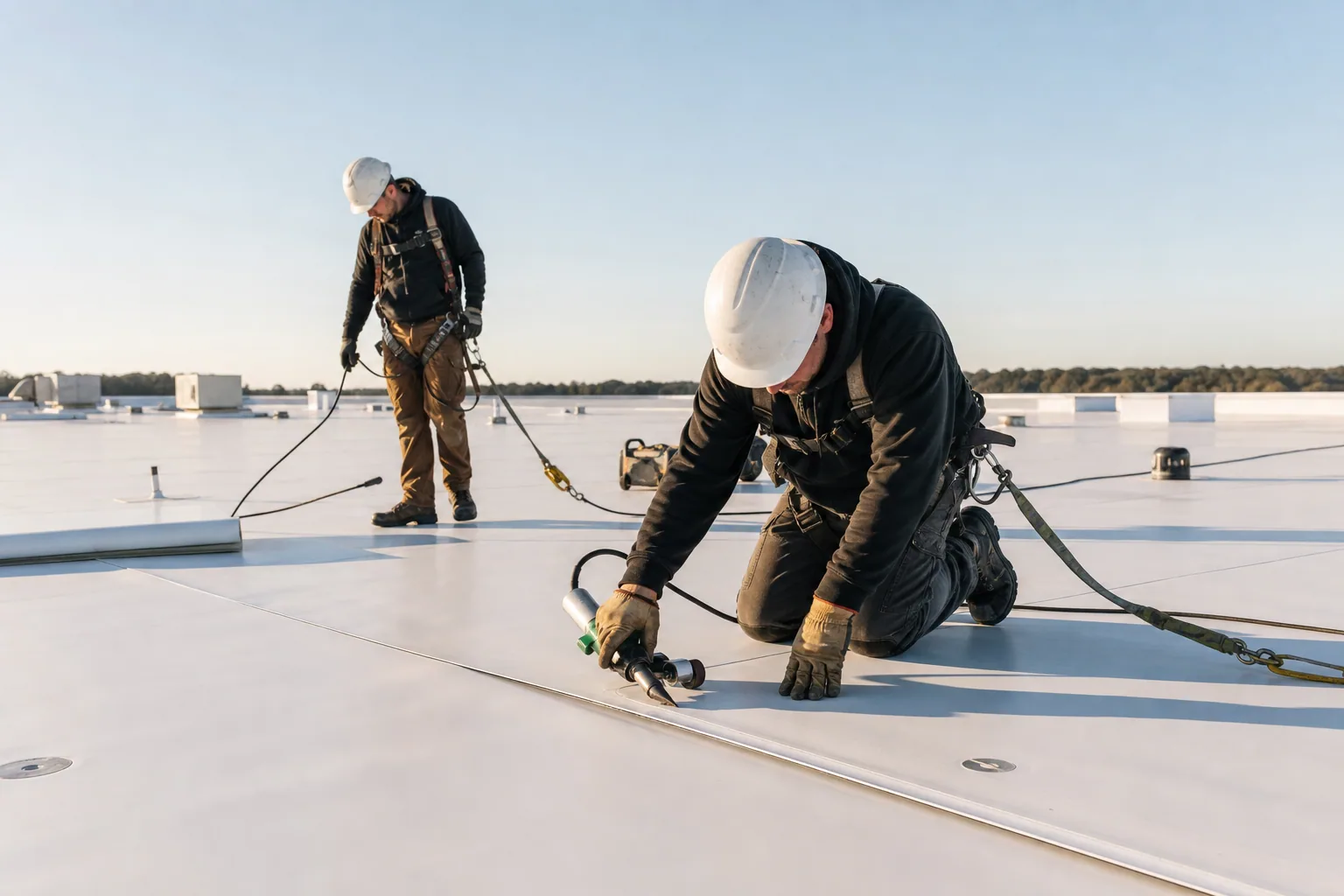
Commercial Cool Roof Installation
Wet insulation beneath an intact reflective membrane changes the next expenditure from surface cleaning to layer rebuilding. We assess the removal boundary before selecting a new finish. Cool roof installation in New Braunfels, TX, compares the exposed finish with the complete roof assembly and the building's operating needs. We assess what should be retained, restored or replaced. A brighter surface is one material choice, not a complete diagnosis of the roof condition.
Commercial Roofing New Braunfels installs reflective roofing assemblies and compatible restoration systems. We examine insulation, drainage, attachment and roof details alongside the finish. A sound assembly may support an eligible coating or recover. Damaged layers can require removal before a reflective replacement is useful. Your investment should improve the selected assembly without leaving its existing moisture or connection problems underneath a new light-colored surface.
Evaluate the surface's actual role
A high-reflectance finish changes solar loading at the membrane; insulation depth and interior use still shape the building-level result. Thermal emittance also affects how the surface releases heat. The building's response depends on more than the finish. Insulation, operating hours, equipment loads and the existing construction influence the outcome. We distinguish those factors before a roof material is selected for its heat-related performance.
Comal County experiences humid summer weather and high seasonal heat. For a conditioned commercial building, surface and insulation decisions belong in the same comparison. We assess the roof assembly and intended use rather than promise a fixed utility reduction. Appropriate energy analysis can evaluate the building where that information is important to the investment. The roofing scope still needs to resolve drainage and damaged layers, even if a reflective finish is selected as part of the renewal.
Choose the insulation with the finish
A reflective membrane over deteriorated insulation can leave the thermal assembly unsuitable. We examine the existing layers and investigate suspected moisture before retention. Insulation thickness, attachment and protective board need to fit the proposed roofing. Deck condition also matters. A new surface does not rebuild supporting construction. We define those quantities so the owner can compare a complete installation rather than only the visible finish.
For insulation and cover board decisions, applicable requirements and existing-building conditions need review. New Braunfels applies the 2021 editions of the IBC, IEBC and IECC, with local amendments. Those provisions belong in the assembly assessment. We connect any resulting layer work with the membrane and detail scope. Retaining eligible construction can remain useful, but the retained material needs to support the proposed roofing and its required thermal role.
Select a suitable reflective system
A white membrane and a reflective coating involve different rebuilding decisions. A membrane installation may require removal or a suitable recover base. A coating requires an eligible surface, compatible preparation and repaired details. We compare those conditions before recommending either route. The material's reflectivity does not establish whether it can bond to an existing finish or remain suitable for the anticipated exposure.
A reflective TPO roof assembly can provide one installation option. Other membranes or compatible coatings may suit different conditions. We assess traffic, exhaust exposure, drainage and the connection method. For restoration with a reflective coating, trial preparation and adhesion assessment may be useful. The choice follows the assembly and operating demand, with color serving one part of the decision rather than replacing the material compatibility review.
Keep weather protection in the renewal scope
An unsuitable drain connection remains a roof problem beneath a cool finish. We inspect water routes, outlets and the relationships to curbs and walls. Added insulation can alter finished heights and reduce available flashing. A new membrane needs suitable terminations and perimeter securement. Those details should be resolved in the installation scope instead of deferred because the principal renewal goal concerns heat performance.
We coordinate drainage improvements at the new surface where needed. A recover using eligible retained layers also requires assessment of loading, moisture and attachment. The owner should compare the correction quantities that each option carries. A system with a suitable reflective finish still needs sound support and dependable connections. Those assembly conditions determine whether the chosen heat-related improvement can remain part of useful weather protection.
Match the finish to the commercial use
Live Oak has shopping developments including Gateway Plaza and Live Oak Crossing. For an occupied retail building, roof equipment and service traffic can affect finish selection and maintenance. We examine the actual traffic paths and compatible protection. A reflective surface may need care where dirt or other residues accumulate. Those conditions belong in the material comparison because the exposed finish, not its original appearance in a product description, receives the building's operating demand.
Bulverde includes Bracken Christian School and Living Rock Academy. For reflective roofing above educational space, the assembly decision needs to account for insulation and the occupied work sequence. A property in Live Oak may require a different installation release from a school building in Bulverde. We define those operating constraints while comparing the retained layers and new finish, keeping the roof expenditure specific to each building.
Maintain the performance you selected
Dirt, deposits and surface wear can change the exposed finish over time. We assess cleaning methods appropriate to the installed system and examine any damaged areas. Cleaning should not compromise membrane or coating connections. Equipment paths can need separate protection. A maintenance plan should consider the surface condition and the weatherproof details, rather than measure success only by how bright the roof appears after a visit.
The investment comparison includes preparation, material removal, insulation, interface work and future care. Those drivers can differ substantially between restoration and replacement. We identify the quantities each option retains or rebuilds. Planned equipment changes also influence timing. Rebuilding a curb before the reflective assembly is installed can avoid reopening that area soon afterward. The next roof allocation should fund suitable construction with a selected heat-performance role, not a surface change detached from the remaining assembly needs.
Commercial Roofing Questions
Can you promise a specific cooling bill reduction from a white roof?
The building response depends on insulation, equipment demand, operating use and other conditions. We assess the roofing options and identify where appropriate energy analysis would help the investment decision. A highly reflective roofing finish returns more incoming solar energy than a darker surface, while the building's utility effect still depends on its full assembly and use. It should not be assigned a fixed utility result without a building-specific basis. The assembly must still provide suitable weather protection.
Would cleaning my existing reflective roof be preferable to replacement?
Examine the finish and the underlying condition separately. Suitable roofing may benefit from appropriate cleaning and local corrections. Deteriorated layers or widespread failed connections can still require renewal. We compare those findings before recommending a new surface. The useful choice restores the needed performance without replacing sound material merely because its exposed finish has become dirty.
Does a reflective coating eliminate the need for insulation work?
The coating and insulation serve different roles. Existing wet, compressed or unsuitable insulation needs its own assessment. Applicable thermal requirements can also affect the renewal scope. We evaluate the retained layers before selecting restoration. A compatible reflective finish may be useful on a suitable assembly, but it cannot restore damaged insulation or establish the required construction beneath it.
How should rooftop service traffic affect the finish decision?
Assess the route, frequency of access and protection appropriate to the roofing system. Traffic can wear or soil exposed material and disturb connections. We identify suitable protection and maintenance needs before installation. A surface chosen for reflectivity still needs to fit the operating demand. Material compatibility and the details around equipment remain part of the same assembly decision.
Should a planned equipment replacement delay the cool roof work?
Compare the equipment date with the roofing release and the connections that will change. Combining compatible interface work may avoid disturbing the new assembly. Active roof defects may require attention sooner. We distinguish immediate repairs from the later renewal quantities. The useful schedule leaves suitable weather protection at each stage while allowing the selected finish and insulation to serve the completed building arrangement.

Commercial Cool Roof Installation