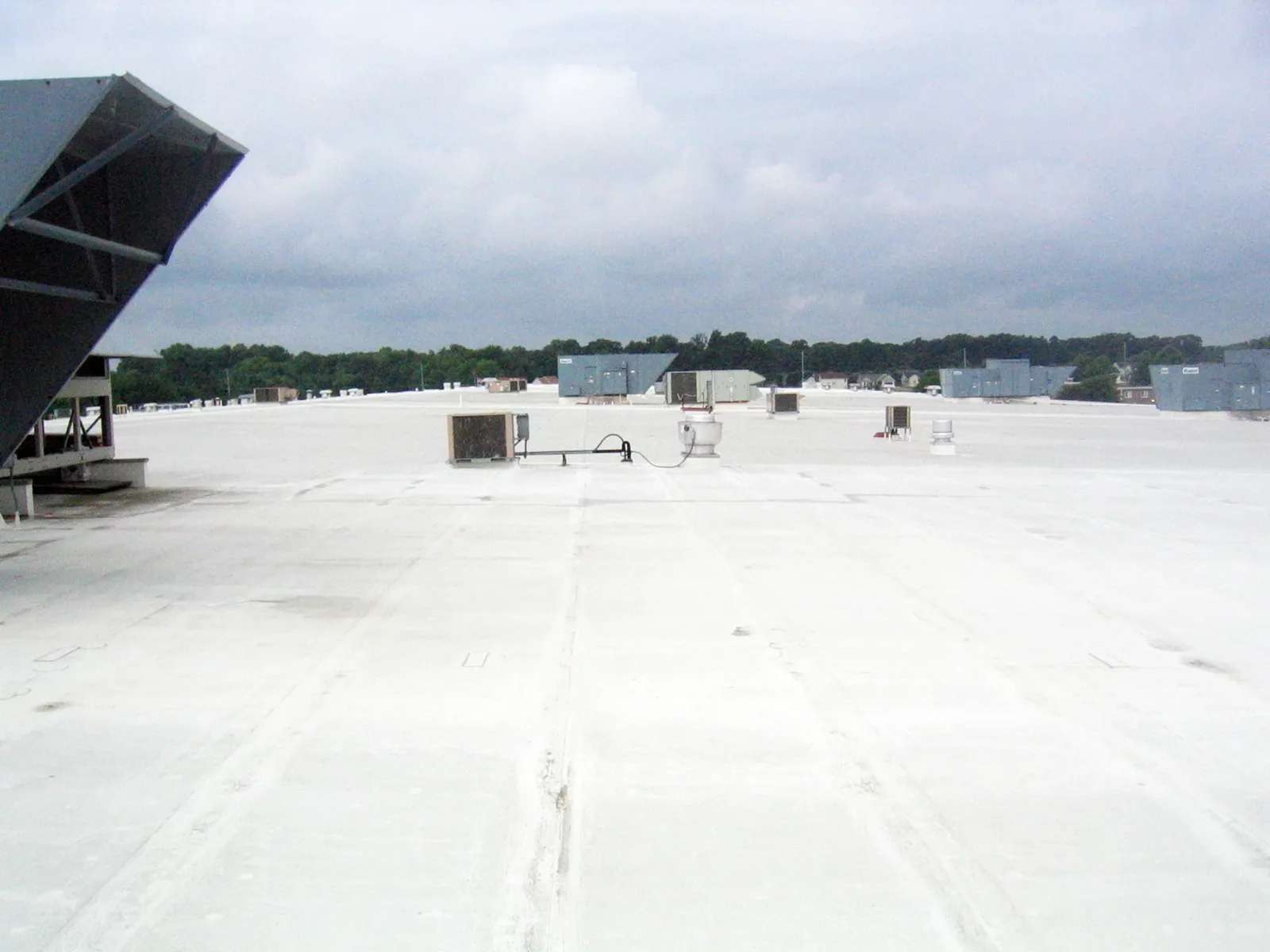
Fitness and Recreation Center Roofing
A crushed drain strainer obstructing flow above an intact bowl connection can make replacement of the removable component the immediate recreation roof decision. The surrounding membrane still needs its own condition assessment. Fitness center roofing in New Braunfels, TX, connects the outlet finding with retained material and any affected lower layers. We inspect the drain approach and flashing. The owner can then compare component correction with actual roofing reconstruction rather than assign both the same renewal quantity.
Commercial Roofing New Braunfels repairs and renews commercial roofs above exercise and recreation use. Equipment, occupied activity and different interior conditions can affect the assembly review. We identify those requirements at the building. The proposal should distinguish the drainage component, weatherproofing detail and field condition. A useful investment restores the affected connection and leaves suitable construction in service where the selected repair or renewal assembly permits it.
Remove the obstruction and examine the drain connection
A distorted strainer can restrict flow and complicate access to the bowl beneath it. We examine the removable component and accessible drain approach. The bowl, clamping connection and adjoining roofing need their own inspection. An intact detail may remain useful after the appropriate strainer correction. Deteriorated flashing or damaged support requires a separate repair quantity. The work should identify those conditions rather than treat every outlet symptom as a membrane failure.
We connect recreation roof outlet repairs with suitable service access. Drainage capacity and altered geometry may need appropriate assessment beyond component replacement. The corrected arrangement should permit future care of the outlet and adjoining detail. The owner should compare the complete water route with the local repair. A new strainer does not correct a blocked lower pipe or another unsuitable discharge condition outside its component boundary.
Assess the gathering and school-related building use
Geronimo includes a VFW meeting and dance facility along with antique shops. Roof work near an occupied activity area needs a practical release for handling and protection. We inspect the specific outlet or field detail requiring correction. The building operator establishes relevant operating restrictions. For exercise or recreation space in Schertz, we assess the actual roof layers and operating dependencies. Equipment and interior conditions can differ from a property in Geronimo. The next repair or renewal allocation should identify the outlet component, adjoining membrane and lower material separately, with the work release fitted to those findings.
Review interior conditions where they affect retained layers
Exercise buildings can contain spaces with different equipment and moisture conditions. We assess those relevant uses with the building operator. Where an enclosed pool or another high-moisture area is present, the complete insulation and moisture-control design needs appropriate review. The outer roof surface alone does not establish those requirements. Suspected wet or deteriorated lower construction should be examined before a retention decision closes access to it.
A building sharing school facilities or hotel operating space can have connected roof levels and equipment. We identify the specific dependency affecting work. For insulation and receiving-board rebuilding, removal follows the material condition and selected assembly. Suitable layers outside that boundary may remain. The useful comparison connects those concealed quantities with the building use rather than select another field finish independently of its support.
Determine whether retained roofing remains suitable
Water retained near an obstructed outlet can expose a membrane already damaged by another mechanism. We inspect the field, seams and receiving material around the drain approach. Moisture investigation can be necessary where concealed condition changes rebuilding. The removal boundary should reach suitable support. A corrected outlet does not repair a torn sheet or replace wet insulation beside it. Those material quantities need identification before surface work is selected.
We use examination of the recreation roof assembly to distinguish those conditions. A TPO field and drain detail is one construction option where suitable. Other roof systems need their own compatible connections. The selected repair should meet useful material and provide appropriate attachment. The owner should compare complete outlet and field quantities, not treat the apparent condition of the drain basket as the condition of every layer around it.
Match the roof phase with the occupied activity area
Removal above occupied exercise space needs protection and handling appropriate to the actual task. We locate the affected assembly with the building operator. Another work period or access route may be needed where activity limits the release. The opening should fit a practical removal and closure sequence. A narrower phase may reduce exposure but add transitions and repeated material handling.
For roof renewal over continuing recreation use, the operating arrangement should permit complete lower-layer rebuilding where required. Adjoining office or reception areas may share equipment with the released space. We assess those actual connections before selecting separation. The owner should compare the work quantities and practical closure for each phase, rather than leave the material boundary incomplete to fit an operating period that cannot support the necessary reconstruction.
Compare component care with wider roof renewal
A removable drainage defect can remain a small component correction where the bowl and field assembly are useful. Wider membrane deterioration, weak support or concealed moisture can justify another investment. We examine the roof beyond the outlet before recommending that scope. The proposal should distinguish the immediate component from permanent assembly rebuilding. Repeated water symptoms should not lead to another field treatment without identifying the actual drainage and material conditions.
We connect recreation roof funding decisions with planned equipment or interior-use changes. Related interface preparation may be useful before new roofing closes the area. The owner needs to see retained material, removal and access for each option. Your next allocation should restore useful drainage and suitable weather protection where required, with any larger renewal phase tied to the field condition examined beyond the corrected strainer.
Commercial Roofing Questions
Does a crushed drain strainer require rebuilding the surrounding roof?
Inspect the bowl, flashing and field material independently from the removable component. Suitable roofing may remain where the strainer correction restores its intended access and flow. Damaged membrane or support needs its own work quantity. We identify those different conditions. The useful investment should correct the component while addressing actual assembly damage found beside it, rather than assume both need the same removal.
What if water remains after the strainer is replaced?
Review the approach, outlet and discharge beyond the removable basket. A blocked pipe, unsuitable geometry or another drainage condition may remain. We assess the roofing connection and coordinate the relevant trade or design review where needed. The owner should compare those component and material quantities separately. Another field surface would not resolve a lower discharge defect left outside its scope.
How should an enclosed pool affect roof retention?
The complete building assembly needs appropriate review for its temperature and moisture conditions. We examine suspected lower-layer damage and the material a roof correction would retain. Insulation and moisture-control connections may require their own rebuilding quantity. The selected surface should follow that assembly assessment. A sound outer membrane alone is not the complete retention decision where concealed material or design requirements need correction.
Can exercise activity continue outside the affected roof phase?
Suitable operating separation may allow unaffected use to remain distinct. We coordinate protection, handling and equipment dependencies with the building operator. Shared systems can extend the release beyond the immediate opening. The roof phase still needs complete removal and closure where damaged layers require rebuilding. The practical arrangement should identify those requirements before the work area is opened.
When should a fitness property compare broader roof replacement?
Examine the field and supporting construction away from the drainage component. Useful material may support local correction and continued care. Broad moisture, deterioration or unsuitable attachment can favor another renewal boundary. We identify those findings with the work release needed for rebuilding. The next allocation should compare complete material quantities rather than treat an obstructed outlet alone as the replacement decision.

Fitness and Recreation Center Roofing