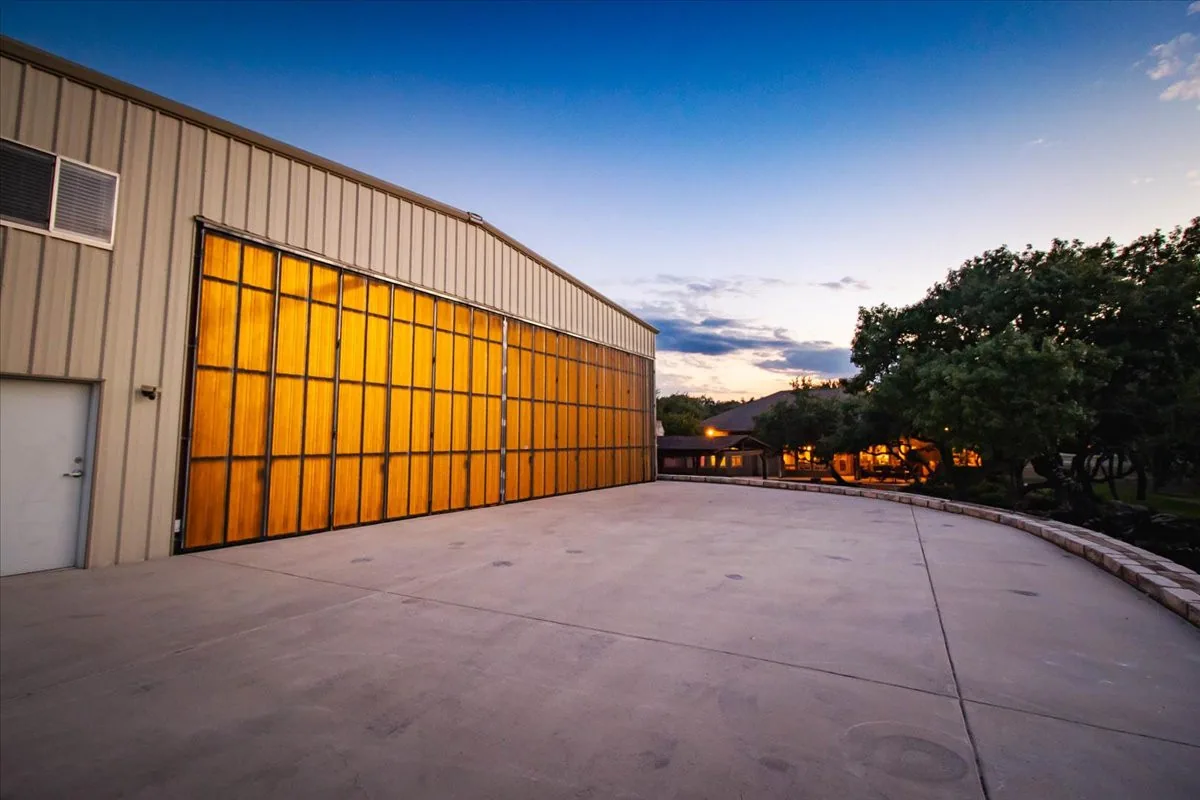
Aircraft Hangar Roofing
A damaged rake-to-door-head flashing at a hangar opening can leave the roof perimeter disconnected from the upper door enclosure. The junction needs assessment before the adjoining field is assigned renewal. Aircraft hangar roofing in New Braunfels, TX, connects that finding with attachment, receiving material and the operating opening. We examine the roof edge and door-head interface. The owner can then compare complete local reconstruction with retention of suitable roofing outside the affected boundary.
Commercial Roofing New Braunfels repairs and installs commercial roofs serving aviation and maintenance use. Large openings, equipment and operating areas can change exterior handling and the work release. We inspect the rake and upper door enclosure before selecting the removal position. The useful scope identifies what material remains and the complete connection requiring rebuilding. Aviation-area requirements need coordination where they affect access, debris handling or completion of the weatherproof detail.
Rebuild the rake and door-head connection together
A bent or detached flashing junction can expose support and adjoining roof material. We inspect attachment, metal condition and the weatherproof connection at the door-head enclosure. Damage can extend beneath the visible outer piece. The selected correction should meet suitable receiving construction. Appropriate review may be needed where movement or support design affects the detail. A new cover alone should not conceal an unresolved attachment or damaged substrate.
We connect hangar perimeter metal reconstruction with the roof assembly. The door operation and its enclosure need assessment by the relevant personnel where they affect access or geometry. Roofing should meet the complete upper connection without restricting required operation. The owner should compare those local quantities with the retained field. Rebuilding only the accessible metal face can leave another weather entry where the roof edge meets the door-head detail.
Assess the supported aviation building use
Hangar inspections must account for door travel, movement zones and roof-access constraints around active operations. A property-specific review for Aircraft Hangar Roofing should establish safe access, material handling and a complete closure sequence. Hangar roof work needs examination of the actual perimeter, field and operating access. We identify the material requiring repair before choosing a removal boundary. Base access and aviation-area requirements need coordination for the proposed task rather than an assumed exterior work position.
The Texas Army National Guard's Martindale facility in San Antonio includes helicopter maintenance and flight-operations areas. For that type of maintenance use, roofing tasks need a suitable equipment-area release and material-handling arrangement. We assess the roof connection and receiving layers. The investment should restore its complete weatherproof interface while keeping retained field condition and operating requirements distinct.
Set material movement beside the operating opening
Panel, membrane or flashing removal near a hangar door needs a work position appropriate to aircraft and equipment movement. We establish the door-area release with the operator before arranging panel or flashing removal. Debris collection and incoming materials need suitable separation. The roof boundary still must reach damaged construction and allow complete closure. A convenient lifting position should not establish the repair extent if unsuitable material continues beyond its access.
For military maintenance roofing or Air Force installation buildings, access, escort and permitted work arrangements need coordination for the task. Applicable roofing design may follow Unified Facilities Criteria requirements. We assess those project requirements without substituting them for direct material examination. The useful release identifies the work itself, its handling and the closure needed where rebuilt roofing meets the retained assembly.
Identify the assembly available for perimeter retention
A failed door-head transition can sit beside useful metal or membrane roofing. We inspect the field, attachment and material at the proposed repair edge. Corrosion, lower-layer moisture or damaged support can enlarge reconstruction. Suitable material may remain where the new detail connects correctly. The proposal should distinguish the perimeter defect from field deterioration rather than use one finding as the removal quantity for both.
We assess standing seam hangar construction with its panel movement and attachment requirements where selected. Low-slope systems need their own compatible transitions and receiving layers. A direct hangar roof examination can establish those differences through accessible details and selected openings where necessary. The owner should compare complete assemblies, including the door-head and rake connection that must meet the selected field.
Evaluate the actual approach for regional roof handling
For multi-property work, record each building's access and staging rules separately; one site's plan should not carry across a portfolio. For a property in Universal City, exterior roof handling needs assessment at the actual building approach. We inspect access to the affected detail and coordinate the relevant operating release. The work should identify the receiving material and rebuilding boundary before components are removed above the opening.
Northern Schertz has Interstate 35 access through exits 174 to 180. Material delivery and collection need a suitable arrangement where the proposed work position meets another active route. We assess that specific handling requirement. We verify lifting positions and the path to the roof before accepting delivery into the work area. The next investment should include the actual lifting, separation and closure tasks needed for the examined assembly rather than rely on an unresolved shared operating area.
Compare junction reconstruction with broader hangar renewal
A defined rake and door-head correction can be useful where the remaining roof assembly is suitable. Repeated defects across deteriorated fields, weak securement or concealed damage can justify wider renewal. We examine those conditions before recommending removal. The comparison should identify lower-layer work and the perimeter detail each option rebuilds. A new field alone should not leave the damaged door enclosure junction outside its scope.
We connect hangar roof renewal allocation with planned equipment and door-area alterations. Related interfaces may be worth preparing before new roofing limits access. The owner should compare permanent rebuilding and any temporary closure alongside the operating release. Your next expenditure should provide useful weather protection at the actual damaged connection and leave the retained field's condition clear enough for its later renewal decision.
Commercial Roofing Questions
Can rake-to-door-head flashing be rebuilt without renewing the hangar field?
Assess the receiving roof and enclosure construction at the damaged junction. Suitable material may remain where a complete new connection can meet it. Corroded support or affected lower layers can enlarge local removal. We identify those components before selecting reconstruction. The useful scope restores attachment and weatherproofing at the whole junction, not only its exposed metal face.
How should door movement affect the roofing detail?
Review the operating enclosure and required clearances with the relevant personnel. The roof connection should meet the door-head construction without restricting its intended use. We examine attachment and receiving material for the selected detail. Appropriate design review may be needed where geometry changes. The owner should compare that complete interface quantity before another cover or field surface is installed.
What work boundary is needed beside aircraft or maintenance activity?
Establish suitable operating separation, handling and debris collection with the building operator. Access requirements can affect the exterior position and release period. We compare those restrictions with complete removal and closure of the damaged roof assembly. The work should still reach unsuitable receiving material. A practical release supports the whole correction rather than restrict it to the portion easiest to reach.
Does military access preparation establish the roofing removal extent?
Material condition establishes the roof boundary. Applicable access and mission requirements establish how the task can be released. We coordinate both for the proposed work. Suitable construction may remain where a complete detail can connect to it. The investment should distinguish handling and operating requirements from damaged-layer rebuilding so each quantity has a clear purpose.
When should a hangar owner compare a larger renewal phase?
Inspect field material, attachment and support beyond the isolated perimeter failure. Useful roofing may support a local reconstruction. Broader corrosion, moisture or weak receiving construction can favor another removal extent. We identify those findings with the operating release each option needs. The next allocation should compare complete assemblies, including the upper door connection, rather than another field installation disconnected from the failed junction.

Aircraft Hangar Roofing