Hospitality Groups
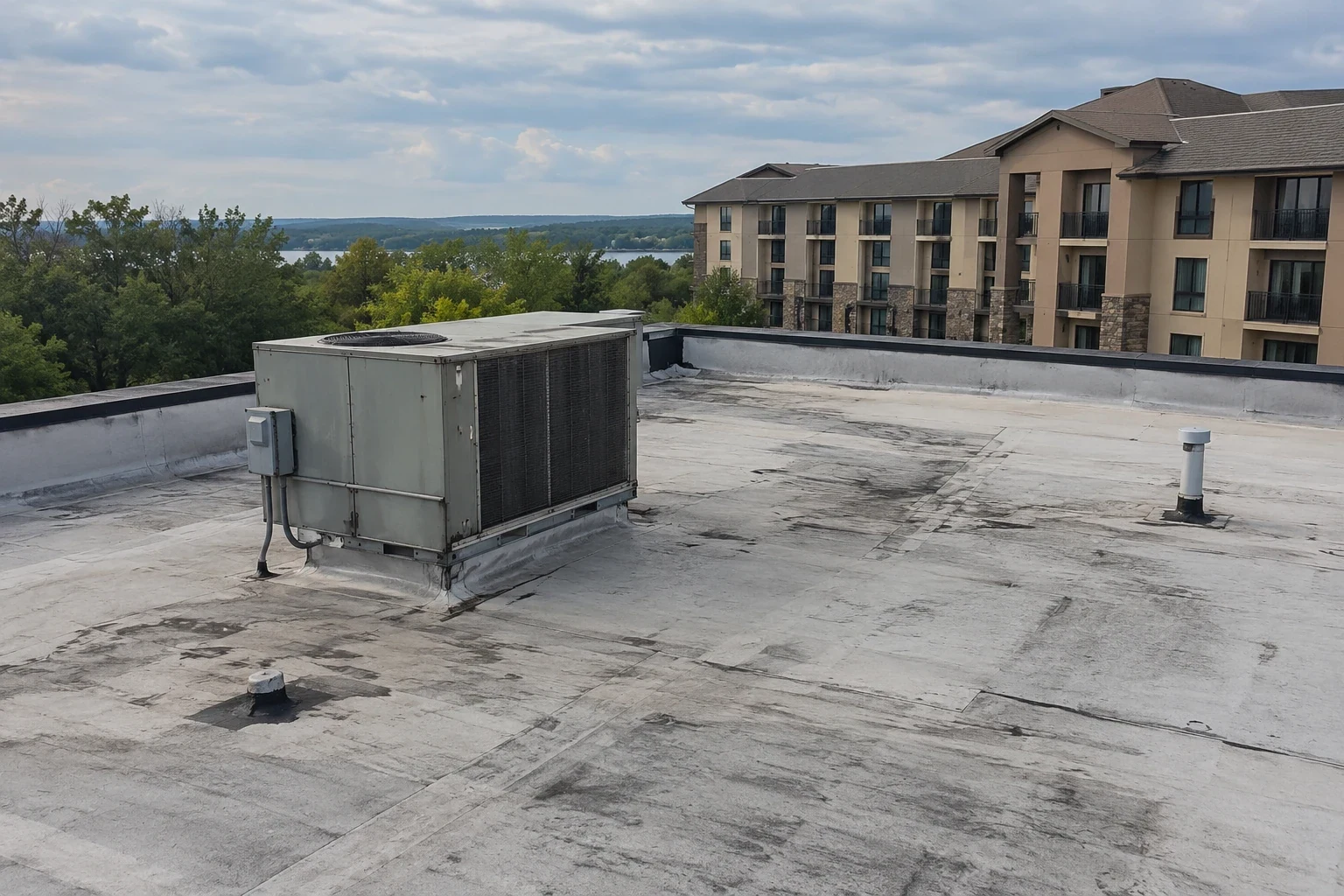
Damaged exterior louver blades can admit rain into equipment above a sound roof curb. That inspection finding changes the hospitality owner's next repair. Replacing the surrounding membrane would leave the equipment opening unchanged. We examine the curb connection and adjoining layers while the equipment trade assesses the louver's weather protection. A building in New Braunfels, TX, needs the failed component corrected and any affected roofing measured separately before the investment is released.
We investigate commercial roof conditions and complete the repair or renewal that the assembly requires. A hospitality group may have several properties with different equipment layouts and roof histories. Each building receives its own physical assessment. The scope identifies the roof material to retain, the damaged layers to remove and the access needed for complete reconstruction. Guest use affects the work release. It should not reduce the correction to an incomplete surface application.
Distinguish louver entry from the curb connection
A bent blade or open louver joint can let wind-driven water pass into a housing. We check the roof flashing around that housing for loose attachment, splits and failed terminations. The equipment specialist examines the blade arrangement and internal water handling. A controlled investigation may be needed to separate the entry paths. The test sequence must avoid introducing water into operating equipment or occupied space without suitable protection.
The resulting repair of an investigated roof leak follows the roofing defect actually found. If the curb connection remains suitable, it may be retained while the equipment component receives correction. Damaged board or membrane beside the curb still needs removal and rebuilding. We identify that quantity independently. Temporary protection should address the exposed entry without blocking the unit's required airflow or creating another drainage problem.
Plan access around the affected hospitality space
Restored buildings in Gruene Historic District support shops, restaurants and hospitality use. The Gruene Family Home operates as the Gruene Mansion Inn. For a requested hospitality roof in Gruene Historic District, we examine its actual access and connections before proposing handling. A receiving area above a guest approach may need controlled work periods, overhead protection or another route for lifting materials. The roof opening must remain reachable for a complete repair.
Wimberley Square includes restaurants, boutiques, galleries and antique shops. Work at an occupied property in that setting requires attention to the requested building's shared approaches and adjacent uses. We identify where discarded roofing can leave the work area and where new material can be held safely. A narrow approach can add handling and protection. Those allowances belong beside the roof reconstruction quantity before the owner compares the repair with a broader renewal.
Open the layers that could change retention
Water that has passed an equipment opening may affect material beneath the nearby sheet. We inspect accessible edges and selected openings where that condition determines the scope. Physical examination distinguishes usable boards from those needing replacement. The opening also identifies the deck and existing repair materials. Restoring the roof after investigation is part of the work, including a compatible closure at the test location.
Where useful, thermal investigation of concealed roof moisture can help locate areas for closer examination. We select suitable survey conditions and check suspect indications by opening the assembly. Removal should follow confirmed layer condition rather than the apparent outline of a thermal image alone. A written roof assessment with photographs identifies the affected construction and the remaining decision before the hospitality group approves its next phase.
Arrange equipment correction before closing the roof work
A louver replacement may require access beside freshly rebuilt flashing. We coordinate that task before completing the vulnerable roofing connection where practical. The equipment trade determines disconnection and operating requirements. We identify the roof material that must be protected during its work. If the unit must remain operating, temporary weather protection and access need specific agreement before an exposed assembly is left between trades.
The approach to repairing a hotel roof assembly also considers rooms and service areas below the affected work. We coordinate noise, debris handling and any required equipment outage with the building operator. For an adjoining dining use, roof work above restaurant operations needs its own kitchen and delivery arrangement. One work period may suit both uses. Another property may need separate releases to complete the same physical correction safely.
Fund the measured defect before the wider renewal
A failed louver alone does not set the field roof's replacement quantity. We examine the adjoining sheet, attachment and retained layers before recommending wider work. Local damage may justify rebuilding the affected section after the equipment repair. Repeated roofing defects or broad concealed deterioration may warrant another renewal boundary. The comparison includes the complete transitions, removal and handling each option requires, with equipment work identified separately.
Groups coordinating with managers responsible for several properties need each building's correction tied to its current finding. An upcoming room renovation may offer a useful release for roof work. It still needs an assembly suited to the receiving construction. Owners considering a property investment or ownership change should carry forward both the completed local correction and any measured roofing renewal remaining beyond it.
Examine the repaired interfaces before reopening the approach
The final inspection should reach the louver-adjacent flashing and the roof repair edge. We check visible continuity, attachment and water discharge at the reconstructed area. The equipment specialist checks its own corrected component. A remaining roof defect receives an identified work boundary instead of being folded into the equipment handover. The owner can then distinguish the restored connection from any field construction that has not been renewed.
Service access matters after the work ends. Technicians should be able to reach the equipment without pressing tools or ladders into a vulnerable membrane transition. We identify compatible protection where the approach needs it. A later equipment change may alter dimensions, support or access. Review those changes before opening the installed flashing again. The roof history should identify the material used and the boundary reconstructed so the next correction can meet suitable receiving layers.
Commercial Roofing Questions
Should we approve new roof flashing if the louver is still damaged?
Resolve the equipment weather opening as part of the coordinated correction. We assess whether the roof flashing itself needs work and identify any damaged adjoining layers. Rebuilding those layers can be necessary, but it will not correct rain entering the equipment casing. The completed work needs both responsibilities identified before temporary protection is removed.
How does a group compare repair proposals for different hotels?
Use the physical scope at each property. Compare the receiving assembly, removal boundary and complete connection rather than a general patch description. Handling and operating restrictions may differ even where the roof sheet is similar. We document each property's layer removal and detail work so a lower square-foot figure cannot stand in for an incomplete rebuild.
Can guest-room refurbishment and roofing share a work release?
A coordinated release may improve access to the affected area, particularly when equipment or interior protection is already planned. Inspect the roof first and establish what the reconstruction requires. The refurbishment schedule should allow weather-resistant stopping points and full completion of the roof connection. Roof materials and equipment access must remain suitable throughout the sequence.
What should be retained after a local hospitality roof correction?
Keep the repair photographs, material identity and measured boundary with the building's roof history. Include any concealed construction exposed during investigation and the remaining work proposed outside that boundary. Those details help assess a later leak or equipment replacement. They also distinguish a completed local repair from a field roof that remains in service without wider renewal.

Hospitality Groups